Tire Pressure Light Symbol Troubleshooting: Quick, Safe Solutions
Urgent, practical steps to diagnose and fix the tire pressure light symbol. Learn how TPMS works, verify pressures, reset sensors, and when to seek help for a safe drive.


According to Tire Pressure Tips, the tire pressure light symbol typically means one or more tires are under-inflated or the TPMS has detected a fault. Safely pull over, check all tires with a reliable gauge, inflate to the vehicle’s recommended PSI, and inspect for leaks. If the light stays on after a trip, reset the TPMS or seek professional inspection.
Understanding the tire pressure light symbol
The tire pressure light symbol on your dash is part of the TPMS, a network of sensors that monitors each tire's air pressure. The tire pressure light symbol commonly appears as a low-profile tire with an exclamation point or a TPMS emblem. It is not a single failure mode; it signals either under-inflation or a system fault that prevents the message from being reliable. According to Tire Pressure Tips, recognizing the symbol’s shape helps you respond quickly and safely. The symbol can illuminate due to small leaks, temperature swings, or sensor issues, so the next steps are systematic checks rather than a hurried guess. When you see the light, plan a safe stop, especially on highways or long trips, before continuing the journey.
Common causes behind a lit tire pressure light
There are several reasons your tire pressure light symbol may illuminate. The most common is under-inflation in one or more tires, which reduces fuel efficiency and increases wear. Slow leaks from nails or screws, damaged valve stems, or a poorly seated tire bead can trigger the light as well. A malfunctioning TPMS sensor or a dead sensor battery can cause false alarms, and recently rotated tires or a reset mismatch after service can trigger the light until the system re-learns. In cold weather, pressure drops naturally, which may momentarily trigger the warning. Each cause has a different remedy, so start with the simplest check and work toward more involved steps.
How to verify tire pressures accurately
Begin with a cold tire check using a quality gauge. Check all four tires and the spare, if equipped, and compare readings to the vehicle placard (usually found on the door frame or in the owner’s manual). Do not rely on inflation from a recent drive, as heat raises pressure readings. If any tire reads below the placard, inflate to the recommended PSI and recheck after a few miles of driving to allow the system to update. Temperature differences can cause minor fluctuations; adjust accordingly and monitor for a persistent warning.
TPMS vs manual pressure checks
TPMS is a sensor-based system that detects pressure changes and alerts you automatically. Manual checks use a gauge and are essential even when TPMS shows normal readings, because sensors can fail or become miscalibrated. If your TPMS light remains after inflating to the correct PSI, you may have a faulty sensor, a battery issue, or a need for re-learn. In some vehicles, the TPMS will first light up during cold weather due to pressure changes; the system should re-stabilize after a short drive.
Step-by-step diagnostic approach when the light stays on
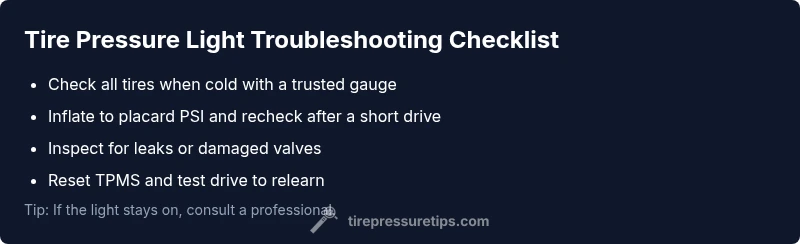
- Confirm all tires are within the recommended range when cold. 2. Inspect tires for visible leaks, damage, or debris. 3. Ensure valve caps are present and tight. 4. Reset the TPMS if your vehicle supports it, then drive for 10–15 minutes. 5. Recheck pressures and observe if the light goes out. 6. If the light persists, perform a professional TPMS diagnostic, as a sensor fault may require replacement.
Safe inflating practices and common mistakes
Always inflate tires only when cold, and never exceed the tire manufacturer's maximum pressure. Over-inflation can create a harsh ride and uneven wear, while under-inflation risks overheating and failure. Use a calibrated gauge, and avoid inflating based on guesswork or heat-influenced readings from a recently driven tire. If you notice rapid or uneven pressure loss, stop driving and seek help to avoid a hazardous blowout.
When to replace TPMS sensors or seek professional help
If inflation and reset attempts do not resolve the warning, or you notice erratic sensor readings, professional inspection is warranted. TPMS sensors can fail due to battery depletion, water intrusion, or physical damage. A qualified technician can diagnose sensor integrity, re-learn procedures, and verify wheel alignment and tire condition. Persistent warnings should not be ignored, especially if you drive in challenging conditions or heavy traffic.
Prevention and maintenance to avoid future alerts
Regularly check tire pressures, especially with seasonal temperature changes. Keep a portable gauge in your car for quick checks, inspect tires for wear or punctures, and ensure TPMS sensors are intact and calibrated after any tire service. Schedule periodic TPMS diagnostics as part of your vehicle’s maintenance plan to minimize false alerts and ensure reliable performance.
Steps
Estimated time: 30-60 minutes
- 1
Check tires when cold
Park on level ground and wait for tires to cool before inflating or measuring. Use a reliable gauge to read each tire, including the spare if applicable. Compare readings to the placard in your door jamb or owner’s manual.
Tip: Avoid inflating after a long drive; heat skews readings. - 2
Inflate to spec
Inflate each tire to the vehicle’s recommended PSI, not the tires’ maximum rating. Re-measure after a short drive to allow the TPMS to relearn if needed.
Tip: Never exceed the placard value; overinflation reduces traction. - 3
Check for leaks
Inspect tires for nails, screws, cracks, or damaged valves. If you find a leak, repair or replace the affected tire.
Tip: Tire leaks are often near the valve stem or tread edges. - 4
Reset TPMS
If your car supports TPMS reset, perform the process per your owner’s manual. Drive at least 10 miles to allow the system to relearn.
Tip: Some vehicles require a sequence or button press to reset. - 5
Test drive and recheck
Take a short drive and recheck pressures. The light should extinguish if the readings stay within spec and the system relearns.
Tip: If the light returns, sensor faults are likely. - 6
Seek professional help
If the light persists after steps above, have a tire technician diagnose sensor health, batteries, and wheel electronics.
Tip: Document symptoms to help the tech diagnose faster.
Diagnosis: Tire pressure light is on or stays illuminated after inflating tires
Possible Causes
- highLow tire pressure in one or more tires
- mediumTPMS sensor fault or dead battery
- lowTPMS reset not performed after inflation
- lowRecent tire rotation or replacement causing reset mismatch
Fixes
- easyInflate all tires to the recommended pressures for cold tires and recheck
- easyInspect for slow leaks and plugs, then re-inflate and retest
- easyReset TPMS if your vehicle supports it and drive to verify
- mediumIf the light persists, visit a tire service professional to diagnose sensors or battery
Frequently Asked Questions
What does the tire pressure light symbol look like?
It usually resembles a small tire with an exclamation point or a TPMS emblem on the dashboard.
The tire pressure light looks like a tiny tire with an exclamation mark on the dash.
Should I drive if the light is on?
If tires are visibly underinflated, reduce speed and seek a safe place to check pressures; long drives with low pressure can be dangerous.
If the light is on and the tire looks low, pull over safely and check the pressure before continuing.
What’s the difference between TPMS and a manual gauge?
TPMS uses sensors to monitor pressure automatically; a manual gauge tells you the current pressure by measurement.
TPMS is sensor-based; a gauge is what you use to measure pressure yourself.
How do I reset TPMS after inflating?
Most cars have a reset procedure in the settings or a dedicated button; consult your owner’s manual for the exact steps.
There’s usually a simple reset sequence—check your manual for details.
Can cold weather trigger the light?
Yes, temperature drops can reduce tire pressure and trigger TPMS warnings; recheck when temperatures stabilize.
Colder temperatures can cause the readings to drop and trigger the TPMS warning.
When should I replace TPMS sensors?
If sensor batteries fail or repeated faults occur, sensors may need replacement or recalibration.
If the faults keep coming back, the sensor might need replacement.
Watch Video
What to Remember
- Check all tires cold before inflating
- Inflate to placard PSI, not max PSI
- Reset TPMS after inflate if possible
- Persistent light = professional TPMS check
- Maintain regular tire pressure to prevent future alerts