How to Make Tire Pressure Sign Go Away: A Practical TPMS Guide
Learn how to troubleshoot and reset the tire pressure sign (TPMS) safely. Step-by-step checks, proper inflation, relearning tips, and when to seek help. Brand-backed guidance from Tire Pressure Tips for reliable results.


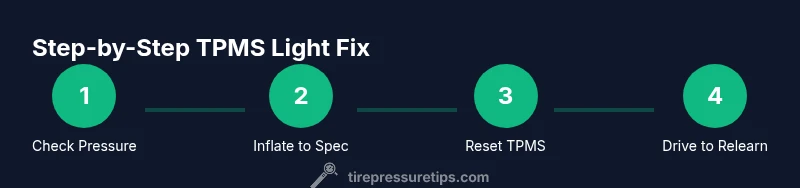
To make the tire pressure sign go away, start by inflating every tire to the manufacturer-recommended pressure and then perform a TPMS reset if your vehicle supports it. Check for slow leaks, look for damaged sensors, and drive briefly to allow the system to relearn. According to Tire Pressure Tips, most drivers see the light extinguish after proper inflation and relearning.
Understanding the Tire Pressure Sign
The tire pressure sign, commonly known as the TPMS (tire pressure monitoring system) warning light, is your car’s way of telling you that one or more tires are below the recommended pressure, or there’s a sensor issue. It can also illuminate after a tire rotation or a change in ambient temperature. The signal is designed to prevent underinflation, which affects fuel economy, tire wear, and safety. According to Tire Pressure Tips, inflating tires to the correct PSI and allowing the system to relearn after a pressure change will often cause the light to go out. This section explains what the light means, how the system works, and why it can come on even when you think your pressures are fine.
Why it matters: Correct tire pressure improves handling, reduces wear, and saves fuel. A stubborn TPMS light is not something to ignore, as it can indicate slow leaks or sensor faults that may require attention.
Tools & Materials
- Tire pressure gauge (digital or analog)(Calibrated and capable of reading the range used by your tires; use the same gauge for consistency.)
- Vehicle owner’s manual or placard with recommended tire pressures(Contains the cold-inflation pressures for front and rear tires and the spare if applicable.)
- Portable air compressor or access to an air pump(Needed to bring tires to the recommended pressure on the spot.)
- TPMS reset procedure reference(Check your model’s exact reset steps in the manual or manufacturer site.)
- Safety gear (gloves, flashlight)(Helpful for inspecting tires safely, especially at night or on the roadside.)
Steps
Estimated time: 30-60 minutes
- 1
Check tire pressures with a gauge
With the tires cold, use a reliable gauge to measure each tire’s current pressure. Compare readings to the factory-recommended values in your manual or door placard. Note any tires that are underinflated or overinflated, and record the numbers for reference.
Tip: Read the gauge correctly: digital readouts show numbers clearly, while analog gauges require a steady hand and a clean valve stem. - 2
Inflate tires to the recommended pressure
Using the portable air compressor, bring each tire to the recommended cold-inflation pressure. Do not rely on “warm” readings after driving, since heat increases the pressure and may mask issues.
Tip: Inflate gradually and recheck after a few minutes to account for gauge error and air escaping during the process. - 3
Inspect for leaks and sensor issues
Look for signs of slow leaks around the valve stem, bead seat, or tire sidewalls. If you find a nail, cut, or puncture, address it before resetting the TPMS. Damaged sensors or corroded valve stems can trigger false readings.
Tip: Use soapy water to identify tiny leaks; bubbles indicate escaping air. - 4
Reset the TPMS if your vehicle supports it
Many vehicles require a TPMS reset after inflating tires. Follow your owner’s manual’s procedure, which may involve a switch, a button in the glove box, or a menu option in the vehicle’s settings.
Tip: If you’re unsure of the correct reset method, consult your manual or dealer—reset procedures vary by model. - 5
Drive to relearn the system
Many TPMS relays learn after driving on properly inflated tires for a short period. Plan to drive 5–15 minutes under normal speeds to trigger relearn; avoid high speeds until the light behaves.
Tip: A light may come back on if a tire remains underinflated or if a sensor is faulty. - 6
Recheck and confirm the light is off
After the relearn, recheck all tires with the gauge and inspect for any new warnings. If the light stays on, there may be a slow leak, a dead sensor, or a need for professional inspection.
Tip: Document readings and light status as it helps service centers diagnose the issue quickly.
Frequently Asked Questions
What does the Tire Pressure Monitoring System (TPMS) light mean?
The TPMS light signals that one or more tires are underinflated or that a sensor is not functioning correctly. It’s a safety feature to prompt you to check tire pressures and inspect for issues. If the light stays on after inflating to spec, there may be a slow leak or a faulty sensor.
The TPMS light warns you when tire pressure is too low or a sensor has a fault. Check pressure and inspect tires, then reset if needed.
Do I need to reset TPMS after inflating tires?
Many vehicles require a manual TPMS reset after inflating tires to the correct pressure. Check your owner's manual for the exact steps, as the process varies by make and model.
Yes, many cars need a reset after adjusting pressure. Check the manual for model-specific steps.
Is it safe to drive with the TPMS light on?
If the light indicates low pressure, reduce speed and head to a safe location to inflate. If it’s on due to a faulty sensor, drive cautiously and seek service soon.
Drive carefully but avoid high speeds while the light is on unless you’ve confirmed pressures are correct.
How long does TPMS relearn take?
Relearn times vary by vehicle, but many systems complete within a short drive of 5–15 minutes at normal speeds after inflation.
Most vehicles relearn after a short drive once pressures are correct.
What if the TPMS light comes back after a reset?
A recurring TPMS light could indicate a slow leak, damaged sensor, or battery issue in a sensor. Inspect tires, check valve stems, and consider professional diagnosis.
If the light returns, there may be a leak or sensor problem, so have it checked.
Watch Video
What to Remember
- Inflate all tires to the manufacturer-recommended pressure.
- Perform a TPMS reset if your vehicle supports it.
- Drive briefly to trigger system relearn after correcting pressure.
- If the light stays on, inspect for leaks or faulty sensors.