How to Fix Tire Pressure Monitoring System (TPMS) - Practical Guide
Expert, step-by-step instructions to diagnose, reset, and repair TPMS faults. Learn safe DIY checks, when to recalibrate, and how to prevent false alerts with maintenance tips from Tire Pressure Tips.


Learn how to fix tire pressure monitoring system (TPMS) issues, from diagnosing common sensor faults to recalibrating after tire service. This quick guide covers safe initial checks, when to reset the system, and practical prevention tips to reduce false alerts. By the end, you’ll know what tools you need and how to decide between DIY fixes and professional help.
Why TPMS issues matter for safety and maintenance
According to Tire Pressure Tips, TPMS helps prevent underinflation, a major safety and efficiency concern. When TPMS signals a fault or a low tire pressure, it gives you a critical reminder before a tire develops a dangerous leak or a blowout on the highway. Causes range from a dying sensor battery and a damaged valve stem to corrosion on wheel fasteners or a misread after tire service. Understanding how TPMS works and what can go wrong empowers you to respond quickly, keep tires inflated to the maker’s specification, and maintain safer handling. False alerts are common after tire rotations or during rapid temperature swings, and they can distract you from a real issue. Regular checks save money by reducing uneven wear and avoiding unnecessary service visits. This section sets the stage for practical diagnosis and safe DIY options, while underscoring that some steps require professional tools or service, especially on newer vehicles with complex relearn procedures.
How TPMS works: sensors, valves, and control units
TPMS relies on small wireless sensors mounted in each wheel to monitor air pressure (and sometimes temperature). Each sensor transmits a signal to the vehicle’s TPMS control module, which processes data and triggers a warning if pressure falls outside the manufacturer’s recommended range. Many sensors house a small battery; others depend on wheel electronics. When tires are serviced, a relearn or reset may be required to re-sync sensors with the vehicle. Relearn procedures are vehicle-specific: some cars require a drive cycle, others need a scan tool or a dedicated procedure in the owner’s manual. Understanding the basics helps you decide when to DIY and when to seek a shop’s help. A reliable TPMS keeps you informed about real pressure changes, not just fluctuating readings from a loose valve cap.
Common TPMS failure modes and symptoms
Common symptoms include the TPMS warning light staying illuminated after inflating tires, inconsistent readings across wheels, or a complete failure to read any pressures. False alerts can occur after temperature changes or tire service. Sensor batteries degrade over time, valves can corrode, and wheel or brake work can disturb the sensor’s position. Some faults arise from software glitches in the vehicle’s ECU or ABS module. If you notice repeated warnings despite correct pressures, or if a scan tool reveals fault codes related to the TPMS, it’s time to investigate sensor health, wiring harnesses, and the relearn status. Precise codes will guide your next steps toward replacement or repair as needed.
Safety and prep: what you should do before tests
Before touching wheels, park on level ground and apply the parking brake. Use wheel chocks, wear gloves, and keep a clear work area away from traffic. If you plan to lift the vehicle, use a proper jack and stands and never work under a raised car without support. Check the tires when cold for an accurate baseline pressure reading, and have your owner’s manual handy for model-specific relearn instructions. If you suspect a fuel-safety issue or a reactive fault, stop immediately and consult a professional. These precautions protect you and your tires during the diagnostic process.
DIY diagnostic checks you can perform
Start with a cold tire pressure check using a reliable gauge and compare readings to the vehicle’s recommended settings. Inspect the valve stems for damage and ensure the TPMS sensor cap is present and secure. If you have access to a diagnostic tool with TPMS functions, retrieve any fault codes and note which wheel shows discrepancies. Visually inspect wheel rims for corrosion or damage that could affect sensor readings. If a leak is suspected, apply soapy water to valve stems and observe for bubbles. Document any inconsistent readings and prepare to perform a relearn if the codes indicate sensor misalignment.
Recalibration and reset options after tire service
Many modern vehicles require a relearn or calibration after tire changes or sensor work. The process can involve: (1) a specific button sequence in the car, (2) driving the vehicle for a defined period under certain speeds, or (3) using a dedicated TPMS scan tool. Always consult the owner’s manual for your model’s exact steps. If your car uses a reset button, press it as directed and drive the vehicle as recommended to complete the relearn. For vehicles with complex procedures, a quick visit to a shop with a TPMS-capable scan tool can save time and ensure the sensors are correctly paired.
When to replace sensors or seek professional help
If sensor batteries are dead or a wheel sensor is damaged beyond repair, sensors may need replacement. Replacing TPMS sensors can be straightforward on some models, but other vehicles require specialized tools and software to relearn. If you repeatedly encounter fault codes, if the system cannot relearn after multiple attempts, or if a tire is leaking despite correct pressures, professional service is advised. A trained technician can verify sensor integrity, correct wiring, and confirm proper wheel alignment and torque settings to avoid future warnings.
Proactive maintenance to prevent TPMS problems
Regularly check tire pressures when cold and ensure all four tires are within specification. Schedule periodic TPMS checks during routine service visits, especially after tire rotations or wheel repairs. Keep valve stems clean and free of corrosion, replace damaged caps, and avoid over-tightening during repairs. If your vehicle is older or has high mileage, consider sensor inspection or battery replacement as part of preventative maintenance. Recording readings and service events helps you detect trends and reduce the chance of unexpected TPMS warnings.
Tools & Materials
- Digital tire pressure gauge(Reads to 0.5 psi; use on cold tires for accuracy)
- TPMS relearn/diagnostic tool(Needed for most vehicles to reset sensors and re-sync)
- Owner’s manual or service manual(Vehicle-specific relearn steps and sensor specs)
- Wheel chocks and jack (safety gear)(Secure the vehicle when removing wheels)
- Lubricant (silicone-based) or penetrating oil(Helpful for sensor removal or valve service)
- Replacement TPMS sensor (if needed)(Choose the correct OEM or aftermarket sensor for your vehicle)
- Soapy water spray(Check for leaks at valve stems and sensors)
- Notebook or digital log(Record pressures, events, and relearn results)
Steps
Estimated time: 60-90 minutes
- 1
Prepare vehicle and safety gear
Park on level ground, apply the parking brake, and place wheel chocks. Gather your tools and ensure the area is safe before touching any wheel.
Tip: Wear gloves to protect your hands from sharp edges and hot surfaces. - 2
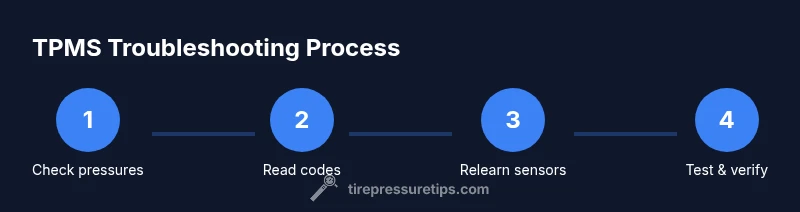
Check pressures with tires cold
Use a digital gauge to measure all four tires and compare against the vehicle’s recommended pressure from the placard or owner’s manual.
Tip: Record the baseline numbers for future reference. - 3
Read fault codes with a TPMS tool
Connect a TPMS diagnostic tool to read any stored fault codes and identify which wheel sensor or circuit may be problematic.
Tip: Note the exact code to guide replacement or relearn steps. - 4
Inspect sensors, stems, and wheels
Visually inspect each sensor, the valve stem, and the wheel for damage, corrosion, or improper seating. Look for loose or missing caps.
Tip: If you see corrosion, do not force parts; seek professional help. - 5
Relearn or calibrate TPMS
Follow your vehicle’s relearn procedure using the owner's manual or a TPMS tool. Some cars require a drive cycle, others a menu selection or a tool-assisted reset.
Tip: Ensure all four tires are within target pressure before relearn. - 6
Test the system and verify
Inflate to the recommended pressure and monitor the TPMS indicator. If the light remains or codes persist, re-check sensors or consider sensor replacement.
Tip: Drive slowly for a short distance to complete the relearn after resetting. - 7
Document results and plan maintenance
Log pressures, sensor status, and relearn outcomes. Schedule periodic TPMS checks and replace aging sensors as needed.
Tip: Keep tracking data to spot early signs of degradation.
Frequently Asked Questions
What is TPMS and how does it work?
TPMS stands for tire pressure monitoring system. It uses wheel-mounted sensors to report tire pressure to the vehicle’s computer and alert you when pressure drops below the recommended level. Understanding the fault codes helps you identify whether the issue is a sensor, valve, or pressure condition.
TPMS uses wheel sensors to monitor pressure and alert you if it drops. Codes tell you whether the problem is sensor or pressure related.
Why is my TPMS light on after inflating tires?
A persistent TPMS warning after inflation can indicate a slow leak, a faulty sensor, or a need for a relearn. Temperature changes can also trigger misleading readings. If the light stays on, perform a thorough check or use a diagnostic tool to confirm the cause.
If the light stays on after inflation, check for leaks, sensor faults, or a required relearn.
Can I reset TPMS myself?
Many modern cars allow a DIY reset or relearn using the owner’s manual or a TPMS tool. Some models require professional software. Always follow the model-specific steps to avoid misalignment or data errors.
Yes, many cars let you reset at home with the manual or a tool; others need a shop.
How long do TPMS sensors last?
Sensor life varies by vehicle and usage. If a sensor repeatedly fails or has irregular readings, consider testing or replacing the sensor. Battery life and environmental exposure influence longevity.
Sensor life varies; if failures recur, replace the sensor and check the battery.
Is it dangerous to drive with a TPMS warning?
Yes, a real drop in tire pressure is dangerous. If your tires are underinflated, reduce speed and seek service promptly. TPMS warnings should be treated as a real safety concern.
A TPMS warning means a tire could be underinflated; drive cautiously and seek service.
What should I do after reinstalling tires?
Reset the TPMS according to the vehicle manual and verify each tire’s pressure. Relearn the sensors if required and test for accurate readings.
Reset and relearn after tire service, then verify readings.
Watch Video
What to Remember
- Diagnose TPMS faults before replacing parts.
- Reset and relearn after service following the manual.
- Regular checks prevent false alerts and improve safety.
- Use the right tools or a professional when needed.
- Document maintenance to track sensor life.