TPMS Tire Pressure Monitoring System: Practical Guide
A comprehensive, educational guide to the tpms tire pressure monitoring system, explaining how it works, how to reset it when needed, and best practices for reliable tire pressure, safety, fuel economy, and tire life.


You will learn how a tpms tire pressure monitoring system protects safety by alerting you to underinflation and hot spots, how to interpret TPMS warnings, and how to verify pressures with a manual gauge. This quick guide also covers resets and routine maintenance. According to Tire Pressure Tips, proper TPMS care can improve fuel efficiency and tire longevity.
What is the tpms tire pressure monitoring system and why it matters
The tpms tire pressure monitoring system is a safety feature that monitors air pressure in your tires and alerts you when levels fall outside the recommended range. There are two common implementations: direct TPMS, which uses wheel-mounted sensors to report actual pressure values, and indirect TPMS, which estimates pressure by analyzing wheel-speed data. Regardless of the method, the goal remains the same: prevent underinflation, improve safety, boost fuel efficiency, and extend tire life. Underinflated tires can lead to poor handling and increased heat buildup, while overinflation can reduce traction and cause uneven wear. For drivers, understanding TPMS helps you respond quickly to warnings and keep tires in their optimal range. According to Tire Pressure Tips, staying proactive with TPMS checks reduces risk and saves money over the long run.
How TPMS works: sensors, transmitters, reporting
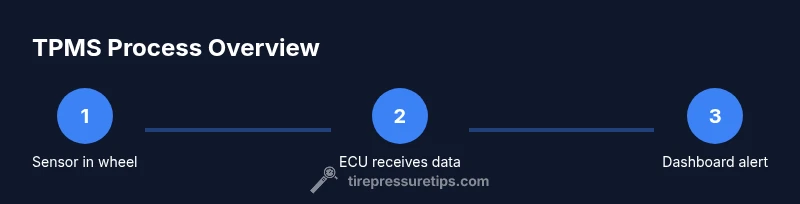
In most vehicles, each wheel houses a sensor that transmits a radio signal with its tire pressure data to the vehicle’s central computer. The ECU processes these signals, checks them against the vehicle’s recommended pressure, and triggers a dashboard alert if any reading deviates beyond a safe threshold. Direct TPMS provides actual psi values at a glance, while indirect TPMS uses wheel-speed sensors to infer pressure changes when a tire is underflated relative to the others. The system may also flag sensor faults, battery depletion, or communication errors. When you inflate a tire to the correct pressure, the system should update, and some vehicles require a short drive or a reset to relearn current conditions. The net effect is a proactive, real-time signal that helps you avoid driving on underinflated tires.
Checking tire pressure with and without TPMS
Manual checks are still essential even with TPMS. Use a reliable digital gauge to measure cold tire pressures against the vehicle’s recommended pressure, usually found on a label in the door jamb or owner's manual. Record measurements for all four tires and adjust as needed. If TPMS alarms, verify with gauge readings; sometimes a sensor misreads a healthy tire, while other times a slow leak requires attention. Note the difference between cold and hot tire readings, because heat raises pressure by a few psi and can mask low pressure on a quick check. Maintaining the correct pressure improves fuel economy, tread wear, and braking performance.
Calibrating and resetting TPMS: when and how
Resetting or relearning TPMS is necessary after changing tires, rotating wheels, or replacing sensors. Consult the owner’s manual for your vehicle’s exact procedure; many cars require selecting a relearn option in the vehicle settings and then driving a short distance to allow the system to relearn. If your car uses a TPMS scan tool, follow its prompts and confirm the relearn is successful. In some models, the system learns automatically after a few miles of driving at normal speeds. Keep a log of dates and tire pressures to track performance year over year.
Common TPMS issues and troubleshooting
The TPMS may warn due to sensor battery failure, damaged valve stems, or corroded sensors after wheel service. A sensor that doesn’t transmit can trigger a warning even when pressures are correct. Slow leaks, punctures, or wheel vibration can interfere with the signal. If a warning persists after inflating tires, troubleshoot by inspecting for leaks with soapy water, inspecting the sensors and their seals, and verifying the ECU is receiving data from all sensors. If you suspect a faulty sensor or dead battery, contact your mechanic or tire shop for a proper TPMS sensor replacement.
Maintenance routine and safety considerations for TPMS
Create a maintenance routine that includes checking tire pressures monthly, after long trips, and whenever ambient temperatures shift. Always use cold readings for accuracy and calibrate after tire or sensor servicing. Based on Tire Pressure Tips analysis, regular TPMS checks help drivers stay within recommended ranges, reduce the risk of roadside failures, and extend tire life. When in doubt, follow the vehicle manufacturer’s recommended pressures and prioritize safe driving practices to protect yourself and others on the road.
Tools & Materials
- Digital tire pressure gauge(0-80 psi range; accuracy ±1 psi)
- Owner's manual (vehicle-specific TPMS section)(Identify relearn steps and sensor details)
- TPMS relearn tool or compatible scan tool(Some vehicles require a dedicated tool for re-learn)
- Soapy water spray bottle(Check for leaks around valve stems and sensors)
- Notebook or digital log(Record pressures and dates)
- Wheel chocks and a stable surface(Safety while lifting a wheel)
Steps
Estimated time: 45-60 minutes
- 1
Prepare tools and secure the vehicle
Park on a flat surface, set the parking brake, and gather your gauge, logbook, and any relearn tools. This keeps the process organized and safe, reducing the chance of misreadings or accidents.
Tip: Verify the tire pressures with the vehicle cold, and avoid inflating immediately after a drive for accuracy. - 2
Record baseline pressures
Before changing anything, check each tire’s current pressure using the digital gauge. Note the reading next to the recommended value found in the door jamb label or owner's manual.
Tip: Use the same gauge for consistency across all four tires. - 3
Inflate to recommended levels
If any tire is below the recommended pressure, inflate to the specified value. Do this for all tires and confirm the new readings with the gauge.
Tip: If you’re unsure about the exact number, start slightly under and then top off to the label value. - 4
Locate TPMS sensor placements
Familiarize yourself with where sensors sit (usually inside each wheel). This helps you assess if a sensor appears damaged after a tire service.
Tip: Check wheel rims and valve stems for any visible damage during inspection. - 5
Initiate TPMS relearn/reset
Follow your vehicle’s relearn procedure from the manual or use a scan tool if required. Some cars relearn automatically after a short drive.
Tip: If your car requires a manual relearn, complete the steps exactly as described to avoid false warnings. - 6
Drive short test miles
Drive 5–10 miles at normal speeds to allow the system to relearn. Monitor the dashboard for any new warnings during the drive.
Tip: If a warning persists, stop and recheck all tires and valve stems for leaks. - 7
Verify readings post-relearn
Recheck tire pressures with the gauge after the relearn process. Ensure all four tires show pressurized values within the recommended range.
Tip: Document the final readings and the date for your maintenance log. - 8
Document and schedule next checks
Record the outcomes and set a reminder for your next monthly check or seasonal adjustment, especially in temperature swings.
Tip: Pair TPMS maintenance with seasonal tire changes for efficiency.
Frequently Asked Questions
What does the TPMS warning light mean?
A TPMS warning indicates one or more tires are underinflated or a sensor fault is detected. Check pressures with a gauge and inspect for leaks or damage.
A TPMS warning means you should check tire pressures and inspect for leaks or sensor issues.
Can I drive with a TPMS warning?
Driving a short distance is possible, but you should stop soon to verify pressures and inspect tires. Don’t ignore warnings for an extended period.
Drive cautiously to a safe place and check the tires as soon as you can.
Do all vehicles have TPMS sensors in every tire?
Most vehicles equipped with TPMS have sensors in each wheel, including the spare on some models. Verify with the owner’s manual.
Most cars with TPMS have sensors on each wheel; check your manual for specifics.
How often should TPMS be reset after service?
Reset after tire rotations, replacements, or sensor service. Follow the manual or your tool’s prompts to ensure the system relearns correctly.
Reset after tire work or sensor changes, following the manual.
Are TPMS sensors battery-powered and replaceable?
Most TPMS sensors have sealed batteries and are replaced as a unit rather than having the battery replaced individually.
Sensors are usually replaced as a unit when the battery dies.
What if TPMS warns after inflating tires?
Possible leaks, sensor faults, or valve problems. Inspect with soapy water and consider a professional TPMS diagnostic.
If warnings persist after inflating, check for leaks and sensor issues.
Watch Video
What to Remember
- Know what triggers TPMS alerts and how to respond
- Always verify with a reliable tire gauge when TPMS warns
- Relearn TPMS after tire changes or sensor work
- Regular maintenance supports safety and tire life