If Tire Pressure Is Low: A Troubleshooting Guide
Urgent, practical guidance to diagnose and fix tire pressure issues. Learn why if tire pressure is low matters, how to safely check PSI, inflate correctly, and prevent future problems with TPMS and maintenance.


According to Tire Pressure Tips, the most likely reason a tire seems low is slow air loss or a faulty TPMS sensor. First, pull over safely and inspect for visible damage, then check the PSI with a reliable gauge and inflate to the vehicle’s recommended value from the door jamb sticker or owner’s manual. If TPMS warns persist, continue with the diagnostic flow.
Why if tire pressure is low Demands Immediate Attention
Underinflated tires are more than an annoyance—they threaten safe handling, braking, and efficiency. If tire pressure is low, the tire’s contact patch grows, which can make steering feel vague and increase the risk of a blowout on highways. The result is reduced braking performance, excessive tire heat, and uneven wear. According to Tire Pressure Tips, addressing the issue promptly helps preserve handling, fuel economy, and tire life. Safely pull over, inspect for obvious damage, and verify the pressure with a reliable gauge before continuing. Remember that even small losses add up over time, especially if you drive on rough roads or in heat.
In addition to safety, a sluggish response under load or during emergency maneuvers can be traced to underinflation. This is not just a tire problem—it changes your vehicle’s dynamics, including steering effort and cornering stability. If you want to keep your car predictable in sudden turns or braking events, check and correct tire pressure as part of your routine now. The Tire Pressure Tips team emphasizes that the simplest fixes yield the biggest safety returns.
The True Costs of Underinflation and What It Means for Your Wallet
When tires operate below the recommended PSI, rolling resistance increases, which lowers fuel economy and accelerates wear on the tread shoulders. A tire that is too soft generates heat and deforms more quickly on hot days or long trips, raising the likelihood of a blowout or a puncture. Even modest underinflation can reduce mileage by a few percent over a tank, adding up over time. In cold weather, pressure drops naturally, making proactive checks essential. Tire Pressure Tips analysis shows that keeping tires inflated to spec improves longevity and performance, while neglect invites costly repairs and unsafe driving conditions. From a consumer perspective, staying on top of inflation is a simple maintenance habit that protects your investment while keeping you safer on the road.
Quick In-Place Checks You Can Do Right Now
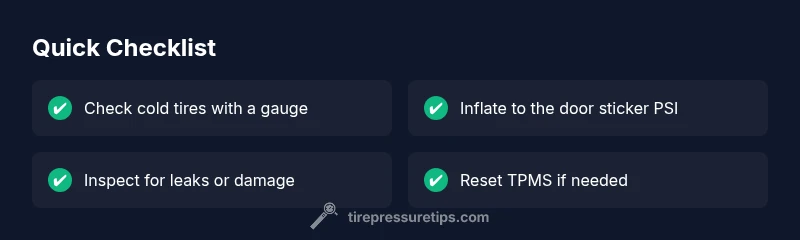
When you suspect underinflation, start with basic checks that don’t require tools beyond a gauge. First, verify the tire pressure on cold tires using a digital or analog gauge; never rely on a warm tire reading. Compare your numbers to the sticker on the driver’s door jamb and the owner's manual. If a tire reads low, inflate to the recommended PSI and recheck after a few minutes. While inflating, check for obvious signs of damage—nails, cuts, or screws—and inspect the valve stem for leaks. If you find a slow leak, or if the tire cannot reach the recommended pressure, you may have a puncture or a faulty valve, and you should seek professional help. Remember: if tire pressure is low consistently, you could have a recurring leak that needs repair.
Diagnostic-Flow: Symptom to Diagnosis
A structured flow helps you identify the root cause of low tire pressure. Start with the symptom: a TPMS warning or a visibly deflated tire. Next, consider common causes: slow air leaks (likelihood: high), puncture or nail in the tread (high), faulty TPMS sensor (medium), or valve stem leaks (low). For each, apply simple fixes first: reseat or tighten the valve core (easy), replace damaged tire or seal leaks (medium), or reset/calibrate TPMS after inflation (easy). If the problem persists after these steps, seek a professional inspection to prevent a dangerous failure on the road.
Step-by-Step: Reinflate and Inspect (Complementary Guide)
This section provides a practical, end-to-end process to fix most low-tire-pressure situations. Step-by-step instructions below align with the diagnostic flow to ensure you inflate correctly and verify safety before you drive again. Each step includes a quick pro tip to maximize safety and reliability. If you encounter a persistent leak or suspect TPMS issues, stop and consult a tire technician. Safety first: if you’re unsure, don’t drive long distances on an underinflated tire.
Prevention, TPMS, and Seasonal Considerations
Maintaining proper tire pressure is a year-round task. Temperature changes, load, and highway speeds all influence PSI, so you’ll want to check tires more frequently as seasons shift. Keeping a portable tire gauge in the glovebox makes it easy to verify cold PSI before trips. Regular inspections for punctures, sidewall damage, and TPMS sensor function help you catch issues before they become emergencies. The goal is consistent inflation around the door jamb recommended PSI, not guesswork. Tire Pressure Tips recommends scheduling a monthly quick check and a before-long-trip inflation review to stay safe.
Common Pitfalls and Safety Reminders
Avoid common mistakes that compound risk when dealing with low tire pressure. Don’t rely on a TPMS light alone—verify with a gauge and inspect the tire visually for damage. Never assume you know the exact PSI by habit; always reference the sticker. If you must drive with a tire that is suspiciously deflated, do so at reduced speeds and avoid sharp maneuvers. When in doubt, call for roadside assistance or a tire professional. Remember: safety first, smooth handling after inflation, and a commitment to regular checks will prevent emergency repairs.
Final Notes: Maintaining Confidence on the Road
Toward the end of any troubleshooting, review what you learned about if tire pressure is low and how to prevent future issues. A quick habit of monthly checks, especially in extreme heat or cold, helps you stay ahead of leaks and sensor faults. Combined with TPMS calibration and professional service when needed, you’ll improve safety margins, preserve tire life, and maximize fuel economy. The Tire Pressure Tips team stands by a proactive approach: check, inflate, verify, and drive with confidence.
Steps
Estimated time: 15-25 minutes
- 1
Identify underinflated tire(s)
Park on level ground and inspect all tires visually. Confirm which tire reads low with a gauge and note any obvious damage. If you see nails, tears, or sidewall bulges, do not resume driving until inspected.
Tip: Keep a digital tire gauge handy for quick, accurate readings. - 2
Check PSI against the door sticker
Read the PSI rating printed on the driver’s door jamb; compare it to your measured cold PSI. Record each tire’s reading to track patterns and leaks. If all tires read properly but a single tire remains low, focus repairs there.
Tip: Measure when tires are cold for an accurate baseline. - 3
Inflate to the recommended PSI
Using a compressor or a gas-station inflator, bring each tire up to the recommended pressure in small increments. Pause to recheck after inflating to avoid over-inflation. Do not exceed the maximum pressure stamped on the tire sidewall.
Tip: Inflate slowly and use the gauge in real time to avoid overshoot. - 4
Inspect for leaks or damage
Look for punctures, sidewall cracks, or valve stem issues. A soapy-water test can reveal slow leaks—watch for bubbles around the bead area, valve, or puncture sites. Do not drive on a tire found to be leaking visibly.
Tip: If you locate a leak, proceed to repair or replace before continuing. - 5
Recheck and adjust if necessary
Re-measure each tire after a short wait (1-2 minutes) to ensure pressure loss isn’t ongoing. Adjust as needed so all tires sit at the recommended PSI with a tolerance of +/- 1-2 psi.
Tip: Temperature can affect PSI; consider checking again after a few hours. - 6
Test drive and verify stability
Take a short, careful test drive and recheck pressures after about 5-10 miles. Ensure the vehicle tracks straight and the TPMS does not trend back to low readings. If readings remain unstable, consult a tire professional.
Tip: Drive gently on roads you know well until the tires stabilize.
Diagnosis: Tire pressure warning light or visibly low tire
Possible Causes
- highSlow air leaks from punctures or bead leaks
- highPuncture or nail in tread
- mediumFaulty or weak TPMS sensor
- lowValve stem leak or loose valve core
Fixes
- easyInspect tire for punctures and seal leaks or replace tire if damaged
- easyTighten or replace valve core; replace defective valve stem if leaking
- mediumReset/calibrate TPMS after inflation or replace sensor if faulty
- mediumSeek professional repair if leak persists or tire cannot reach proper pressure
Frequently Asked Questions
Why does my TPMS warning stay on after I inflate?
TPMS warnings can stay on if a sensor is faulty, if the system needs recalibration after inflation, or if there is a slow leak the gauge cannot fully fix. If the warning persists, have the TPMS checked by a professional.
If the TPMS light stays on after inflating, a sensor fault or calibration issue could be the cause. Have a tire professional inspect the system.
Can low tire pressure affect fuel economy?
Yes. Underinflated tires create more rolling resistance, which reduces fuel efficiency and can increase wear. Keeping tires at the recommended PSI helps maximize mileage.
Yes, low pressure can reduce fuel economy due to higher rolling resistance.
What PSI should I use for my tires?
Refer to the door jamb sticker or your vehicle manual for the correct cold PSI per tire. Variations may occur for load and speed; always verify before driving.
Check the sticker on the door frame for the right PSI, and measure when cold.
Is it safe to drive with a slightly low tire?
If the drop is minor and no sidewall damage is present, short highway or city drives may be possible. However, don’t push it—continue inflating to spec and avoid long trips.
In many cases you can drive short distances, but don’t risk it if the tire is visibly damaged or the pressure keeps dropping.
How often should I check tire pressure?
Aim for a monthly check and before long trips. Temperature shifts and road conditions can cause pressure to change, so regular checks help prevent problems.
Check once a month or before long trips to stay safe.
Watch Video
What to Remember
- Check tires when cold and inflate to the sticker spec
- Verify all tires, including the spare, if equipped
- TPMS alerts may require sensor service or reset
- Frequent checks reduce wear and improve fuel economy
- Seek professional help for persistent leaks or damaged tires