If Your Tire Pressure Is Low: A Quick, Urgent Troubleshooting Guide
An urgent, practical guide to diagnosing and fixing low tire pressure, protecting TPMS, and preventing flats. Learn quick checks, safe fixes, and when to seek professional help from Tire Pressure Tips.


the moment you notice if your tire pressure is low, safety and fuel economy can suffer. According to Tire Pressure Tips, the fastest fix is to pull over, check all tires, and bring each one to the manufacturer’s recommended psi. This quick answer starts you toward a practical, step-by-step plan you can follow now.
What happens when tire pressure is low?
If your tire pressure is low, safety and fuel economy can deteriorate the moment you drive. Underinflation alters the tire’s contact patch, increasing rolling resistance and making the tire more prone to heat buildup, which accelerates wear. You may notice heavier steering, a softer ride, or slower braking response on wet or slick surfaces. This is not just about the feel; it translates to higher risk of a blowout if the issue is ignored. According to Tire Pressure Tips, even modest losses in pressure can amplify tire stress and wear patterns. If your tire pressure is low, you may also see a TPMS warning on your dash, signaling you to check. The impact on fuel economy is real: underinflated tires require more energy to roll, so you burn more fuel. The Tire Pressure Tips team emphasizes that quickly inflating to the recommended spec is the first line of defense—not a luxury, but a safety-critical habit for every driver.
Why low tire pressure matters for safety and efficiency
If your tire pressure is low, safety and efficiency take a hit: the tire’s shape changes under load, reducing grip and increasing heat generation. Poor inflation leads to uneven tread wear, which can compromise braking and cornering, especially in rain or snow. The vehicle’s response can feel vague, making it harder to steer and slow down smoothly. Reduced pressure also lowers fuel efficiency because the engine has to work harder to move the car. The safe practice remains consistent: inflate to the manufacturer’s recommended psi when tires are cold, then recheck after a short drive. The Tire Pressure Tips team notes that most people can safely handle this at home or at a gas station with a reliable gauge and the correct settings. Regular checks save money, extend tire life, and reduce the likelihood of roadside troubles.
Quick, safe checks you can perform today
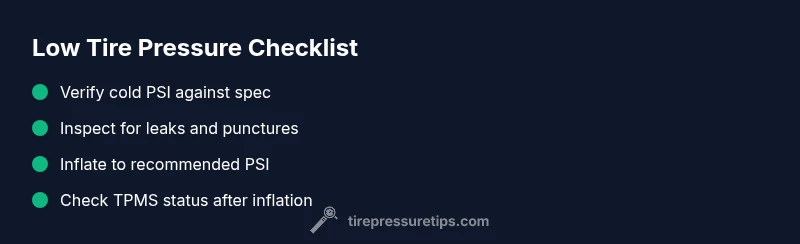
When you suspect low pressure, start with a quick, safe inspection. First, confirm the recommended cold PSI for your tires from the door jamb sticker or the owner’s manual. Use a reliable gauge—digital models are easy to read—and compare readings with the spec for each tire. Inspect for obvious damage: nails, screws, or objects in the tread; cracked sidewalls; or a loose valve cap. If a tire reads low, inflate it with an air pump and check frequently to avoid over-inflation. After adjusting, recheck all tires to ensure uniform pressure. If the dashboard light remains or you can’t reach the recommended PSI, the issue could be a slow leak or a faulty sensor. For safety, stop driving if a tire looks visibly damaged. If your tire pressure is low, regular checks and early action are your best defense to stay safe on the road.
Diagnostic considerations: leaks, punctures, and TPMS faults
Low pressure usually stems from a leak, puncture, or a faulty TPMS sensor. Look for nails, screws, or sharp objects lodged in the tread or sidewall. Inspect the valve stem for cracks or a loose core—these are common culprits in slow leaks. A damaged stem can cause air loss even without a noticeable puncture. If there’s no obvious leak, your TPMS warning could reflect a sensor problem or a dead battery inside the sensor, sometimes requiring a relearn or reinitialization after tire work. The diagnostic approach is systematic: check pressures first, identify any visible defects, verify TPMS operation, and seek professional inspection if you still see a loss or warning light after inflation. This method reduces guesswork and improves safety on the road.
Step-by-step fixes for the most common causes
This section lays out practical, actionable fixes in order of simplicity. If you can start with the easiest options, you’ll often resolve the issue quickly. Start by validating all four tires against the vehicle’s spec and inflating to the recommended psi when cold. If a tire remains low, inspect for leaks or punctures and patch or replace as needed. For punctures, the repair depends on the size and location; sidewall damage generally requires tire replacement, while tread-area punctures may be repairable. If you find a faulty valve stem, replace the stem or cap and reseat the core. After repairs, recheck pressures and drive a short distance to confirm even inflation. If the TPMS light persists or you can’t locate a leak, a professional tire shop can perform a more thorough diagnosis and TPMS relearn.
Using TPMS: reset, relearn, and sensor care
TPMS accuracy depends on proper sensor function and correct relearn procedures after tire work. If you’ve replaced a tire or rotated wheels, follow your vehicle’s manual to complete a relearn, or use a shop with the appropriate diagnostic tool. Check the sensor’s battery condition if the warning persists, and confirm the correct placement of sensors after any tire service. Routine care includes keeping valve stems clean and ensuring valve caps are tight, which helps prevent slow leaks from grime or moisture. If the system seems unreliable, don’t ignore it—TPMS helps prevent blowouts and should be serviced by a professional when needed.
Prevention and long-term maintenance to avoid low pressure
Preventing low tire pressure starts with consistent checks, especially during temperature swings or before long trips. Keep a quality gauge in your tool kit or car, and set a reminder to check pressure monthly. When the season changes, recheck tires, including the spare, because temperature shifts can cause pressure fluctuations. Always inflate to the manufacturer’s recommended PSI; remember that the PSI setting is for cold tires. Replace worn tires timely to maintain safety margins and ensure TPMS readings remain accurate. By integrating simple habits—monthly checks, proper inflation, and proactive TPMS care—you can avoid most pressure-related issues and save money in the long run.
Steps
Estimated time: 30-45 minutes
- 1
Check tire pressures with a gauge
Park on a level surface and read the cold PSI for each tire from the sticker. Use a reliable gauge to confirm readings and note any variance from spec.
Tip: Use the same gauge for consistency and avoid relying on dashboard readings. - 2
Inspect tires for leaks or damage
Look for nails, screws, cracks, or objects embedded in the tread. Check valve stems and caps for cracks or looseness, which are common leak sources.
Tip: Use soapy water on suspected areas to visibly spot leaks. - 3
Inflate to the recommended PSI
Fill each tire to the cold-spec value, not the heated pressure after driving. Stop when the gauge reads at or near the spec for all four tires.
Tip: Avoid over-inflation by inflating gradually and rechecking. - 4
Recheck after a short drive
Drive 2-3 miles on a calm road, then recheck all tires. Temperature and heat stabilize pressure once the tires have warmed.
Tip: If a tire still reads low, there may be a slow leak or sensor issue. - 5
Check TPMS status
If the warning persists after inflation, review TPMS status. Some vehicles require a relearn procedure after tire work or a sensor replacement.
Tip: Consult the owner’s manual for the exact relearn steps or visit a shop. - 6
Seek professional help if unresolved
When in doubt or if a leak can’t be found, schedule a Tire Pressure Tips–recommended inspection. A shop can verify TPMS sensor health and provide a safe fix.
Tip: Document recent tire work and readings to share with the technician.
Diagnosis: Tire warning light on TPMS or persistent low tire pressure
Possible Causes
- highTPMS sensor fault or dead sensor battery
- highVisible puncture or slow leak from tread/valve stem
- mediumTemperature-related pressure drop (cold weather)
- lowMisread or improper inflation after service
Fixes
- easyInspect tires for punctures and repair or replace as needed; reseat valve cores
- easyInflate to vehicle spec using a reliable gauge; recheck after a few miles
- mediumPerform TPMS relearn or sensor replacement at a shop if warning persists
Frequently Asked Questions
Why did my TPMS light come on?
The TPMS light usually means one or more tires are underinflated or a sensor problem. Verify tire pressures first, then consider sensor health if the light remains after inflation.
The TPMS light often signals underinflation or a sensor problem. Check all tires and recheck after inflation; if the light stays on, a TPMS diagnosis may be needed.
Is it safe to drive with low tire pressure?
Driving with low pressure increases the risk of tire failure, reduces handling, and can extend braking distances. If you notice underinflation, slow down, avoid aggressive maneuvers, and inflate to spec as soon as possible.
Driving on underinflated tires is unsafe. Inflate to spec as soon as you can and avoid hard turning or high speeds.
How often should I check tire pressure?
Check tire pressure at least once a month and before long trips. Recheck after driving a few miles when you’ve inflated them to ensure even pressure.
Check your tires monthly and before long trips; recheck after inflation to confirm accuracy.
How do temperature changes affect tire pressure?
Colder temperatures lower tire pressure, while heat can raise it. Use a gauge and verify cold readings against the recommended PSI to avoid over- or under-inflation.
Temperature shifts can change pressure; check when tires are cold and adjust to spec.
What if I can’t find a leak?
If you can’t locate a leak, the issue may be a slow leak or a TPMS sensor fault. Inspect the valve stem and take the vehicle to a tire shop for a full diagnostic.
If no leak is visible, you may have a slow leak or a TPMS issue. A shop can diagnose further.
Can TPMS be reset at home?
Some vehicles allow a home relearn, but many require a tool at a shop. Check your manual; if in doubt, have a technician perform the TPMS relearn after any tire work.
Some cars let you relearn TPMS at home, but many need a tool at a shop. Check the manual.
Watch Video
What to Remember
- Check pressures monthly and before trips.
- Inflate to the vehicle spec when cold.
- Inspect for leaks and TPMS faults regularly.
- Seek professional help if the issue persists.