Car Low Tire Pressure: Troubleshooting and Fix Guide
Urgent, practical troubleshooting for car low tire pressure. Learn quick checks, safe inflation practices, leak diagnosis, and TPMS handling to stay safe on the road.


If your car has low tire pressure, the quickest fix is to check the tire pressures with a gauge, adjust to manufacturer spec, and inspect for leaks. Start by visual inspection for bulges, nails, or cuts; top up to the recommended psi, then recheck with the gauge after driving 1-2 miles. If the PSI keeps dropping, seek professional help.
What car low tire pressure means for safety and handling
Low tire pressure is not just about a soft ride—it directly affects grip, braking distance, and tire wear. Underinflated tires generate more heat and can fail unexpectedly, especially at highway speeds or during aggressive maneuvers. The situation is urgent because a small leak or a temperature-driven dip can escalate quickly. According to Tire Pressure Tips, consistent tire pressure is essential for safety and fuel efficiency, and even small deviations can compound under load or cornering. The Tire Pressure Tips team found that keeping tires within the recommended range helps maintain predictable steering response and reduces irregular wear patterns. If you notice an underinflated tire, treat it as a safety issue and address it promptly. Use a quality gauge, check tires when cold, and compare readings to the vehicle placard or owner’s manual. Remember that the TPMS is designed to alert you, but it won’t fix a leak by itself—inflation and diagnosis are still required.
Key takeaway: don’t ignore a low pressure warning, and verify readings across all four tires to catch uneven wear or a slow leak early.
Immediate safety steps if you notice soft tires
When you first notice a soft tire, pull over safely as soon as possible. Do not continue driving aggressively or at high speeds on underinflated tires. Turn on hazard lights if you feel unsure, and inspect the affected wheel for obvious damage, bulges, or nails. If a tire looks visibly deflated, replace it with a spare if available and lane the vehicle to a safe location. Check all tires briefly for signs of air loss, especially after hitting a curb or pothole. While you’re stopped, confirm the tire pressure with a gauge and compare against the placard on the door jamb. If you cannot safely inflate the tire or the pressure keeps dropping, contact road assistance. This approach keeps you and your passengers safe while you diagnose the root cause.
Tip: Set your phone to remind you to recheck tire pressure after a short drive to confirm pressure stability.
How to correctly check tire pressure and recognize the signs
Accurate tire pressure checks are the foundation of early detection. Always check cold tires—the tire should not have accumulated heat from driving. Remove the cap from the valve stem, place the gauge on the stem, and read the pressure. If readings vary significantly between tires, investigate potential issues like a slow leak or a damaged valve stem. Look for signs of punctures, slow leaks from the tread area, or sidewall damage. If a tire appears asymmetrical in wear, it may indicate alignment or suspension issues contributing to abnormal pressure loss. The correct procedure is to inflate to the vehicle manufacturer’s recommended psi, which is typically listed on the door jamb placard or in the owner’s manual. After inflating, recheck to confirm the pressure matches the spec.
Pro tip: Always carry a portable air compressor or a reliable gas-station gauge for on‑the‑spot checks during trips.
Diagnosing the cause: leak, puncture, or environmental factors
A common cause of car low tire pressure is a slow puncture from a nail, screw, or shard of glass. Temperature shifts can also cause natural pressure fluctuations, particularly with outdoor exposure and daily temperature swings. Valve stem leaks, damaged rims, or bead seating issues can contribute to gradual loss. Environmental factors like recent driving over debris or hitting potholes may create micro-leaks that are easy to miss. To diagnose, compare readings across tires; if one tire is consistently low regardless of others, you likely have a leak in that tire. If all tires drop in unison with temperature changes, the culprit may be ambient temperature rather than a tire issue. A professional inspection can confirm leaks, TPMS calibration needs, and the integrity of the tires and wheels. The goal is to identify the root cause so you can apply the right fix—patch, patch and seal, valve replacement, or TPMS recalibration.
How to fix common causes: inflating, patching, and TPMS handling
If a tire is punctured, the repair method depends on puncture size and location. A slow leak may be patched from the inside or via a plug if the tread is repairable. For a damaged valve stem, replacing the stem is usually necessary. Inflating to the manufacturer’s recommended PSI is essential; use a gauge to confirm accuracy and avoid overinflation, which can cause its own issues. If the TPMS warning persists after inflation, you may need to reset or relearn the TPMS sensors when the tires are correctly inflated and the system recognizes the current set. Some vehicles require a scan-tool procedure to retrain the TPMS; check your service manual or call a professional if you’re unsure. Maintain proper inflation by checking regularly, especially before long trips or in seasonal temperature changes.
Safety note: If you detect a tire with sidewall bulges, cracking, or tread separation, do not drive it; call for roadside assistance and replace the tire.
When to seek professional help and how TPMS is involved
If you can’t locate a leak, or if you suspect a TPMS fault (sensor failure or battery depletion), it’s time to involve pros. A tire shop can perform a comprehensive leak test, inspect the tire bead seal, and repair or replace tires as needed. TPMS-related failures may require sensor replacement or relearning the system to the vehicle’s ECU. Even if you can inflate tires back to spec, ongoing PSI loss warrants a professional check to prevent a blowout on the road. For safety, avoid relying on the TPMS alone; proper inflation and tire condition are essential for road stability.
Prevention and maintenance: routine checks and best practices
The best defense against car low tire pressure is a regular maintenance routine. Check tire pressure once a month and before long trips, and inspect tires for wear, cracks, and objects embedded in the tread. Rotate tires on schedule to ensure even wear, which helps maintain consistent pressures across all four wheels. Keep the valve stems clean and capped; this helps prevent dirt intrusion that could cause leaks. Use high-quality gauges and consider keeping a portable air compressor in your vehicle for emergencies. As part of a broader maintenance plan, align the wheels if you notice uneven wear or handling changes that happen with inflation. The Tire Pressure Tips team recommends establishing a simple checklist and sticking to it so small issues don’t become unsafe problems.
Quick-reference safety and maintenance reminders
- Check all four tires for visible damage and ensure proper inflation before trips.
- Use a reliable gauge and the vehicle placard as your pressure target.
- If the pressure drops repeatedly, don’t ignore it—have a professional inspect the TPMS and tires for punctures or leaks.
- Maintain tire pressure as part of your seasonal vehicle care routine to keep efficiency, grip, and safety high.
Final note on urgency and ongoing care
Car low tire pressure is a warning that demands prompt attention. Quick checks, correct inflation, and a professional diagnosis when needed will keep you safe and extend tire life. By following a systematic troubleshooting approach, you can prevent sudden tire failures and maintain predictable handling in all driving conditions. The Tire Pressure Tips team emphasizes that ongoing maintenance is cheaper and safer than emergency repairs on the side of the road.
Steps
Estimated time: 30-45 minutes
- 1
Pull over safely and inspect
Find a safe place to stop, turn on hazard lights, and inspect the tire you suspect is low. Look for bulges, nails, or obvious damage. If you’re unsure about safety, call for roadside assistance rather than continuing to drive.
Tip: Always prioritize personal safety; if you hear unusual thumping or see rapid tire deflation, do not drive further. - 2
Check tires when cold with a gauge
Remove the valve cap and press the gauge onto the valve stem to get a reading. Compare with the placard on the door jamb or in the owner’s manual. Repeat for each tire to identify any outliers.
Tip: If you’re unsure about gauge accuracy, test on a known-good tire first to calibrate your gauge. - 3
Inflate to the recommended PSI
Inflate each tire to the vehicle’s recommended value. Do not overinflate; use the gauge to confirm. If a tire can’t reach spec due to a leak, note it for repair before driving long distances.
Tip: Always inflate tires when cold; a hot tire will read higher and mislead you about actual pressure. - 4
Inspect for punctures and damage
If a tire is consistently low, examine tread for embedded objects or sidewall damage. Patchable punctures should be addressed promptly, and damaged tires should be replaced according to safety guidelines.
Tip: If the object is deeply embedded or the tire is severely damaged, replace rather than patch. - 5
Check TPMS and reset if needed
If the light remains after inflation, consult the owner’s manual about relearning TPMS sensors or use a diagnostic tool to check sensor status. Some vehicles require calibration after tire changes or pressure corrections.
Tip: If you’re unsure how to relearn TPMS, seek a professional service to avoid false alerts. - 6
Road test and recheck
Take a short, careful test drive (2-4 miles) and recheck shortly after. Ensure the pressure remains stable; if it drops again, pull over and re-evaluate rather than continuing.
Tip: Drive smoothly and avoid aggressive acceleration or braking during the test.
Diagnosis: TPMS warning light or visibly underinflated tires
Possible Causes
- highSlow puncture from nail, screw, or shard
- mediumValve stem leak or damaged bead
- lowAmbient temperature causing brief pressure drop
- lowBead seating or rim leak after impact
Fixes
- easyCheck all tires when cold, inflate to the manufacturer spec, and recheck
- mediumInspect tires for punctures and patch/plug as needed; replace if repair is not safe
- mediumInspect/replace valve stems; consider a professional bead seal test
- hardIf TPMS remains alert after inflation, have TPMS relearned or sensors tested
Frequently Asked Questions
What causes car low tire pressure?
Low tire pressure is commonly caused by slow leaks from nails or damaged stems, temperature changes, or valve issues. Regular checks help detect these problems early and prevent unsafe handling.
Common causes of low tire pressure include slow leaks, temperature changes, and valve problems. Regular checks help prevent unsafe driving.
How often should I check tire pressure?
Check tire pressure at least monthly and before long trips. If you notice significant changes in pressure, check sooner and inspect the tires for damage.
Check your tire pressure at least once a month and before long trips, and inspect for damage if you notice changes.
Can TPMS readings be inaccurate?
TPMS can warn about pressure changes, but sensors or batteries may fail. If readings don’t align with a gauge, have the system inspected by a professional.
Yes, TPMS readings can be inaccurate if sensors fail. If in doubt, have it checked by a professional.
What is the safe PSI for my tires?
The safe PSI comes from your vehicle’s placard or owner’s manual. It can vary by model and load, so always use the official target rather than guessing.
Use the official PSI listed on the placard or in the manual; it varies by car and load.
If I can’t locate a leak, what should I do?
If you can’t locate a leak, seek a tire shop for a leak test and TPMS check. Drive cautiously and avoid long trips until the issue is resolved.
If you can’t find the leak, visit a tire shop for testing and TPMS checks, and avoid long trips until fixed.
What to Remember
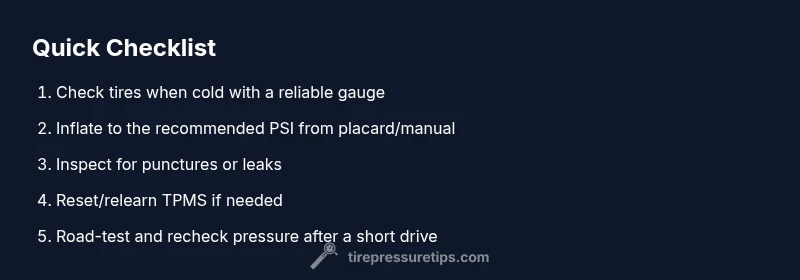
- Check tires when cold with a reliable gauge.
- Inflate to the manufacturer spec and recheck.
- Inspect for punctures or leaks and fix promptly.
- If TPMS stays on after inflation, seek professional service.