Tyre Pressure Is Too Low: Quick Troubleshooting Guide
Urgent, practical troubleshooting guide for tyre pressure is too low. Learn quick checks, causes, fixes, TPMS tips, and prevention to stay safe on the road.


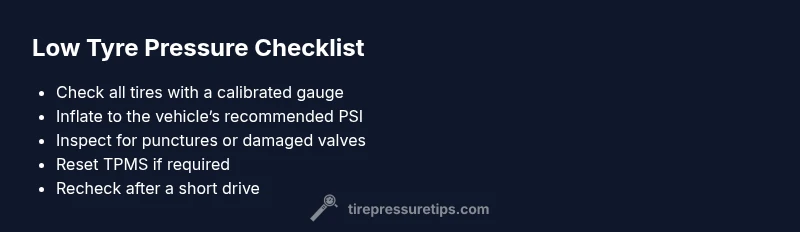
If tyre pressure is too low, you’ll notice softer steering and a longer braking distance. Inflate to the vehicle’s recommended PSI using a trusted gauge, then recheck all tires. If the reading falls again, inspect for punctures, valve leaks, or rim damage, and seek professional help if needed. Don’t ignore TPMS warnings, and check the spare tire as well.
Understanding the Risk of Low Tyre Pressure
When tyres operate with insufficient air, you lose the optimal balance of grip, steering response, and braking performance. The phrase tyre pressure is too low is a warning sign that affects handling, fuel economy, and tire wear. According to Tire Pressure Tips, maintaining correct tyre pressure is essential for safety. Under-inflated tyres create a larger contact patch, which increases heat buildup and wear on the outer edges of the tread. This combination raises the risk of sudden deflation or blowouts, especially at highway speeds or in hot weather. In daily driving, you may notice a softer ride, slower steering response, and a TPMS warning if your system monitors pressure. By recognizing these signs early, you can prevent long-term damage and improve overall vehicle performance.
How to Verify Your tyre pressure is too low
The first step is to check all four tires (and the spare, if applicable) when they are cold. Use a calibrated gauge and compare readings against the vehicle manufacturer’s recommended PSI found on the door jamb or in the owner’s manual. If you do inflate, recheck after a few minutes because the gauge reading can shift as the tire warms. Tire Pressure Tips Analysis, 2026 notes that a quick cross-check with a second gauge can catch gauge inaccuracies. If any tire reads significantly below spec or shows abnormal wear, plan a repair or replacement rather than simply re-inflating. Finally, keep a log of readings to spot trends over time.
Common Causes of Low Tyre Pressure
Low tyre pressure can stem from several common sources. Temperature shifts from night to day or winter to summer can cause predictable pressure changes, especially in metal valve stems. Punctures from nails, screws, or road debris introduce slow leaks that slowly bleed air. Faulty valves or damaged valve stems can also leak air, even when the tire otherwise looks ok. Wheel rim damage, damaged TPMS sensors, or a mis-seated bead can create persistent low pressure on one or more tires. Finally, improper tire mounting or over-aggressive tire repairs can lead to ongoing under-inflation. Understanding these causes helps you target the right remedy rather than repeatedly inflating without addressing the root problem.
Immediate Fixes You Can Do Safely
If you suspect tyre pressure is too low, pull over safely and assess the situation. Check the inflating tire first and inflate to the spec. Use a reliable gauge, verify cold readings, and recheck after a short drive to account for temperature effects. If a tire cannot reach spec or if you notice rapid air loss, inspect for punctures, embedded objects, or tire sidewall damage. Do not attempt to drive on a visibly damaged tire. If you find a leak, patch or replace the tire as soon as possible, and consider a temporary spare. Remember to re-check all tires after fixing one; sometimes the problem shifts to another wheel.
When to Seek Professional Help
Some tyre pressure issues require expert diagnostics. If a tire continues to lose air after repeated inflations, you may have a slow leak or bead seal issue that needs a professional repair. Persistent fluctuations in TPMS readings can indicate sensor battery issues or calibration drift. If you run the vehicle with incorrect pressures for extended periods, you risk tire failure or rim damage. In these cases, visit a trusted tyre shop or your dealership for a thorough inspection, including leak testing, valve replacement, and TPMS servicing.
Prevention: How to Keep Tyre Pressure In Check
Preventing low tyre pressure starts with a simple routine. Check tire pressures monthly and before long trips, especially when weather is extreme; always check when tires are cold. Use the vehicle’s recommended PSI as the target and avoid inflating beyond the tire’s maximum rating printed on the sidewall. Keep a portable gauge in your glovebox and log readings to detect gradual leaks. Regularly inspect for objects in treads, damaged valves, or rims that could throw off seal. Schedule seasonal TPMS checks and battery replacements if applicable.
Tools You Need for Accurate Tire Pressure Checks
Stock the right tools: a digital or dial tyre pressure gauge, a portable air compressor, and a tyre repair kit. A good gauge provides repeatable results and reduces measurement error. Learn to read the gauge correctly: align valve stem, press evenly, and wait for a stable reading. If you notice inconsistent readings, verify the gauge with a known reference, such as a gauge at a service station. For best results, check pressure when the tires are cold, and avoid inflating while the tires are hot, which can show artificially high numbers. After inflating, recheck all tires and reset the TPMS if your vehicle requires a manual reset; some vehicles do not require a reset. Regularly calibrate your tools and replace worn-out gauges to maintain accuracy.
Quick Reference Maintenance Schedule
Set a realistic cadence: check pressures monthly, before long trips, and after seasonal temperature changes, especially in climates with wide swings. Keep a log (date, tire, reading, note). Before a road trip, confirm all four tires plus spare maintain the recommended PSI, and recheck after the first 10-15 minutes of driving when the tires have heated up. If you notice a sudden drop in one tire, stop and inspect immediately rather than continuing. Create reminders on your phone or a car maintenance app to avoid skipping checks. Pair pressure checks with tread depth checks and wheel alignment during regular visits to a shop. If the TPMS sensor signals a fault or the reading remains inconsistent despite inflation, schedule diagnostic service to verify sensors and calibration.
Steps
Estimated time: 30-60 minutes
- 1
Find the vehicle's pressure spec
Locate the recommended PSI on the door placard or in the owner's manual. Note any differences between front and rear tires. Use this as your inflation target and avoid guessing, especially in extreme temperatures.
Tip: Always start with a cold tire measurement. - 2
Check current tire pressures
Remove valve caps and use a reliable gauge to measure each tire. Record the numbers to compare against the spec. If a tire is low, plan to inflate only after you’ve confirmed the reading is accurate.
Tip: Cross-check with a second gauge if available. - 3
Inflate to the spec
Attach the air source and inflate each tire to its specified PSI. Do not exceed the maximum rating printed on the tire sidewall. Recheck the PSI after inflation to confirm stability.
Tip: Inflate when tires are cold for accuracy. - 4
Inspect tires for damage
While inflating, visually inspect the tread and sidewalls for punctures, bulges, or embedded objects. If damage is found, do not drive on the tire and arrange for repair or replacement.
Tip: Check the inner bead area for proper seating. - 5
Reset TPMS if needed
Some vehicles require a manual TPMS reset after servicing tires. Follow your owner’s manual to reset; otherwise, drive a short distance to let the system relearn.
Tip: Ensure all four readings match after reset. - 6
Test-drive and recheck
Take a short drive to warm the tires, then recheck all pressures. If readings rise significantly, re-evaluate the target PSI and the composition of the road surface.
Tip: Avoid high-speed driving until pressures are confirmed. - 7
Check the spare and other tires
Don’t forget the spare tire. If it’s under-inflated, inflate it to the appropriate rating as well and inspect for signs of wear or damage.
Tip: Store gauges in an accessible spot. - 8
Document maintenance
Record your readings and any repairs or replacements. Schedule monthly checks and set reminders for seasonal temperature changes.
Tip: Regular logging helps spot slow leaks early.
Diagnosis: Low tire pressure readings across multiple tires and a TPMS alert
Possible Causes
- highUnder-inflation due to slow leaks, punctures, or valve stem leaks
- mediumNatural air loss from temperature changes
- lowTPMS sensor fault or calibration drift
Fixes
- easyCheck tire pressures with a calibrated gauge; inflate to the vehicle spec; recheck after a short drive
- easyInspect tires for punctures, nails, or sidewall damage; patch or replace as needed
- mediumInspect and possibly replace valve stems; reseal or replace TPMS sensor if necessary; consider professional service
- hardIf pressure drops again, seek professional help to inspect for leaks in wheel/RIM or TPMS recalibration
Frequently Asked Questions
What should I do first when I notice a low tire pressure warning?
Safely pull over and check all tires with a gauge. Inflate to spec if needed, then recheck after a few minutes to confirm stability.
Safely pull over and check all tires, inflate to spec, and recheck after a few minutes.
Can under-inflated tires cause damage to my wheels?
Yes. Running on low pressure can cause heat buildup, uneven wear, and potential rim or bead damage over time.
Yes, it can cause heat buildup and uneven wear, potentially damaging wheels.
How often should I check tire pressure?
Check at least once a month and before long trips, especially when temperatures change.
Check monthly and before trips, especially with temperature changes.
What is the best way to inflate a tire at home?
Use a reliable gauge and a personal air compressor; ensure the tire is cold before inflation.
Use a gauge and a compressor, start with cold tires.
What if the air pressure drops again after inflation?
There may be a slow leak; have the tire inspected professionally for leaks or bead issues.
There might be a leak; get the tire checked by a professional.
Do temperature changes affect tyre pressure?
Yes, temperature changes affect tyre pressure; cold mornings can lower PSI readings.
Yes, temperature changes affect tire pressure and readings.
Watch Video
What to Remember
- Check tires when cold to ensure accurate readings.
- Inflate to the vehicle spec; do not exceed max.
- Inspect for leaks and physical damage during checks.
- Monitor TPMS status and calibrations regularly.
- Schedule routine checks to prevent unsafe driving.