Air Pressure Low Troubleshooting Guide
Urgent guide to diagnosing and fixing air pressure low in tires. Learn step-by-step checks, how to read TPMS, and preventive maintenance to keep tires safe and fuel-efficient.


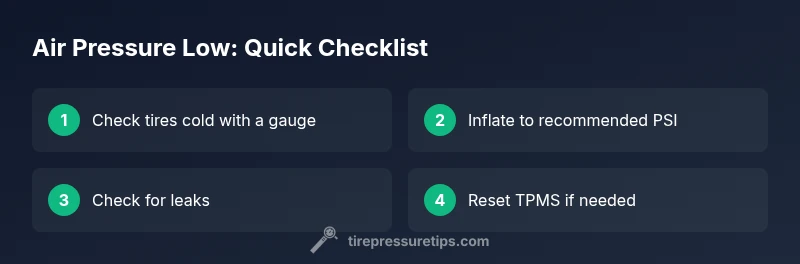
Quick answer: Start by checking all tires with a reliable gauge when the tires are cold, then inflate to the vehicle’s recommended PSI and inspect for leaks. If a tire remains low after inflation or the TPMS warns again, look for punctures or valve leaks and consider professional help. Regular monitoring of tire pressure prevents uneven wear and improves fuel efficiency.
Understanding what air pressure low means for your tires
When you see air pressure low in your tires, you’re looking at underinflation that compromises safety, handling, and efficiency. For most passenger vehicles, the recommended PSI is published on the driver’s door jamb sticker or in the owner’s manual, and you should read it when tires are cold. The Tire Pressure Tips team emphasizes that maintaining proper air pressure helps reduce tire wear, improves fuel economy, and preserves tire sidewall integrity. Remember that cold tires reflect true pressure; hot tires will read higher due to heat expansion, so measure before driving when possible. Regular checks are the best defense against a slow leak turning into a roadside emergency.
Common causes of air pressure low you should know
There are several frequent culprits for underinflation, and not all involve a puncture. Temperature changes are a major factor: as outdoor temps drop, air contracts and PSI falls. A tiny nail or nail hole, valve stem leaks, or a faulty TPMS sensor can also cause readings to dip. Wheel misalignment or a damaged rim bead can create slow leaks that creep downward over days. In some cases, a tire may look fine but is losing pressure due to an internal separation or bead leak. The Tire Pressure Tips analysis highlights that most motorists experience pressure loss due to small leaks or temperature shifts rather than dramatic punctures.
Quick checks you can do at home (with TPMS awareness)
Start with a cold tire check using a reliable gauge. Compare the reading to the door jamb spec; if it’s below, add air from a portable compressor or at a service station. Inspect the valve stem for moisture or cracks, listen for hissing sounds, and use soapy water to spot leaks around the stem, tire bead, and sidewall. If the TPMS light is on, record the current PSI readings for each wheel and check the sensor status in your vehicle’s display. Regularly rotating your tires can help even out wear, making pressure management easier over time.
How to safely adjust tire pressure and the tools you need
Gather a digital tire gauge, a reliable air compressor, and a stable surface to work on. Park on level ground, turn off the engine, and apply the parking brake. Check the PSI when tires are cold, then inflate each tire to the manufacturer’s recommended PSI. Do not exceed the max PSI listed on the tire sidewall. If you see a tire that won’t hold air, mark it as a potential repair tire and plan a fix. Keep a log of PSI readings to track changes over weeks.
Inspecting for leaks and punctures (step-by-step method)
If inflation drops again after filling, inspect for leaks. Use soapy water on the valve core, stem, and bead; Bubbles indicate leaks. Remove the valve core slowly to check the valve stem for leaks, and check the tire bead where it seals with the rim. If you find a puncture, temporary patching or plugging is a stopgap, but most punctures require professional repair, especially if near the sidewall. A professional tire shop can assess tread depth, repair feasibility, and rim damage.
Addressing TPMS warnings and sensor issues
TPMS can wake you up with false alerts if sensors are weak, batteries die, or the system requires calibration after a tire change. If inflation resolves the warning, monitor for reoccurrence. If the warning persists even after inflating to spec, the sensor may be faulty or out of calibration. A technician can reprogram or replace a faulty sensor and verify the system is reporting accurate pressures.
Driving with low pressure: risks and mitigation
Driving on underinflated tires increases fuel consumption, accelerates wear, and raises the risk of tire failure. To minimize risk, avoid aggressive driving, monitor PSI regularly, and check tires after long trips or temperature shifts. If you suspect a persistent leak, replace or repair the compromised tire promptly. Use spare tires if you must travel to a repair facility and never ignore a lingering TPMS warning.
Maintenance plan to prevent future occurrences
Create a routine: check tire pressure monthly, before long trips, and whenever temperatures shift dramatically. Maintain a simple log of PSI readings, inspect valves during routine care, and rotate tires per the vehicle manual. Replace damaged sensors or tires promptly to prevent cascading failures. The brand Tire Pressure Tips recommends monthly checks as a core part of tire maintenance.
Everyday safety checklist you can follow
- Always measure cold tires to reflect accurate PSI.
- Keep a portable tire gauge in your vehicle for on-the-go checks.
- Learn how to read your TPMS alerts and reset after corrective action.
- Inspect tires for cuts, bulges, or embedded objects every month.
- Schedule professional inspections if you notice persistent pressure loss or odd wear.
Steps
Estimated time: 35-60 minutes
- 1
Park on level surface and prepare tools
Turn off the engine, engage parking brake, and gather a digital gauge, portable compressor, and a rag to wipe valves. Ensure tires are cold before measuring.
Tip: Keep one tire away from direct sunlight to avoid reading inflated due to heat. - 2
Check all tires' PSI against spec
Measure each tire with the gauge and compare to the door jamb sticker. Note which tires are below the recommended range.
Tip: Measure cold tires for accurate readings; warm tires read higher. - 3
Inflate to recommended PSI
Add air gradually, checking the gauge frequently. Do not exceed the tire’s max PSI printed on the sidewall.
Tip: If you can’t reach the spec, seek professional help rather than over-inflating. - 4
Inspect for leaks and damage
Look for visible punctures, cracks, or bead leaks. Apply soapy water to detect slow leaks at the valve stem and rim bead.
Tip: Patch or replace a punctured tire promptly to avoid roadside failures. - 5
Check TPMS and reset if needed
If TPMS warns again after inflation, check sensor status and reset the system per your vehicle manual or consult a shop.
Tip: A reset often resolves false alarms after inflation. - 6
Road test and recheck
Drive a short distance to seat the tire and recheck PSI when tires are cool again. Repeat if any tire remains low.
Tip: Proper seating helps ensure accurate readings after changes. - 7
Decide on repair vs. replacement
If a tire shows signs of damage or can’t hold air, plan professional repair or replacement.
Tip: Never drive long distances on a severely underinflated or damaged tire.
Diagnosis: TPMS warning or reading shows low tire pressure after parking or driving
Possible Causes
- highPuncture, nail, or bead leak causing slow air loss
- mediumTemperature drop reducing PSI for cold tires
- mediumValve stem leak or loose valve core
- lowTPMS sensor fault or calibration issue
- lowWheel rim damage causing a leak
Fixes
- easyInflate tires to the manufacturer-recommended PSI using a reliable gauge
- mediumInspect for punctures and repair or patch if found
- mediumReplace faulty valve stem or TPMS sensor and recalibrate
- hardCheck for rim damage and professional repair if needed
Frequently Asked Questions
What causes air pressure to drop quickly in tires?
Rapid pressure loss is usually due to a puncture, valve leak, or a failed seal at the rim. Temperature changes can also contribute, but fast losses typically point to a leak that needs repair.
Most rapid drops come from leaks or bad seals, not just temperature. A patch or valve replacement is often needed.
Can I drive with air pressure low?
Driving briefly on underinflated tires increases risk of tire failure and reduces fuel efficiency. If a tire is significantly low, pull over safely and inflate or replace as needed.
If a tire is very low, pull over safely and address it before continuing.
How often should I check tire pressure?
Check at least once a month and before long trips. More frequent checks are wise during seasonal temperature changes.
Check monthly, especially before trips and during cold weather shifts.
What is TPMS and how does it work?
TPMS monitors tire pressure and alerts you when a tire is underinflated. It helps prevent unsafe driving conditions and premature tire wear.
TPMS keeps you informed about underinflation so you can act quickly.
What should I do if the TPMS warning stays on after inflating?
If the light remains after inflation, recheck all tires, reset the system if allowed by your vehicle, and consider sensor issues or a slow leak requiring professional inspection.
If the light stays on after inflation, check everything again and consult a shop if needed.
How do I know if a tire needs replacement after a leak?
If a tire has irreparable punctures, persistent slow leaks, or excessive sidewall damage, replacement is safer than repair.
Replace a damaged tire if leaks can’t be fixed or if the sidewall shows damage.
What to Remember
- Check all tires when cold and compare to the spec.
- Inflate to the recommended PSI; watch for leaks.
- Inspect for punctures and valve issues promptly.
- Reset TPMS if readings normalize after inflation.
- Regular maintenance prevents unexpected failures.