Tire Pressure in Heat vs Cold: A Practical Guide
Understand how heat and cold influence tire pressure, why readings shift with temperature, and how to check and adjust safely for safer driving all year long.


In this guide, you’ll learn how heat and cold affect tire pressure and why those changes matter for safety and performance. Temperature shifts cause air inside tires to expand or contract, altering psi. We’ll compare hot versus cold effects, show practical check-and-adjust steps, and explain TPMS alerts and when to adjust your tires.
Why tire pressure in heat vs cold matters
According to Tire Pressure Tips, temperature is a major factor in tire pressure. The air inside tires behaves like any gas: it expands when heated and contracts when cooled. This simple principle means your PSI readings can drift with the weather, highway travel, and driving style. Understanding this relationship helps you avoid underinflation in cold mornings and overinflation during hot days, preserving tire wear and fuel efficiency.
How heat changes tire pressure (and why that matters)
In warm conditions, ambient heat warms the tire and the air inside, causing a slight rise in psi. The effect may seem small, but it can influence tire wear patterns and handling, especially for sporty or heavily loaded vehicles. For most drivers, the key is to measure when the tires are cold and adjust to the manufacturer’s recommended PSI when planning long trips in heat.
How cold changes tire pressure (and what to do about it)
Cold weather causes air to contract, lowering tire pressure. This drop can reduce contact patch and grip or cause underinflation-related heat buildup during operation. Check tires after exposure to cold and adjust to the recommended PSI when tires are cool, ideally before a morning drive or after the car has sat overnight.
TPMS, gauges, and readings across temperature swings
Tire Pressure Monitoring Systems (TPMS) alert you to pressure changes, but they don’t always reflect exact PSI differences caused by temperature. Use a reliable gauge to verify readings and remember that TPMS thresholds are designed for typical loading and speed ranges. Temperature shifts can temporarily push readings outside the nominal range.
How to measure tire pressure correctly in different temperatures
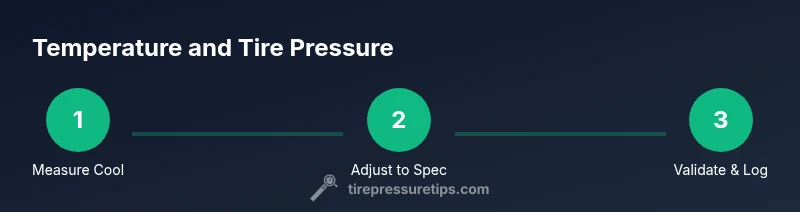
Always check tire pressure when tires are cool. If you must check after a drive, wait at least 3 hours or drive only short distances to minimize heat buildup. Use the vehicle’s door jamb placard as your target PSI and compare all tires for consistency across the axle for balanced handling and wear.
Step-by-step quick adjustments for heat vs cold days
On hot days, your tires may read higher PSI; on cold days, lower PSI. Adjust to the recommended value based on the current temperature and vehicle load to maintain even pressure across the tread surface.
Common mistakes and myths about temperature and tires
Don’t assume higher psi is always better or that winter gains in PSI persist into summer. Temperature effects are real, but overinflating or underinflating tires can lead to uneven wear and poor handling. Always verify with a calibrated gauge and revert to the recommended PSI when in doubt.
Seasonal tire pressure maintenance checklist
Create a simple seasonal routine: check pressure at the start of each season, verify readings after long trips, and adjust to the manufacturer’s target as temperatures shift. Keeping all tires within the same range helps ensure even wear, predictable handling, and optimal fuel efficiency.
Practical scenarios and takeaways
Scenario A: A hot afternoon after a long highway trip may show elevated PSI; rebalance to the recommended value when tires cool to prevent overinflation. Scenario B: A cold morning shows reduced PSI; topping up to spec before driving improves grip and even wear.
Authority Sources
For detailed guidelines, refer to: https://www.nhtsa.gov/equipment/tires and https://www.nhtsa.gov/road-safety/tires. Additional guidance can be found at https://www.aaa.com/drive/maintenance/tire-pressure for practical maintenance tips.
Tools & Materials
- Tire pressure gauge (dial or digital)(Calibrate before use; check both front tires and the spare if accessible)
- Air compressor or access to air source(Ensure it has a gauge and supports your target pressure)
- Vehicle owner’s manual or manufacturer PSI chart(Vital for the recommended PSI by load and speed)
- TPMS diagnostic tool (optional)(Useful for diagnosing TPMS sensor issues)
- Notebook or smartphone to log readings(Helpful to track changes over time)
Steps
Estimated time: 30-60 minutes
- 1
Check tires cool for baseline
Inspect all tires and record current PSI when the tires are cool to avoid heat bias. Use a reliable gauge and reference the vehicle manufacturer’s recommended PSI.
Tip: Always measure after the car has sat and cooled for at least 3 hours. - 2
Compare to recommended PSI
Locate the recommended PSI on the door jamb placard or owner’s manual and compare against current readings.
Tip: Remember that load and speed can slightly affect target PSI. - 3
Adjust to target PSI
If needed, add or release air to reach the recommended PSI, ensuring consistency across front and rear tires.
Tip: Use a slow, steady inflow or release; check in 2-3 psi increments. - 4
Recheck after settling
Recheck PSI after a few minutes of driving or after the wheel has cooled again to confirm stability.
Tip: Tires often settle a bit after adjustments. - 5
Check TPMS and log
If your car has TPMS, verify alerts and log readings for future reference.
Tip: A log helps you spot seasonal trends. - 6
Test drive and observe handling
Take a short drive to verify even handling and even tire wear during temperature changes.
Tip: If you notice pull or vibration, re-check pressures. - 7
Seasonal adjustments
Plan adjustments as temperatures shift to avoid consistent under- or overinflation throughout the year.
Tip: Keep a seasonal checklist for tires. - 8
Record and review
Record PSI values, ambient temperature, and load to create a baseline for future checks.
Tip: Compare across months to spot trends.
Frequently Asked Questions
What causes tire pressure to change with temperature?
Temperature changes cause air to expand in heat and contract in cold, which shifts tire pressure. This is a natural gas-law effect that affects PSI readings.
Temperature changes cause air to expand in heat and contract in cold, shifting tire pressure.
Should I adjust tire pressure when moving from cold to hot conditions?
Yes. Check tires when cold, then adjust to the recommended PSI to compensate for heat buildup on longer trips.
Yes. Check when cold and adjust for heat buildup on longer trips.
Is TPMS reliable for temperature swings?
TPMS provides alerts, but they don’t always reflect exact PSI differences caused by temperature. Use a reliable gauge to confirm readings.
TPMS helps, but it may not show exact changes from temperature. Check with a gauge.
How often should I check tire pressure for seasonal changes?
Check at the start of each season and after extreme temperature events to maintain proper inflation.
Check at the start of each season and after big temperature changes.
Can I inflate tires to max psi in hot weather?
No. Inflate to the vehicle’s recommended PSI, not the maximum rating on the sidewall.
No—stick to the recommended PSI, not the max sidewall rating.
Watch Video
What to Remember
- Check tires when cool to establish a baseline
- Temperature affects tire pressure and should guide adjustments
- Use manufacturer PSI targets as the anchor
- Verify readings with a reliable gauge and TPMS
- Log seasonal PSI readings for trend tracking