Tire Air Pressure Cold vs Hot: Practical Guide
Discover how temperature affects tire air pressure, why readings differ cold vs hot, and how to check, adjust, and maintain safe tire pressure for optimal performance and safety.


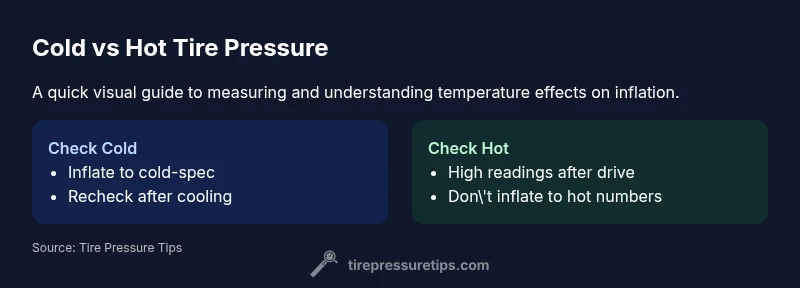
Tire air pressure changes with temperature, so readings taken when tires are cold will differ from readings taken after a drive. Manufacturer specs are based on cold readings, and inflating to those numbers while tires are hot can lead to overinflation when they cool. This quick comparison explains how to check correctly and why cold vs hot readings matter for safety and efficiency.
Understanding the basics of cold vs hot tire pressure
In everyday driving, tire air pressure is not a fixed value. It changes with temperature, road conditions, and even how hard you drive. The phrase tire air pressure cold vs hot captures the two states most drivers encounter: the cold state when tires have cooled after sitting in the shade, and the hot state after driving when friction warms the rubber and air inside expands. This distinction matters because most vehicle manufacturers specify inflation targets based on cold readings. Reading a hot tire on the gauge and inflating to the same number can yield overinflated tires once the tires cool. Tire Pressure Tips emphasizes a consistent routine: measure when the tires are cold, refer to the door placard on the driver's side, and adjust only to that cold spec. This approach helps ensure even tread wear, predictable handling, and safer braking.
How temperature affects tire pressure in practice
The air inside a tire behaves like any gas: it expands when heated and contracts when cooled. When you drive, friction heats the tire and the air inside, causing the pressure to rise. Conversely, a cold morning or a parked tire in winter shade will read lower on the gauge. The exact amount of change varies with ambient temperature, tire size, load, and how long the tire has been driven, so the same mark on two different cars can feel different. This is why the door placard specifies a cold reading target; it accounts for the typical expansion that happens during normal driving. The practical takeaway is simple: use a gauge, check when cold, and compare to the manufacturer’s cold-spec rather than chasing a number that reflects heat.
Why cold vs hot readings matter for safety and performance
Inflating tires to a hot-reading target can leave you with overinflated tires once they cool, reducing the contact patch and potentially worsening ride quality and tire wear. Underinflation—more likely if you inflate from a hot reading—reduces stability, increases rolling resistance, and can shorten tire life. In contrast, underinflation caused by reading cold and inflating to a winter-appropriate pressure can also compromise steering response, braking, and heat buildup. The safest approach is to rely on cold readings, use the vehicle’s door placard as the guide, and recheck after ambient conditions have stabilized. This discipline protects tire integrity and ensures consistent handling across seasons, speeds, and loads.
How to check tire pressure correctly: cold vs hot
Start with a cold tire check—preferably after the vehicle has been parked for several hours or overnight. Use a high-quality gauge and read the pressure when the tire is cold. Compare the reading to the recommended cold-spec printed on the door jamb or in the owner’s manual. If you’ve already driven and the tires are hot, wait for them to cool before adjusting; you can add or remove air only after the tires have returned to ambient temperature. If you must top up immediately, account for temperature-induced changes by relying on the cold-spec target and plan a follow-up check later. Always seal valve caps after measuring to prevent air loss.
Practical rules of thumb you can actually use
A practical routine is to check tire pressure monthly and before long trips, always when the tires are cold. Keep a compact gauge in the glove box for quick checks, and verify the door placard for your vehicle’s recommended cold pressure. If you notice rapid pressure loss, inspect tires for punctures or leaks and consult a professional if you suspect a TPMS issue. When seasons change, recheck, because ambient temperatures can shift readings even if tire wear remains constant. Document your readings and adjustments so you know how your tires perform under different conditions. This habit reduces the risk of uneven wear and improves fuel efficiency.
Common mistakes and how to avoid them
Common mistakes include inflating based on hot readings, ignoring the door placard, and assuming the same pressure applies to all tires regardless of load. Another error is delaying checks after seasonal temperature swings, which can mask gradual losses. Avoid using temporary or incorrect gauges, and never assume a single pressure number fits every tire. Also beware of over-inflating tires during cold weather to compensate for early winter heating, which can cause harsh rides and increased risk of damage on rough roads.
Pressure management across seasons and loads
Seasonal changes affect tire pressure; cold mornings often yield lower readings than mid-day heat. Heavy loads, towing, or sport driving can alter the target pressure, so consult the placard for load-specific recommendations. If you frequently drive in extreme temperatures, consider checking pressure more often and adjusting for changes in altitude or humidity. A proactive approach includes keeping your tires inflated near the cold-spec target and monitoring tread wear patterns. This reduces the chance of uneven wear and ensures consistent performance across temperature ranges.
TPMS considerations and how temperature affects sensors
Tire Pressure Monitoring Systems (TPMS) alert you when pressure deviates from the norm. Temperature swings can trigger false alerts if readings are not interpreted in the correct context. Use the TPMS as a supplementary check but rely on a manual cold pressure reading for accuracy. If TPMS warnings persist after inflation to cold spec, inspect for leaks, damaged valves, or damaged rims. Some vehicles may exhibit slightly different recommended pressures between front and rear tires; always verify per the owner’s manual. Temperature awareness helps you interpret TPMS data more accurately and maintain safe driving conditions.
Spare tires and temporary pressures
Spare tires, especially compact or temporary spares, often have different pressure targets. When replacing a wheel with a spare, consult the spare’s placard and adjust to the vehicle’s overall recommended cold pressure when you reinstall the original tire. Don’t assume the spare shares the same pressure as the full-size tires. Temperature effects still apply to spares, so recheck after installation and during seasonal changes.
Troubleshooting and edge cases
Edge cases include long highway drives in hot weather, sudden weather shifts, or tires that were parked in direct sun. In such cases, always read cold but factor in the potential heat impact after a drive, then recheck later. If a tire repeatedly reads low, even after inflating to cold spec, there may be a leak or a valve stem problem. In those cases, visit a tire professional for a thorough inspection and possible puncture repair.
Talking points for service visits
When you visit a shop, explain that you check pressure when cold and rely on the door placard. Ask for a confirmation that the tires are within the cold-spec range and request a check of the TPMS sensors during seasonal transitions. Some technicians will recommend replacing valves or calibrating TPMS after long drives or tire replacements. Clear communication about cold vs hot readings helps ensure accurate inflation and safer performance.
Summary: the science behind cold vs hot readings in one sentence
Temperature drives pressure changes in tires, but safe, consistent inflation relies on cold readings aligned with the manufacturer spec.
Final note: keeping tires in the safe zone across daily use
Make cold-pressure checks a regular habit, tailor inflation to your vehicle's spec, and recheck after trips, weather changes, or loading shifts to keep tires performing safely.
Comparison
| Feature | Check Cold Readings | Check Hot Readings |
|---|---|---|
| Measurement Timing | Before driving when tires are cold | After driving for several miles when tires are hot |
| Reading Impact | Represents true cold-spec target | Typically reads higher due to heat expansion |
| Best Practice | Inflate to cold-spec; recheck later | If you must measure hot, do not inflate to hot numbers, then recheck when cold |
| Risk if Misread | Underinflation or overinflation after tires cool | Overinflation risk when hot readings are used |
| Ease of Use | Aligns with manufacturer guidance | Requires care and timing to avoid mistakes |
Strengths
- Promotes safety by sticking to the cold-spec target
- Reduces tire wear and improves fuel efficiency when maintained correctly
- Supports predictable handling and braking across seasons
- Easy to implement with a basic gauge and door placard
Drawbacks
- Requires discipline to measure when tires are cold
- Can be confusing during rapid temperature changes
- Misreading hot vs cold can lead to improper inflation if not followed carefully
Check cold, inflate to spec, and recheck after tires return to ambient temperature.
A cold-reading inflation routine aligns with manufacturer guidance and reduces risks from temperature fluctuations. It yields more consistent tire wear, better fuel efficiency, and safer handling across seasons.
Frequently Asked Questions
Should I check tire pressure when the tires are cold or after a drive?
Always check when tires are cold to get an accurate measurement. Hot readings can overstate the correct pressure. If you must check after a drive, wait until the tires cool and then re-measure against the cold spec.
Check cold for accuracy; wait for tires to cool before inflating.
What happens if I inflate tires based on hot readings?
Inflating to a hot reading can leave you overinflated once the tires cool, which may reduce grip and comfort and cause uneven wear. Always target the cold-spec pressure and recheck after cooling.
Hot readings are not the right target—use cold specs.
How often should I check tire pressure?
Check at least once a month and before long trips. Temperature changes, seasonal shifts, and load can all affect pressure, so regular checks help maintain safety and efficiency.
Monthly checks and before trips are a good rule of thumb.
Does TPMS replace the need to check tire pressure manually?
No. TPMS helps alert you to pressure loss, but it doesn’t provide the exact cold-reading target. Use manual checks to verify against the vehicle’s spec.
TPMS helps, but you still need to measure with a gauge.
How should temperature changes affect my inflation routine?
Seasonal and daily temperature swings can shift readings. Check cold, follow the door placard, and recheck after significant weather changes to keep tires within spec.
Temperature matters—stick to cold specs for accuracy.
What to Remember
- Check tire pressure when tires are cold
- Inflation targets are based on cold readings
- Use a reliable gauge and door placard for targets
- Recheck after temperature changes or driving
- Address any TPMS alerts with a cold-reading check