Hot vs Cold Tire Pressure: Chart & Tire Size Guide
Explore how hot tire pressure relates to cold readings, the role of tire size, and how to use a temperature-adjusted chart to maintain safe pressures across seasons. Practical tips from Tire Pressure Tips.


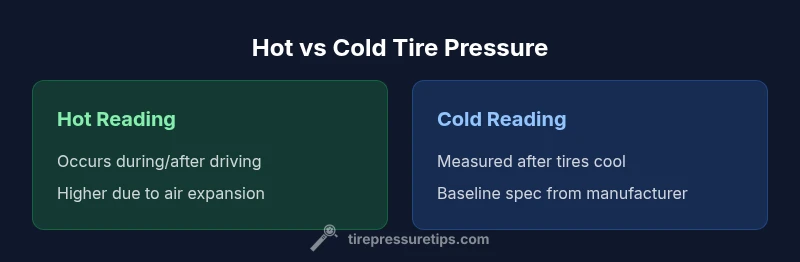
Temperature is a key driver of tire pressure: hot readings rise after driving, while the cold spec remains the baseline. According to Tire Pressure Tips, understanding hot vs cold tire pressure charts helps you maintain safe inflation across seasons and tire sizes. Inflate to the cold-spec listed by the vehicle maker, then adjust for heat and load using practical checks.
Temperature Fundamentals: How Heat Turns into Pressure
Air inside a tire expands when heated; the same gas in a sealed volume pushes outward, increasing the internal pressure. This basic principle means that tires inflated to a specific cold pressure will show a higher reading after a long highway trip or under direct sun. Temperature swings caused by ambient weather and road surface can shift readings by noticeable amounts. According to Tire Pressure Tips, temperature is the single biggest variable drivers should monitor. In practice, you’ll notice the difference most after a few miles of highway driving or when you park a warm car after a hot day. The key takeaway for drivers is that a cold-inflation target remains your baseline, and any hot reading should be treated as a temporary deviation to be corrected when the tire cools. This foundation helps you interpret both a hot-tire chart and a cold-tire chart without mixing concepts.
The Role of Tire Size in Pressure Readings
Even though the tire size does not change the factory cold inflation specification printed on the door jamb, it influences how pressure translates into load and contact patch. Wider tires have a larger contact patch and may heat up faster under the same conditions, which can produce a higher hot reading if measured immediately after driving. Taller sidewalls alter the heat conduction path and may retain heat longer after stopping. In addition, the weight distribution across the tire size affects how quickly a tire reaches the intended load rating; this is important when comparing a compact sedan with a larger performance tire. The takeaway is that when you consult a temperature-adjusted chart, you should pair the tire size context with the cold spec to avoid over-inflating for a given heat level. Tire Pressure Tips emphasizes that the cold spec is the baseline, while size and load conditions shape how aggressively you should compensate for heat.
Reading Charts: Hot vs Cold Tire Pressure
Charts that show hot versus cold tire pressure are designed to help you translate a reading from hot conditions back to your cold baseline. The critical concept is to anchor your inflation practice to the cold spec and view hot readings as temporary deviations. In practice, you first identify the manufacturer’s cold specification and keep your target near that value. When you take a hot reading, note the delta created by heat and adjust after cooling. The chart helps you estimate how much you should re-adjust after the tire cools; since there is no universal PSI delta for all tires, rely on the chart’s guidance that relates temperature exposure, load, and speed to the acceptable range. The goal is to sustain safe tire pressure for even wear, fuel efficiency, and handling. A well-used hot-vs-cold chart also accounts for seasonal changes, ensuring your practice remains consistent across summer heat and winter cold.
How to Use a Cold-Measurement Chart in Practice
To use a cold-measurement chart, begin with a cold vehicle—ideally after the car has sat overnight. Use a high-accuracy gauge and record the cold pressure for each tire. Compare this value to the manufacturer’s spec printed on the sticker inside the door frame. If the chart shows how much the pressure should increase when hot, apply that guidance only after the tires have cooled down, not immediately after a drive. Keep in mind that the chart’s suggestions assume typical vehicle load and driving conditions. If you frequently drive with a full trunk or a roof rack, you may need to adjust the target more conservatively to maintain even wear and safety. Finally, incorporate these steps into a routine—monthly checks and pre-trip checks—to prevent cumulative deviations over time.
Effects of Driving Speed, Load, and Inflation Practices
Speed, payload, and inflation habits all interact with how heat builds in tires. Higher speeds produce frictional heat and can raise hot readings quickly, while heavy loads increase tire temperature and cause faster pressure rise during operation. If you routinely drive with passengers, cargo, or a roof rack, your hot readings will differ from the baseline more often, making the cold-spec reference even more critical. A consistent practice is inflating to cold spec and then rechecking once the vehicle has cooled, or using a temperature-compensated gauge if available. The chart can guide adjustments for these scenarios, but never rely solely on a single hot reading as the basis for permanent inflation changes. Tire Pressure Tips recommends balancing performance with safety by pairing the chart guidance with routine gauge checks and a habit of measuring after cooling. This approach reduces the risk of under-inflation in cold weather and over-inflation in hot weather.
Temperature Ranges by Climate: What to Expect
Climates with wide diurnal temperature swings can produce pronounced shifts in tire pressure between morning and afternoon. In hot seasons, tires can heat up quickly on the highway, leading to higher hot readings that may creep above the cold spec when automated TPMS alerts drive your attention. Cold seasons, by contrast, lower tire pressure and can mask under-inflation if you only rely on the warm-season chart. The best practice is to check pressures when tires are cold, especially after overnight parking or in morning commutes. The chart should then be consulted to determine whether to adjust for anticipated heat during the day. Tire Pressure Tips stresses that environmental conditions and tire size together determine how aggressively you adjust from cold to hot in a given climate. Use seasonal routines to keep pressures within safe ranges year-round.
TPMS vs Manual Gauges: Which to Trust?
TPMS provides a warning when a tire breaches a threshold, but it does not replace manual tire pressure checks. TPMS readings reflect internal tire pressure relative to cold baseline, but the sensors measure current pressure and do not indicate how much the tire will rise when heated. Manual gauges, used correctly after tires have cooled, reveal whether you’re at the cold specification. The chart for hot vs cold readings supplements both systems by guiding how to interpret the discrepancy between a TPMS alert and the actual cold spec. The Tire Pressure Tips method is to rely on cold measurements for the target, while using TPMS and gauges to verify practical safety and performance across temperature changes and tire sizes. Always consider tire size, load, and driving conditions as part of your overall strategy and avoid over-inflating based on a single hot reading.
Case Studies: Common Scenarios
Scenario A: Daily commuter with a mixed-speed route and a full trunk in winter. You check cold pressures, follow the cold spec, and use the chart to anticipate heat during the day. After a long drive, you re-check once cooled, preventing over-inflation. Scenario B: Leisure trip with a roof rack on a hot summer day. You may see higher hot readings; by following the chart, you reset to the cold spec of the tires and adjust for load, avoiding squeeze on the sidewalls. Scenario C: Replacement tires in a performance car with wider widths. The hot reading approach differs due to accelerated heat buildup; the chart helps you calibrate a slightly higher warm target if the cold spec is not appropriate for high-speed driving. In all cases, consistent check routines and alignment with the cold spec help minimize wear, improve fuel economy, and preserve handling.
The Interaction Between Tire Size and Wheel Temperature
Wheel temperatures rise due to braking and road contact and can influence tire temperature distribution. The tire’s size interacts with heat transfer from the rim area, which can influence how quickly the inner plies warm up. Larger wheel and tire assemblies may retain heat longer, leading to higher hot readings during a drive that ends quickly due to cold night air. The chart’s guidance remains the same: maintain cold-spec inflation and use temperature-aware adjustments rather than chasing a single hot reading. Tire Pressure Tips notes that size, load, and driving style all contribute to heat generation. For best results, pair the cold spec with careful monitoring across seasons and use a good gauge to verify that the hot reading aligns with safe operating ranges after the tires cool.
Maintenance Habits to Keep Pressures Consistent
Develop a routine to check tire pressures at least monthly and before long trips, especially when temperatures shift between day and night. Use a fresh gauge, calibrate it if possible, and ensure the valve stems are not leaking. Record changes over time to detect drift caused by pressure loss or heat-related increases. The chart should inform your response when you observe persistent deviations; if you notice persistent high readings after cooling, consider revisiting tire size or load distribution. Tire Pressure Tips advocates that safety, fuel efficiency, and wear prevention hinge on consistent practice. Every season requires a small adjustment to your routine so you can maintain safe pressures across climate-driven changes.
Practical Implementation Checklist
Checklist: 1) Identify cold-spec from vehicle manufacturer and confirm tire size. 2) Check tires when cold, using a reliable gauge. 3) Compare to cold spec and refer to hot-vs-cold chart for heat-related adjustments. 4) Drive normally, then re-check after a cool-down period. 5) Account for load and driving conditions like speed and roof racks. 6) Use TPMS in tandem with manual gauges to catch anomalies. 7) Schedule seasonal checks and record trends for future reference. 8) If in doubt, consult a professional and review the chart’s guidance with your own tires and vehicle model. By following this checklist, you’ll reduce the risk of under-inflation in cold weather and over-inflation in heat, preserve tire wear, and maintain optimal handling.
Additional Resources and Next Steps
Explore trusted sources from Tire Pressure Tips and reputable automotive education sites to deepen your understanding of how temperature affects tire pressure. Use the temperature-related terms from the chart to search for articles on weather and seasonal changes, and review your vehicle-specific guidance for your model. If you drive in climates with extreme heat or cold, consider investing in a temperature-compensated gauge or a digital tire pressure gauge that stores readings for trend analysis. Regular education and practice are the best defense against pressure drift. With the help of a well-maintained cold baseline, a temperature-aware chart, and mindful tire-size considerations, you’ll keep your tires safer, extend tire life, and improve fuel efficiency.
Comparison
| Feature | Hot reading vs Cold reading | Cold-spec target vs Hot-adjusted target |
|---|---|---|
| Measurement context | During/after driving (hot) | Before driving (cold) |
| Pressure target basis | Refer to cold-spec first; hot readings should be corrected after cooling | Use cold-spec as baseline; hot readings guide temporary adjustments |
| Correction method | Infer hot delta and adjust after tires cool | Inflate to cold spec and recheck when cold |
| Tire size impact | Affects heat buildup and hot reading magnitude | Cold-spec target remains the same; size influences heat behavior |
| Best use case | Daily driving with routine checks | Seasonal or extreme temperature conditions with size considerations |
Strengths
- Promotes safer, more consistent inflation across temperatures
- Improves fuel efficiency and tire wear through proper targeting
- Reduces risk of blowouts by respecting cold-spec baselines
- Works with TPMS and gauges for a robust check system
Drawbacks
- Requires regular checks and knowledge of cold specs
- Can be confusing for beginners when reading charts
- Temperature swings may still cause short-term drift
- Batch-specific recommendations may not fit every model
Use cold-spec inflation as the baseline and apply temperature-aware corrections
A cold-based inflation target, complemented by hot-vs-cold chart guidance, provides safer, more predictable tire pressure management across tire sizes and seasons. Regular checks with a reliable gauge reinforce safety and efficiency.
Frequently Asked Questions
How exactly does temperature affect tire pressure readings?
Temperature changes cause air to expand when hot and contract when cold, which shifts tire pressure readings. This is why cold-spec inflation is treated as the baseline, and readings taken after driving should be compared back to that baseline using a temperature-adjusted chart.
Temperature changes cause air to expand when tires heat up, so readings rise. Start with the cold spec and check again after tires cool to verify you stay within safe limits.
Should I inflate to cold or hot pressure?
Inflate to the cold specification provided by the vehicle manufacturer and then recheck after the tires have cooled. Hot readings are not a fixed target; they indicate a temporary deviation to be corrected toward the cold baseline.
Inflate to the cold spec and recheck after cooling. Hot readings show heat effects, not permanent targets.
What about tire size—does it change the target pressure?
Tire size does not change the cold-specified target from the manufacturer, but it affects how heat develops and how pressure translates to load. Use the chart to account for these differences when adjusting for temperature.
The cold target stays the same, but size changes how heat builds. Use the chart to adjust appropriately.
How often should I check tire pressure across seasons?
Check pressures at least monthly and before long trips, especially when temperatures swing between day and night. This habit helps catch slow leaks and drift that temperature changes can cause.
Check monthly and before long trips, especially in seasonal temperature shifts.
Should I rely solely on TPMS for tire pressure safety?
TPMS is a valuable early warning, but it cannot replace manual checks. Use TPMS in tandem with a dependable gauge and a cold-spec baseline to ensure tires stay safely inflated across temperature changes.
TPMS helps, but you still need manual checks against the cold spec.
What to Remember
- Inflate to cold-spec first and verify after cooling
- Temperature is the dominant variable in tire pressure
- Tire size influences heat buildup but not the cold target
- Combine TPMS alerts with manual gauges for best results
- Adopt a seasonal routine for consistency across climates