Summer Tire Pressure: A Practical Guide for 2026
A complete guide to summer tire pressure, explaining how heat affects PSI, where to find the correct pressure, and actionable steps to check, adjust, and maintain tires for safety and efficiency.


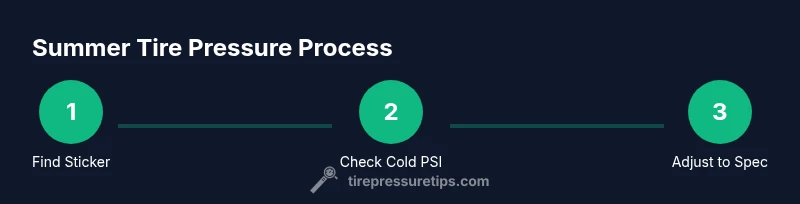
Goal: Master summer tire pressure so your car grips the road, saves fuel, and avoids uneven wear. You’ll learn how heat changes PSI, where to find the correct pressure, how to measure with a reliable gauge when tires are cold, and how to adjust safely. This quick answer previews the steps and common mistakes to avoid.
Why summer tire pressure matters
As outdoor temperatures rise, your tire pressure naturally changes. Keeping the right tire pressure is critical for safety, grip, fuel economy, and tire life. According to Tire Pressure Tips, standard inflation targets assume cold tires; in hot weather, air expands and pressure readings can rise by several psi, masking underinflation or causing overinflation if you read after a long drive. For many drivers, summer tire pressure is a balance between optimal contact patch and avoiding excessive wear. The Tire Pressure Tips team found that many drivers rely on the TPMS warning light rather than checking actual PSI values, which can miss subtle changes. In practice, a quick check with a quality gauge, when tires are cold, gives you a reliable baseline. You should use the vehicle’s door jamb sticker or the owner's manual as your primary reference and adjust for seasonal heat if you drive with heavy loads, frequent highway trips, or high-speed cruising. This article walks you through practical steps to maintain correct summer tire pressure and protect your safety.
Understanding how heat changes tire pressure
Heat affects tire pressure through the basic gas law: as air warms, it expands, raising the psi inside each tire. In summer, road heat and direct sunlight can increase internal pressure even if the tire’s temperature feels only warm to the touch. This means readings taken after a long drive can overstate the true cold pressure, while early-morning readings give you a more accurate baseline. Tire Pressure Tips analysis shows that many drivers misinterpret changes caused by heat and neglect to recheck after a temperature swing. To keep things consistent, check tire pressure when the tires are cold (ideally after they’ve sat at least three hours or before you’ve driven more than a mile). Use the same gauge each time to reduce measurement variability and record the numbers so you can notice trends over weeks.
How to locate the correct summer tire pressure for your vehicle
Your vehicle’s recommended tire pressure is not a single universal number. Look for two numbers on the door jamb sticker (or in the owner’s manual): the recommended cold PSI for the front tires and the rear tires, and the maximum permissible pressure on the tire sidewall. If you carry heavy loads or drive long distances on hot days, you may need a slight adjustment within the acceptable range shown by the sticker. In many cases, the front tires require a slightly higher pressure than the rear to optimize steering and stability. When data is needed, prefer your car’s official guidance over generic rules. The Tire Pressure Tips team emphasizes sticking to the manufacturer’s specifications for safety and handling, then adjusting for ambient heat or load with small, incremental changes.
How to measure tire pressure accurately in summer
Begin with cold tires to obtain an accurate baseline. Remove the cap from the valve stem, press the gauge onto the stem, and take a steady reading without wiggling the gauge. Compare the result to your door jamb sticker values. If you need to adjust, add air in small increments (about 1–2 psi at a time) and recheck after each addition. Repeat the process for all four tires, plus the spare if you expect to use it. Always replace the valve caps securely to prevent leaks. In hot weather, readings can drift as temperatures rise, so consider scheduling a mid-day check if you are on a long trip.”,
Common mistakes that undermine tire pressure in summer
Common errors include inflating after a drive, failing to check the spare, and using a gauge that is not calibrated. Reading PSI in direct sunlight can introduce errors, while inconsistent gauge types create variability. Another frequent mistake is ignoring TPMS warnings and relying solely on a tire’s appearance or ride feel, which can mask underinflation. The fastest path to reliable readings is to check in the morning when tires are cold, use a quality gauge, and document the numbers for comparison over weeks. The Heat of summer also means hotter air in tires during the day, which can cause readings to trend upward. Regular checks build a routine that keeps your tires safe and efficient.
Seasonal maintenance and long-term tips
As seasons change, adopt a lightweight maintenance routine that you can perform in under 30 minutes. Schedule a monthly check during heat waves or before long trips. Keep a small gauge and a pen in the glove compartment to record readings and adjustments. If you notice persistent changes in pressure without obvious leaks, it may indicate a slow leak or a tire issue worth inspection. For those who do a lot of highway driving, consider a slightly higher pressure within the recommended range on hot days to maintain optimal shape of the tire contact patch and improve fuel economy. The goal is consistent pressure close to the manufacturer’s rating, with adjustments for heat and load as needed.
Safety considerations and TPMS checks
Tire pressure safety is about more than numbers. Underinflated tires heat up faster and wear irregularly, increasing the risk of blowouts in extreme heat. Overinflation can reduce the tire’s contact patch, worsening handling in rain or heat and increasing risk of a harsh ride. TPMS is a helpful warning, but it does not replace actual pressure readings. Always confirm the cold pressure with a gauge and adjust accordingly. If your TPMS triggers often, it may signal a sensor issue or a larger underlying tire problem that requires professional inspection. The Tire Pressure Tips team recommends a quick, routine check every month during hot months and before road trips to maintain optimal safety.
Tools & Materials
- Tire pressure gauge (digital or analog)(Prefer a gauge with a wide measurement range (e.g., 0–60 psi) and a bleed function for fine adjustments.)
- Owner’s manual or door jamb sticker(Locate the official cold pressure values for each tire.)
- Portable air compressor or access to an air pump(Needed to adjust tire pressure to the recommended values.)
- Pen and notebook or digital note tool(Record readings and changes for trend tracking.)
- Valve-cap remover (optional)(Useful if caps are difficult to unscrew by hand.)
Steps
Estimated time: 25-50 minutes
- 1
Find the recommended pressure
Locate the vehicle’s cold pressure values on the door jamb sticker or in the owner’s manual. Note different values for the front and rear tires and any notes about loads or speed. This baseline will guide all adjustments.
Tip: Always start with the cold-pressure baseline, not a reading taken after driving. - 2
Check tires when they are cold
Tires need to be cold for an accurate reading, ideally after they’ve sat for several hours or overnight. If you’ve driven recently, wait at least 3 hours before measuring.
Tip: Avoid taking readings after a trip or highway driving, which elevates pressure. - 3
Use a reliable pressure gauge
Attach the gauge firmly to the valve stem and read the measurement without moving the gauge. If the reading seems off, try a second gauge to confirm.
Tip: Calibrate or replace a faulty gauge to prevent false readings. - 4
Inflate or deflate in small steps
If you’re below the recommended pressure, add air in 1–2 psi increments and recheck. If you’re above it, release air gradually and recheck. Repeat until you hit the target.
Tip: Small adjustments prevent overshooting the target pressure. - 5
Check all tires, including the spare
Tires wear differently and the spare may have different rating. Ensure every tire, including the spare, is within the recommended range.
Tip: Don’t neglect the spare; it’s your emergency tire for long trips. - 6
Recheck after driving a short distance
Drive 2–3 miles and recheck to ensure pressure remains in the target range after tires warm up slightly. If it drifts, re-adjust accordingly.
Tip: Pressure drift is common with heat; recheck to confirm stability. - 7
Record readings and notes
Document the date, time, ambient temperature, and the pressures for each tire. This helps you spot trends and plan future checks.
Tip: Keeping records simplifies seasonal maintenance. - 8
Review load and speed impact
If you frequently carry heavy loads or drive at higher speeds, you may need to adjust within the allowable range. Ensure any changes stay within the manufacturer’s guidelines.
Tip: Avoid exceeding the maximum pressure listed on tires.
Frequently Asked Questions
Why does summer tire pressure change with heat?
Heat causes air to expand inside the tire, raising the PSI reading. As temperatures rise, tires also warm up from road contact and sunlight, which can alter readings. Always measure tire pressure when cold to obtain an accurate baseline.
Heat makes air expand, so pressure goes up as it gets hotter. Check when cold for accuracy.
How often should I check tire pressure in summer?
Check your tire pressure at least once a month during summer and before long trips. If you drive in hot climates or carry heavy loads, check more frequently to maintain safety and performance.
Check monthly, and more often if you’re doing long trips or carrying heavy loads.
Can over-inflating tires in summer be dangerous?
Yes. Overinflated tires can reduce the contact patch, leading to harsher rides and uneven wear, and they’re more prone to damage from road hazards in hot weather.
Overinflation can worsen handling and tire wear in summer heat.
Where do I find the correct summer tire pressure for my vehicle?
The correct pressure is on the door jamb sticker or in the owner’s manual. The values may differ by axle (front vs rear) and by load.
Check the door sticker or manual for your specific front and rear pressures.
Does TPMS replace the need to check tire pressure?
No. TPMS warns about underinflation or overinflation, but it doesn’t replace actual PSI measurements. Use a gauge to confirm the numbers.
TPMS alerts you; you should still measure tire pressure with a gauge.
Is it safe to inflate tires at a gas station on a hot day?
Inflate only when the tires are cold. If you must inflate after a drive, wait until they cool down to avoid overinflation readings.
Wait for tires to cool before inflating to avoid misleading readings.
Watch Video
What to Remember
- Check cold PSI against door-sticker values before driving
- Use a quality gauge and recheck after adjustments
- Account for heat and load when choosing summer pressures
- Don't rely solely on TPMS—measure actual tire pressure
- Regular checks protect safety, fuel efficiency, and tire life