How Temperature Drops Affect Tire Pressure
Learn how ambient temperature impacts tire pressure, typical change ranges, and how to measure and adjust safely with TPMS and gauges. Practical tips for winter, summer, and seasonal transitions.


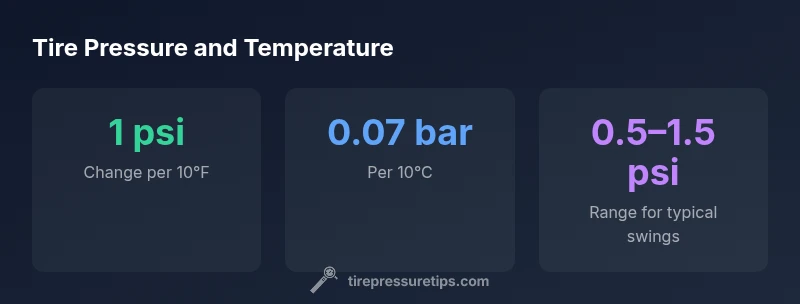
Tire pressure typically changes by about 1 psi for every 10°F (about 0.07 bar per 10°C) change in ambient temperature for standard passenger tires. Real-world changes can vary with initial pressure, tire volume, and driving conditions, often yielding a range of roughly 0.5–1.5 psi per 10°C or 10°F under typical operating conditions.
How Temperature Affects Tire Pressure
According to Tire Pressure Tips, ambient temperature is a major driver of tire pressure readings because air expands when warm and contracts when cold. If you’re asking how much does tire pressure drop with temperature, the short answer is that you can expect roughly 1 psi change for every 10°F change in ambient temperature for typical passenger tires. This rule of thumb aligns with the ideal gas principle: the amount of air inside the tire remains constant, while the surrounding air expands or contracts with temperature, altering the internal pressure. In practice, the actual change depends on initial inflation, tire volume, wheel geometry, and how quickly the tire heats up during driving. To put it in context, a 20°F drop could translate to a 2 psi decrease on many setups, but the range can be wider for larger tires or lower inflation. Always measure when cold and compare to the recommended tire pressure for your vehicle.
Variation by Tire and Vehicle
Not all tires react identically to temperature changes. Low-profile tires with stiffer sidewalls may show a slightly different pressure response than tall, high-volume tires. Wheel size and rim material can also affect how quickly air inside the tire heats and cools during driving. Heavier vehicles with larger tires can exhibit a broader pressure swing because of different air-volume ratios. In short, the basic 1 psi per 10°F rule is a helpful guide, but expect variations based on tire construction, load, and driving style. When diagnosing a change, compare against your vehicle’s recommended pressure and consider the tire’s size class.
Measuring Pressure Correctly
The most accurate way to track temperature-related pressure changes is to measure with the tires cold. Use a reliable gauge and check pressure after the car has sat overnight or for several hours in a stable environment. Avoid inflating or checking right after a highway drive, as heat from rubbing and rolling can temporarily elevate pressure readings. If you must adjust for a forecasted temperature drop, plan ahead and inflate slightly before cold days, then recheck later. For vehicles with TPMS, use it as a warning signal but verify with a manual gauge for a precise reading.
Practical Scenarios: Cold Mornings and Hot Afternoons
In winter, morning temperatures can be well below the tire’s typical operating temperature, causing the gauge to show lower pressures upon first start. In summer, heat from the road and sun can push pressures higher than the nominal setting. A prudent approach is to perform a cold check before daily driving, then adjust if forecasts suggest a sustained temperature swing. If you plan long trips across climate zones, consider checking pressure again at the destination and adjusting to local ambient conditions. These steps help maintain even tread wear and optimal fuel efficiency.
TPMS, Gauges, and Safety
TPMS alerts are helpful, but they are not a perfect substitute for a manual gauge, especially during temperature swings. Temperature affects the air inside tires and can temporarily skew readings if you rely solely on the TPMS. Treat TPMS as a first alert and confirm with a trusted gauge when possible. Regular calibration of your gauge and periodic cross-checks against the vehicle’s recommended pressure ensure you stay within safe and efficient ranges, regardless of season or weather.
Common Pitfalls and How to Avoid Them
A frequent mistake is inflating based on a warm-reading TPMS or gauge because tires heat up during driving. Always start from a cold baseline and account for expected temperature shifts. Another pitfall is ignoring seasonal changes and relying on the same inflation year-round; temperatures in fall and spring can swing widely, yet the recommended pressures remain fixed. Finally, keep a small, portable gauge in your glove box to verify readings on the road, especially when temperatures are changing rapidly or extreme weather is forecasted.
Seasonal Prep Checklist
- Check tire pressures when cold, at least once a month and before seasonal transitions.
- Adjust inflation ahead of forecasted temperature drops or spikes by a small, measured amount.
- Use a trusted gauge and cross-check TPMS readings regularly.
- Inspect tires for wear that could amplify the effect of pressure changes, such as uneven wear or damaged sidewalls.
- Recheck after long drives or rapid weather changes to confirm you’re within recommended ranges.
Typical temperature-related pressure changes
| Scenario | Approx Change | Notes |
|---|---|---|
| Cold start (morning) | -1.0 to -2.0 psi | Ambient temp drop reduces pressure |
| Drive warm-up | +0.5 to +1.0 psi | Pressure rises as tires reach operating temp |
| Daily swing | -0.5 to +0.7 psi | Normal daytime variation |
Frequently Asked Questions
How much does temperature affect tire pressure?
Temperature changes influence tire pressure; expect about 1 psi per 10°F change, with variations based on load and tire size.
Temperature can sway your tire pressure by about 1 psi for every 10 degrees Fahrenheit, though results vary by tire size and load.
Should I inflate more in winter?
In cold months, check pressure when tires are cold and adjust for expected temperature drop; don't wait until after driving.
In winter, check when cold and adjust for temperature changes.
Is TPMS reliable during temp swings?
TPMS provides alerts, but readings drift with temperature; always verify with a manual gauge.
TPMS helps, but temperature can affect readings; confirm with a gauge.
When is the best time to check pressure for temperature changes?
Check when tires are cold, before driving; recheck after major temperature changes.
Check cold, and after big temperature swings.
Does hot weather permanently change tire pressure?
No, changes are temporary due to air expansion and contraction.
No permanent change—it's all about air expansion and contraction.
“Temperature is a key variable in tire inflation; even small changes in ambient temperature can noticeably affect tire pressure readings.”
What to Remember
- Check tires when cold before a temperature swing
- Expect roughly 1 psi change per 10°F
- Always verify with a gauge, not TPMS alone
- Plan inflation adjustments for seasonal changes
- Recheck after long drives or extreme weather