Will the Tire Pressure Light Reset Itself? A Fast, Urgent Guide
Urgent guide: will the tire pressure light reset itself after inflating tires? Learn quick checks, step-by-step resets, and when to call a pro for TPMS faults.


According to Tire Pressure Tips, the tire pressure light often resets automatically after you inflate to the vehicle’s recommended pressure and drive for a short distance, but this isn’t guaranteed. If the underlying tire pressure issue was resolved and the system calibrates, you may see the light turn off within minutes to days. If it stays on, you should recheck pressures, inspect sensors, and consider a professional diagnostic.
Understanding TPMS behavior and reset expectations
The Tire Pressure Monitoring System (TPMS) is designed to alert you when a tire is underinflated or when sensors detect a fault. There are two main types: direct TPMS, which uses sensor data from each wheel, and indirect TPMS, which relies on wheel speed data to infer pressure changes. When you inflate a tire to the recommended pressure, most vehicles will recalibrate the system after a short drive, causing the warning light to turn off if there are no ongoing issues. However, the reset behavior can vary by brand, model, and whether a sensor fault exists. The Tire Pressure Tips team emphasizes that not every light will reset on its own, especially if a sensor is damaged or a tire leaks again. Understanding this nuance helps drivers avoid assuming an automatic reset will always occur.
Scenarios where the light may or may not reset automatically
In many cases, the TPMS light will reset after all tires are inflated to the door placard pressure and the vehicle completes a drive cycle, typically within a few miles of driving. In some vehicles, a reset is only registered after you perform a specific relearn procedure from the vehicle’s settings menu or after you replace a sensor. Seasonal temperature changes can also influence TPMS recalibration, as air expands in warm conditions and contracts when cold. If the light flickers or remains on after a normal drive, this can indicate a slow leak, a faulty sensor, or a damaged wheel.
Common reasons the light may stay on after inflating tires
A persistent TPMS warning can stem from several root causes. The most common is residual underinflation in one or more tires, especially if you’ve recently aired down for fuel economy or loaded weight. Sensor faults, dead batteries in the sensor, or damaged valves can prevent the system from re-calibrating. Replacements or rotations can also trigger a relearn requirement. In some cases, a wheel with a puncture or slow leak won’t seal quickly enough, keeping the light illuminated even after inflation. The Tire Pressure Tips Analysis of 2026 highlights that many drivers overlook subtle leaks around the valve stem or bead seating.
Quick checks you can perform before calling for service
Begin with a cold tire pressure check using a reliable gauge. Compare readings to the vehicle’s recommended psi printed on the door jamb or in the user manual. Don’t rely on the pump’s display alone. If a tire reads low by more than 1-2 psi after inflating, recheck once again in the morning when tires are cold. Inspect tires for visible punctures, embedded objects, or sidewall damage. If all tires hold the correct pressure and the light remains, you may be dealing with a sensor fault or a relearn requirement.
How to approach a possible TPMS reset after inflation
If inflation looks correct, drive the car for 10-20 minutes at steady speeds to give the system a chance to recalibrate. In some vehicles you may need to perform a manual relearn—this is often done via a button or an on-screen menu label like 'TPMS relearn' or 'reset sensors.' Always consult the owner’s manual for the exact procedure, as it varies by make and model. If the light returns after the drive, you should consider a professional diagnostic to check sensors, batteries, and the module.
When to seek professional help and what to expect
If the TPMS light remains on after a careful inflate-and-drive attempt, it’s time to visit a shop. A technician will typically scan sensors with a diagnostic tool, verify sensor IDs, and check battery status. They may replace a faulty sensor or recalibrate the system with specialized equipment. Expect a small diagnostic fee, and if sensor replacement is needed, part costs will vary by vehicle. Timely professional checks can prevent unsafe driving conditions caused by degraded tire pressure monitoring.
Steps
Estimated time: 15-30 minutes
- 1
Check all tire pressures
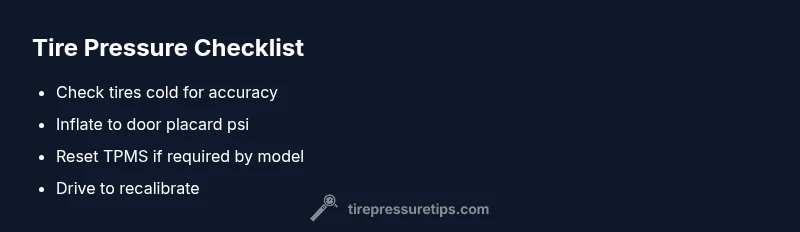
Use a digital gauge to measure the cold tire pressure on every wheel. Compare readings to the vehicle’s door placard and the manual. Record any deviations and plan to correct them before driving
Tip: Always check tires cold for the most accurate reading - 2
Inflate to the specified psi
Add air to any underinflated tire until it reaches the recommended value. Do not guess based on feel; use the chart on the placard. Recheck after filling to confirm exact pressure
Tip: Use a regulator with a gauge that remains stable while you inflate - 3
Reset or relearn TPMS if required
Some vehicles require a manual relearn. Navigate to the TPMS or vehicle settings and select the relearn option, or perform the specific button sequence in the owner’s manual
Tip: If there’s no explicit relearn option, proceed to drive the vehicle as instructed by the manual - 4
Drive to recalibrate
Take a short drive at steady highway speed for 10-20 minutes. TPMS may recalibrate once the system detects the tires are within spec during normal use
Tip: Avoid aggressive driving during recalibration to minimize extra heat buildup - 5
Verify LED status and recheck pressures
After the drive, recheck all tires to confirm they remain at the target pressures. If the light is still on, repeat the steps or consult a professional
Tip: Document readings and times to help the technician diagnose quickly
Diagnosis: TPMS light on or not resetting after inflating tires to the recommended pressure
Possible Causes
- highUnderinflation detected in one or more tires
- mediumSlow leak or puncture not evident on inspection
- mediumFaulty or expired TPMS sensor/battery
- lowDiffers consent relearn required by vehicle
Fixes
- easyRecheck all tires cold to confirm proper inflation; address any leaks promptly
- easyDrive for the specified drive cycle or follow the relearn procedure in the owner’s manual
- mediumIf the light persists, have the TPMS sensors tested with professional diagnostic equipment
Frequently Asked Questions
Will the tire pressure light reset automatically after I inflate the tires to the proper pressure?
In many modern vehicles, the TPMS will reset after inflating tires to the recommended pressure and driving for a short distance. Some models require a manual relearn procedure. If the light remains on after inflation and a standard drive, consult the manual or a technician.
Yes, often the light resets after proper inflation and a brief drive, but some cars need a manual relearn. If unsure, check the manual or seek professional help.
What if the light stays on after I correct tire pressure?
If the light stays on, recheck all tires for leaks, verify the exact recommended pressures, and perform a relearn if your model supports it. If unresolved after a few days or miles, a TPMS diagnostic is advised.
If it stays on, recheck pressures and try a relearn. If it still stays, have a professional diagnose the TPMS system.
Can temperature changes affect the TPMS reset process?
Yes. Cold temperatures can reduce tire pressure and delay calibration, while heat can increase it. Always measure cold tires for accuracy and consider seasonal adjustments when monitoring TPMS behavior.
Weather can affect TPMS readings, so test when tires are cold and consider seasonal changes.
Do I always need to drive a certain distance for reset?
Many vehicles reset after a brief drive, but some require a specific relearn procedure. Consult the owner’s manual for model-specific guidance, and be prepared to take a longer drive if needed.
A short drive often does it, but some cars need a relearn in the settings.
Can a faulty TPMS sensor trigger the warning even with correct pressures?
Yes. A battery-dead or damaged sensor can trigger the light or prevent recalibration. If the light returns after correct pressures and relearn, sensor replacement may be necessary.
Absolutely. A bad sensor can trigger the light even when pressures are correct.
When should I see a technician for TPMS issues?
If you’ve verified correct pressures, performed relearn as per manual, and the light remains on, schedule a professional diagnostic. It helps ensure sensor integrity, wiring, and module function are all healthy.
If in doubt or if the light won’t reset, see a technician for a TPMS check.
Watch Video
What to Remember
- Check cold tire pressures first before assuming a leak.
- Drive after inflating to allow TPMS recalibration in many cars.
- Many TPMS resets happen automatically, but sensor faults require professional checks.
- Follow the owner’s manual for any model-specific relearn procedures.