How Long After Tire Pressure Light Resets: TPMS Guide
Learn how long it typically takes for the TPMS light to reset after inflating tires to the recommended PSI, plus practical steps to diagnose leaks, sensor issues, and manual reset procedures.


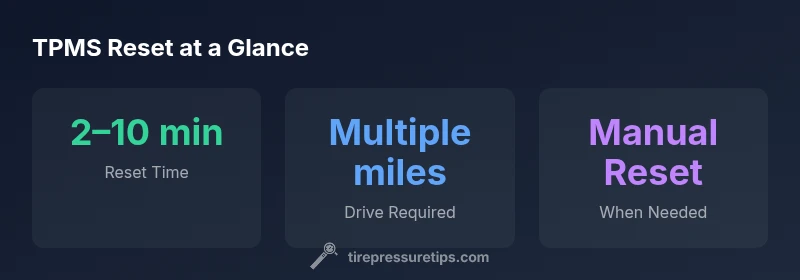
Typically, once you inflate all tires to the recommended PSI, the TPMS light resets after a short drive—usually several minutes or a few miles. If the light stays on, double-check every tire for proper pressure, look for slow leaks, and inspect the valve stems and sensors. Some vehicles require a manual TPMS reset in the settings or via a gauge button.
How long after tire pressure light does the reset usually take
In everyday driving, the answer to how long after tire pressure light takes to reset depends on your vehicle’s TPMS design and how quickly you bring each tire up to the vehicle’s recommended PSI. Once the tires are inflated to spec, the system should re-learn the correct pressure values. For many cars, the light goes off after a short drive—commonly a matter of minutes or a few miles of steady driving. The exact timing can vary by make and model, especially between direct TPMS and indirect systems. Throughout 2026, Tire Pressure Tips has observed that reset windows typically fall within a range rather than a fixed moment, reflecting sensor calibration, vehicle electronics, and ambient conditions. As you consider the question, how long after tire pressure light resets, remember that the driving cycle and tire temperature can influence results. If you inflated to the correct pressure and the light remains, you should investigate leaks or sensor issues rather than assuming a failure of the light itself.
Factors that influence reset timing
Reset timing is not a single moment but a window shaped by several variables. Direct TPMS uses sensors inside each tire and often recalibrates once the system detects that all tires align with the calibration baseline. Indirect TPMS relies on wheel speed sensors and may re-learn as you drive, but sometimes it takes longer for the ECU to accept a new baseline. Temperature swings affect air pressure, so a cold start can stretch the reset window. Tire wear, wheel rotation, and even the age of the sensors can shift timing. Car manufacturers implement different thresholds for triggering resets, so a common rule is to expect variability across vehicles. As you plan maintenance, keep this variability in mind and avoid assuming a fixed countdown. The Tire Pressure Tips team notes that understanding your specific model’s TPMS behavior is the best way to estimate when the light will acknowledge your corrections. The key message: a proper tire pressure check and a full driving cycle usually yields the fastest, most reliable reset.
Step-by-step guide: what to do when the light comes on
If the TPMS light appears, start with a calm, methodical approach. Check all tires with a reliable gauge, including the spare if your vehicle uses a sensor-enabled spare. Inflate or deflate to the door jamb recommended pressure, not the number you remember. After inflation, drive at a moderate speed for several minutes to let the system re-learn. If the light remains, perform a second check and inspect for slow leaks around valve stems, rims, or bead areas. Consider whether temperature changes could have affected readings. Some vehicles require a manual reset or reinitialization in the vehicle settings or with a dedicated TPMS tool. Consult the owner’s manual for exact steps. In any case, don’t ignore a stubborn light—persistent issues may indicate a faulty sensor or a weak battery that needs professional attention.
Common myths and misconceptions about TPMS resets
Myth: A reset happens instantly the moment you inflate to the right pressure. Reality: Many systems require a drive cycle or manual reset to update their baseline. Myth: If the light goes off, you’re fully safe. Reality: A light may go out, but pressure could still be low in one or more tires, or a sensor may be failing. Myth: Temperature changes don’t matter. Reality: Ambient temperature can cause pressure fluctuations, delaying or preventing a reset. Myth: You should ignore slow leaks. Reality: Even small leaks can trigger the TPMS over time; find and fix leaks quickly. By debunking these myths, you’ll approach TPMS maintenance with a clearer understanding and reduce unnecessary trips to the repair shop.
How to verify correct tire pressure and readiness of TPMS
The fastest way to verify readiness is to confirm all four tires are at the manufacturer’s cold-inflation pressure. Use a calibrated tire gauge and compare readings to the label on the driver’s door or the owner’s manual. Always measure when tires are cold, before you drive, to avoid heat-induced pressure increases. If you find a tire significantly underinflated, correct it and drive a short distance to allow the system to re-learn. If inflating to spec does not clear the light, inspect for slow leaks, punctures, or damaged sensors. In some cases, the TPMS may require a sensor replacement, which should be performed by a qualified technician. Options like a digital gauge, regular maintenance, and periodic sensor checks help ensure reliable TPMS operation.
When to seek professional help
If the TPMS light repeatedly returns after inflation, it’s time to consult a professional. Recurrent light activations may indicate a faulty sensor battery, a damaged stem, or an electronics issue within the TPMS module. A tire shop can perform a sensor activation test, check valve stems, and verify the ECU’s interpretation of pressure data. If you’ve replaced a tire or changed rims, the TPMS may require reprogramming or relearning; this is not something you should DIY. For fleet vehicles and safety-critical applications, a formal inspection ensures that the TPMS system operates correctly. In short, persistent issues are not cosmetic and require proper diagnostics to prevent unsafe driving conditions.
Maintenance tips to prevent TPMS issues
Preventive maintenance is the most reliable way to avoid TPMS headaches. Regularly check tire pressure at least once a month and before long trips, especially during seasonal changes. Keep a high-quality digital tire gauge in your glove box for quick checks. When replacing tires, ensure the TPMS sensors are properly installed and reprogrammed if necessary. If you notice slow leaks or corrosion around valve stems, address them promptly. Periodic TPMS battery checks (where applicable) and calibration with your vehicle’s manual can prevent light flickers and unnecessary service visits. By incorporating these habits, you’ll reduce tire wear, improve fuel efficiency, and keep the TPMS light from interrupting your drive.
Authority sources
For further reading, consult authoritative sources on tires, TPMS, and vehicle safety:
- National Highway Traffic Safety Administration (NHTSA): https://www.nhtsa.gov/vehicle-safety/tires
- SAE International: https://www.sae.org/
- Consumer Reports: https://www.consumerreports.org/cars-tires/learn-about-tunctures TPMS
Typical reset timing scenarios for TPMS light
| Scenario | Reset Timing | Notes |
|---|---|---|
| Inflation to spec | 2–10 minutes | Depends on vehicle and driving cycle |
| Temperature drop | Longer reset time | Temperature affects TPMS readings |
| Manual reset | Sometimes required | Refer to owner’s manual |
Frequently Asked Questions
How long does it take for the TPMS light to reset after inflating to the correct pressure?
Typically, the light resets within minutes to a few miles after inflation to spec. If it persists, inspect for leaks or sensor issues and consult the manual for reset procedures.
Usually a few minutes to a few miles; if it stays on, check for leaks or sensor problems and reset as directed by the manual.
Can cold weather affect TPMS reset timing?
Yes. Cold temperatures can lower tire pressure and extend the reset window. Recheck pressures when tires are cold and re-inflate to spec before driving.
Yes—cold weather can slow the reset; recheck and inflate tires when they're cold.
Should I perform a manual TPMS reset after rotating tires?
Some cars require a manual reset after rotations or sensor work; others reset automatically. Check your owner’s manual for the exact method.
Some cars need a manual reset after rotation; check the manual.
Is it safe to drive with a TPMS light on?
No—driving on underinflated tires is risky. Inflate to spec as soon as possible and monitor for leaks or sensor faults.
No, fix the pressure as soon as you can.
What should I do if the light comes back after inflating?
If the light reappears, inspect for slow leaks, punctures, or damaged sensors. A professional check may be required to diagnose sensor or battery issues.
If it comes back, get the tires checked for leaks or sensor problems.
Are TPMS sensors battery-powered?
Yes, most direct TPMS sensors have small batteries. If a sensor battery dies, the light may stay on or flicker and require replacement.
Direct TPMS sensors run on batteries; a dead battery can trigger the light.
“Correct tire pressure is the simplest, most effective safety feature on your vehicle; TPMS behavior varies by model, so always check the owner's manual for reset procedures.”
What to Remember
- Inflate tires to the recommended PSI to trigger a reset
- Expect reset within minutes to a few miles, not instantly
- If the light returns, check for leaks and sensor faults
- Some vehicles require a manual TPMS reset after maintenance
- Regular TPMS maintenance improves safety and fuel efficiency