How Long Does Tire Pressure Take to Reset? Practical TPMS Guidance
Discover how long it takes for tire pressure to reset after inflating or replacing tires. Learn automatic vs manual TPMS relearn timelines, temperature effects, and practical steps to ensure your TPMS light behaves properly.


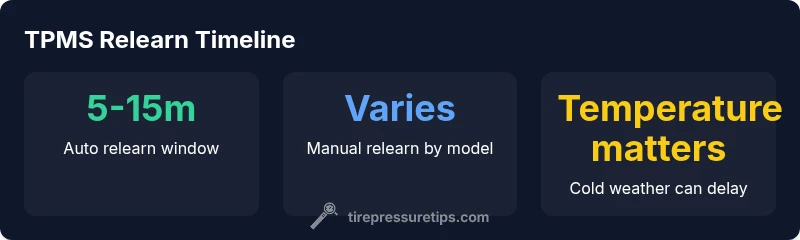
In most modern vehicles, tire pressure reset happens automatically after you inflate tires to the recommended pressure and begin driving. The relearn typically completes within a short drive, often five to fifteen minutes of normal highway or mixed-speed driving. However, some vehicles require a manual relearn procedure, and times can extend to longer drive cycles depending on the model and setup.
How TPMS relearn timing works and why it matters
According to Tire Pressure Tips, drivers frequently ask how long it takes for tire pressure to reset after inflating or adjusting tires. The short answer is: it depends on your vehicle’s TPMS architecture and whether the vehicle relearns automatically or requires a manual procedure. In most modern cars, the system listens for the correct sensor data as you drive and will reset once the new pressure readings are observed. If your tires are inflated to the manufacturer’s recommended pressures and you drive normally, you should see the warning light extinguish after a short drive. The key is to ensure the readings come from all four wheels at or near the target pressures. Any significant deviation in a single tire can delay the relearn process. This is why checking each tire with a gauge before attempting a relearn matters, and why the commonly asked question—how long does it take for tire pressure to reset—doesn’t have a universal answer.
From a data perspective, the relearn timeline is a function of sensor type, vehicle programming, and driving conditions. Some vehicles may complete the relearn during the very next drive, while others may require a specific drive cycle or a manual procedure. By understanding these dynamics, you can plan a quick reset without guesswork.
Automatic relearn mechanics across vehicle types
Most newer vehicles include automatic relearn logic. When you inflate tires to the specified pressure and drive, the TPMS ECU compares the sensor data to expected values and updates the system accordingly. The time to completion is typically short and often completed within a single start-to-finish drive cycle. However, there are notable differences by vehicle type. Some manufacturers rely on a simple learning window, while others require a defined speed range and duration. The common takeaway is that automatic relearn is the default for many cars, but the exact timing is vehicle-specific and may vary with tire size, sensor age, and battery condition.
Manual relearn procedures by model year ranges
While many vehicles relearn automatically, some require a manual trigger. Manual relearn procedures vary by make and model and can involve a sequence of steps performed with the ignition on, a button press, or a service tool. In older or more specialized vehicles, you might need to drive in a specific pattern (for example, a set speed for a certain distance) or perform a reset through the infotainment system. Always consult the owner’s manual for the precise method for your car. If your vehicle requires a manual relearn, the overall timing will depend on how quickly you complete the required steps and whether the system accepts the sensor data on the first try.
Step-by-step: how to trigger a relearn after inflating
If you’ve inflated tires to the correct pressures and want to prompt a relearn, follow these practical steps:
- Verify all four tires are within the recommended ranges using a reliable gauge. Ensure substitutions like temperature or load aren’t causing abnormal readings.
- If your car supports automatic relearn, simply drive at a steady pace on a mix of roads for at least 5-15 minutes. Avoid aggressive braking or rapid cornering that could influence readings.
- If your vehicle requires a manual relearn, locate the relearn procedure in the owner’s manual or consult a dealer. Complete the steps as prescribed, then drive normally to confirm the light goes out.
- If the TPMS light remains after a full drive cycle, recheck your tire pressures and consider a tire rotation or sensor inspection.
- Keep in mind that the relearn may take longer in very cold conditions or when sensors are aging.
Real-world timelines: what drivers typically experience
In practice, many drivers report that automatic relearn happens within a single driving cycle—often within 5-15 minutes of steady driving after inflation. Some vehicles may require up to 20-30 minutes of mixed driving or a specific drive pattern if a manual relearn is needed. If you recently rotated tires or replaced sensors, plan for a longer relearn window and monitor the TPMS indicator closely during the first few trips. Cold weather, heavy payload, and the use of nitrogen or non-standard tire pressures can also subtly extend the relearn time. The takeaway is simple: follow your vehicle’s manual and give the system a few driving cycles to settle.
Temperature, load, and driving patterns: how they affect reset
Ambient temperature and driving conditions influence tire pressure readings. A drop in temperature can lower tire pressure, which in turn can delay the TPMS relearn. Similarly, a full vehicle load or aggressive driving can impact sensor readings, affecting the time required for the system to recognize the new pressures. In practice, warmer ambient conditions generally produce quicker alignment between actual pressures and sensor data, helping the relearn finish sooner. For most drivers, a standard drive after inflating to the recommended pressure is sufficient, but substantial weather changes or heavy loads may necessitate a longer relearn period.
Common pitfalls and misconceptions
Many drivers assume that the TPMS light will automatically turn off as soon as they reach the correct pressure, but this is not always the case. A fresh relearn may require a drive cycle or manual trigger. Another pitfall is relying on a single tire gauge; even a minor gauge error can mislead the system. Always aim for precise, consistent readings across all four tires. Finally, if you recently replaced tires or sensors, don’t rush the process—some vehicles require a complete relearn cycle for the new components to be recognized by the TPMS.
Quick checklists for avoiding TPMS resets
- Confirm all four tires are inflated to the manufacturer’s specified pressures.
- Use a reliable gauge and re-check after 5-10 minutes to account for temperature changes.
- If your car supports auto relearn, drive for 5-15 minutes at steady speeds after inflation.
- If a manual relearn is required, follow the owner’s manual steps precisely and then drive normally to verify.
- If the light stays on after reasonable drive cycles, schedule a sensor inspection to rule out faults.
When to seek professional help and how to document TPMS issues
If the TPMS light remains illuminated after multiple drive cycles or a manual relearn attempt, there may be a faulty sensor, a dead battery, or a malfunctioning ECU. Document the dates of tire service, sensor replacements, and any readings you observed, and consult a technician or dealership. Regular maintenance, such as checking sensor battery life and ensuring proper sensor installation, helps reduce the likelihood of persistent TPMS issues. Having a clear maintenance history can speed up diagnosis and repair if you encounter repeated relearn problems.
Timing snapshots for TPMS relearn
| Scenario | Typical Relearn Time | Notes |
|---|---|---|
| Automatic relearn (driving) | 5-15 minutes | Most vehicles relearn during normal driving after inflation |
| Manual relearn procedure | Varies by model | Consult owner's manual; may require a dedicated sequence or tool |
| Cold weather delay | Up to 30 minutes or longer | Cold temperatures can delay relearn timing |
Frequently Asked Questions
What is TPMS relearn and why does it matter?
TPMS relearn is the process by which the tire pressure monitoring system recognizes new sensor data after inflation, tire rotation, or sensor changes. It matters because an incomplete or failed relearn can leave the TPMS light on or provide inaccurate readings.
TPMS relearn is how the system recognizes new tire data after you adjust pressure or replace sensors, ensuring readings stay accurate.
How long does the relearn usually take after inflating tires to the correct pressure?
Typically a few minutes to a quarter-hour of driving, depending on the vehicle. Some models complete the relearn in a single drive, while others require a defined drive cycle or manual steps.
Usually a few minutes, but it can take longer on some cars or if a manual procedure is needed.
Do I need to drive on the highway after inflating to trigger relearn?
Many vehicles relearn during normal driving at mixed speeds. A highway drive is often sufficient, but some models require a specific drive pattern or a manual reset.
Yes, a normal drive is usually enough, but some cars need a special drive pattern or manual steps.
Can cold weather affect TPMS reset timing?
Yes. Cold temperatures can slow the relearn process or cause readings to lag until temperatures rise. Recheck pressures after warming up to confirm accuracy.
Cold weather can slow the relearn; recheck pressures once temperatures rise.
Why is my TPMS light staying on after a relearn attempt?
The light can remain if a tire is still underinflated, a sensor is faulty, or the relearn procedure wasn’t completed correctly. Recheck all tires and consider professional inspection if it remains on.
If the light stays on, recheck all tires and consider a sensor check with a pro.
How do I manually reset TPMS?
Manual reset procedures vary by vehicle. Check the owner’s manual for the exact steps, which may involve a combination of ignition positions, button presses, or a service tool.
Manual resets depend on your car—consult the manual for the exact steps.
“TPMS relearning timing is not a fixed clock. Most vehicles complete the automatic relearn during a normal drive, but some models need a specific drive pattern or manual steps. Follow the owner's manual for the exact procedure.”
What to Remember
- Verify pressures on all four tires before driving
- Know whether your car auto-relearns or needs manual steps
- Drive normally after inflation to allow relearn to complete
- Temperature changes can affect TPMS readings and timing