When to Reset Tire Pressure Sensor (TPMS): Practical Guide
Learn exactly when to reset your tire pressure sensor (TPMS), how to perform a relearn, and common pitfalls. Practical steps, safety tips, and tools to keep TPMS data reliable for safer driving.


You can reset the tire pressure sensor (TPMS) when the system has learned a new sensor, after tire changes or rotations, or following a TPMS service. The goal is to ensure the vehicle recognizes the correct tire pressures and alerts are accurate. According to Tire Pressure Tips, follow your vehicle’s relearn procedure or perform a manual relearn if needed.
Why Resetting TPMS Matters
Tire pressure sensors are a key part of modern vehicle safety. Direct TPMS devices sit inside each tire and transmit real-time pressure data to the car, while indirect systems infer pressure from ABS wheel-speed signals. When sensors are moved, replaced, or when tires are changed, the readings can become misaligned with the actual pressures. A proper TPMS relearn ensures that the system reports accurate pressures and avoids nuisance lights or incorrect warnings. Following the relearn procedure is essential for reliability; even a small discrepancy can affect fuel efficiency, tire wear, and overall safety. According to Tire Pressure Tips, using the vehicle’s official relearn method helps guarantee correct sensor recognition and consistent alerts.
How TPMS Relearn Works
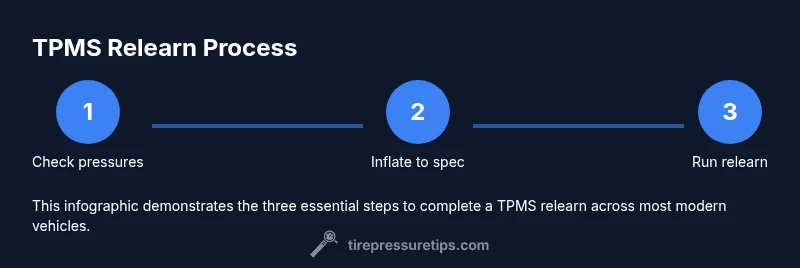
TPMS relearn is the process your vehicle uses to re-associate sensor IDs with the current tire positions and pressures. Direct TPMS sensors, mounted on each wheel, transmit unique IDs, while indirect TPMS relies on sensor data from the ABS system to infer pressure. A relearn can be automatic, where the car detects valid signals after a short drive, or manual, where you initiate the procedure through the instrument cluster or infotainment system. The exact method varies by make and model, so always consult the owner’s manual for your specific steps. In general, you’ll bring each tire to its recommended PSI, then trigger a relearn so the system updates all sensor positions and pressure targets.
When to Trigger a Relearn
You should plan a relearn in several common scenarios. First, after installing a new TPMS sensor or replacing a tire and wheel assembly. Second, after rotating tires, especially if your vehicle requires a position-based relearn. Third, after servicing the TPMS system or when a tire has been repaired and the sensor readings don’t align with the new setup. Finally, after significant temperature or altitude changes that could alter inflation targets. It’s best to perform the relearn promptly after any of these events to avoid prolonged false warnings and to keep pressure readings accurate. The bottom line is: if your tires were touched or sensors were touched, consider a relearn.
Manual Relearn vs Auto-Relearn: Pros and Cons
Some vehicles support automatic relearns simply by driving at a steady pace after inflation to the target PSI, while others require a manual command from the vehicle’s settings. Automatic relearn is convenient and hands-free but may take longer to complete or fail in certain conditions. Manual relearns are faster and can be more reliable for vehicles that don’t auto-learn, but they require finding the exact path in the menu and following a sequence. The choice depends on your car’s make, model, and year. In all cases, ensuring tires are at the correct cold PSI before starting helps the relearn succeed.
How to Find Your Vehicle’s Relearn Procedure
The easiest place to start is the owner’s manual, which provides the exact path for TPMS relearn on your vehicle. If you don’t have a copy handy, check the door jamb sticker for the recommended PSI and look in the vehicle’s Settings or TPMS submenu. Some modern cars offer a searchable TPMS option in the infotainment system; you can use the on-screen search to locate “TPMS relearn” or “sensor reset.” If you still can’t locate it, a dealer or qualified technician can perform the relearn. Remember that the procedure can vary widely across brands, so don’t assume a universal method.
Tools, Gauges, and Safety Precautions
Before starting a relearn, gather the right tools and take basic safety steps. A digital tire pressure gauge with at least 0.5 psi resolution ensures accurate readings. An air compressor or access to an inflation station helps bring tires to the exact target PSI. Always work on cold tires for the most accurate numbers and wear safety gear as needed. Keep lighting good and the vehicle stable when performing any air adjustments. If you notice damaged sensors or corroded valve stems, stop and seek professional help.
Common Scenarios: Sensor Replacement, Tire Changes, and Rotations
Replacing a sensor or patching a tire can require a relearn to restore full TPMS functionality. After a tire rotation, some vehicles automatically relearn as you drive, while others require manual initiation. If you replace more than one sensor, start by documenting each wheel’s condition and ensure correct installation of sensors with fresh seals. If any sensor is suspected to be faulty or dead, plan for sensor replacement rather than forcing a relearn on a bad unit.
Troubleshooting and Next Steps
If the TPMS light stays on after attempting a relearn, double-check that all tires are at the recommended PSI and that no sensor is damaged or leaking. Re-torque wheels if necessary and reattempt the relearn. If the system still won’t accept the sensors, there may be a dead sensor battery or a faulty receiver in the vehicle. In that case, contact a tire shop or dealer to perform a diagnostic relearn. Regular checks of tire pressure and TPMS status help prevent future issues and keep your car running safely.
Tools & Materials
- Digital tire pressure gauge(Ensure at least 0.5 psi resolution; measure cold tires for accuracy)
- Air compressor or access to inflation station(Use to bring all tires to the vehicle’s recommended PSI)
- Vehicle owner’s manual or official relearn steps(Location and exact path vary by make and model)
- Access to your vehicle’s settings/TPMS menu(Some cars require navigating menus to initiate relearn)
- Safety gear (gloves, eye protection)(Basic safety during tire work)
Steps
Estimated time: 25-50 minutes
- 1
Check current pressures
Record the current PSI on all four tires and compare with the door jamb sticker. Note any deviations and ensure tires are cold before inflation. This establishes a baseline before any relearns.
Tip: Use two readings, wait 30 seconds between checks to avoid heat bias. - 2
Inflate to the recommended PSI
Adjust each tire to the manufacturer’s spec listed on the driver-side door jamb or owner’s manual. Do not exceed the maximum PSI printed on the sidewall.
Tip: Inflate symmetrically to avoid uneven wear during the relearn. - 3
Access the TPMS relearn menu
Enter the vehicle’s settings or TPMS submenu to locate the relearn option. If your car uses a voice or touch command, use that method to reach the relearn screen.
Tip: If you can’t find it, use the owner’s manual or vehicle’s search feature. - 4
Initiate the relearn
Select the relearn option and confirm. The system will scan sensors and assign positions. Do not turn off the ignition during this process.
Tip: Some cars require you to press and hold a button; others trigger automatically after confirmation. - 5
Drive to complete the relearn
Take a short drive at a steady speed (commonly 30-40 mph) for 10–20 minutes. The relearn often completes during normal driving, particularly if the car uses auto-learn.
Tip: If the light remains after a drive, repeat the relearn from the start. - 6
Verify success
Observe the TPMS indicator: a steady light or a confirmation message usually indicates success. If the light remains, recheck pressures and retry the process.
Tip: If multiple tires show issues, inspect sensors for damage or battery failure. - 7
Troubleshoot failures
If relearn fails repeatedly, verify sensor installation, check valve stems, and test with a different sensor if possible. A dealer or tire shop can perform a diagnostic relearn.
Tip: Some sensors have limited battery life; consider sensor replacement if readings are erratic.
Frequently Asked Questions
What is TPMS relearn?
TPMS relearn is the process of re-associating tire sensor IDs with their current positions and pressures after changes or servicing. It ensures the system reports correct pressures and warnings.
TPMS relearn updates the system with current sensor data after changes.
Do all cars require a relearn after rotating tires?
Not all cars require a manual relearn after rotation; many auto-learn when driven at appropriate speeds. Check your manual to confirm the exact method for your vehicle.
Some cars relearn automatically after a drive; others need manual steps.
How long does a TPMS relearn take?
A typical relearn can take from 10 to 30 minutes depending on the vehicle and whether you are doing it manually or letting the system auto-learn.
Most relearns finish within minutes, depending on the car.
Why doesn’t the TPMS light go off after inflation or reset?
If the light stays on, recheck all tires for proper PSI and inspect sensors for damage or leaks. Some cars require a second relearn attempt.
If the light stays on, double-check pressures and try the relearn again.
What should I do if relearn fails repeatedly?
Verify sensor installation, battery life, and connections. If unresolved, consult a tire shop or dealer for a diagnostic relearn.
If relearn keeps failing, seek professional help.
Can I drive with a faulty TPMS sensor?
Driving with a known sensor fault can be unsafe and may violate local regulations. Have a technician diagnose and replace faulty sensors when needed.
Driving with a faulty sensor isn’t safe; get it diagnosed.
Watch Video
What to Remember
- Check tires cold to ensure accurate pressures
- Use official relearn procedures for reliability
- Verify success with a confirmation light or message
- If relearn fails, inspect sensors or seek professional help