Tire Pressure System Malfunction Audi: Troubleshooting Guide
Urgent troubleshooting guide for a tire pressure system malfunction in Audi vehicles. Quick checks, diagnostic flow, step-by-step fixes, safety tips, and when to seek professional help from Tire Pressure Tips.


A tire pressure system malfunction Audi is usually caused by a faulty TPMS sensor, low tire pressure, or wiring issues. Start with a safe check: verify all tires are inflated to the vehicle-recommended level, then inspect TPMS sensors and battery connections. If warning persists, reset the system and consider professional diagnostics for sensor faults or module issues.
Why tire pressure system malfunctions matter for Audi owners
In modern Audi vehicles, the tire pressure monitoring system (TPMS) is a safety-critical feature that helps you maintain proper tire inflation. A tire pressure system malfunction audi can trigger warning lights, alter brake performance, and mask underinflation that leads to higher rolling resistance and fuel consumption. According to Tire Pressure Tips, many drivers underestimate TPMS alerts until a tire goes flat or a safety inspection fails. In Audi models, the TPMS can be triggered by sensor age, battery corrosion, a damaged valve stem, or a wheel sensor that loses communication with the ABS/ESP module. Because Audi's TPMS is often integrated with the instrument cluster digital display, the warning can appear as a specific TPMS warning icon, a chime, or a message. Treat any TPMS alert seriously; running on underinflated tires can compromise steering response, braking distance, and tire wear.
Common causes behind TPMS warnings on Audi vehicles
- Battery-dead TPMS sensors or worn-out sensors
- Low tire pressure or inconsistent inflation across tires
- Damaged valve stems or wheel TPMS sensor seals
- Faulty wiring or a failing TPMS receiver/module in the vehicle
- Software glitches or improper sensor relearn after tire service
Safe quick checks you can perform today
- Park on level ground and verify all tires are within the recommended pressure range when cold
- Use a reliable digital gauge to cross-check readings against the door jamb placard values
- Check for obvious leaks around valve stems and tires for any visible damage
- Ensure wheel changes or tire service didn’t leave a sensor misaligned or unplugged
- If a single tire is consistently low, inspect for a slow leak or puncture and mark that tire for closer monitoring
Diagnostic flow: symptom to solution for Audi TPMS
Symptom: TPMS warning light remains on after inflation and reset attempts Possible causes and likelihood:
- Low tire pressure or unequal inflation — high
- Faulty TPMS sensor or dead sensor battery — high
- Damaged valve stem or seal — medium
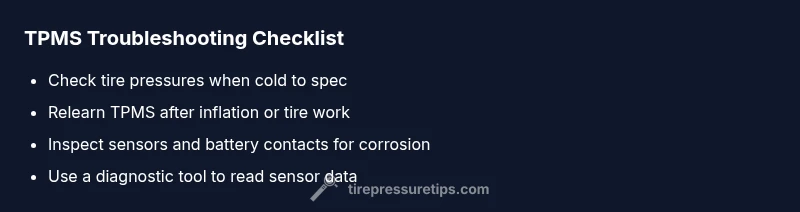
- Electrical fault or TPMS control module issue — low Recommended fixes and progression: inflating to spec, relearning the TPMS, inspecting sensors, and testing with a diagnostic tool if needed
Step-by-step fix for the most frequent cause
- Stop safely and ensure all tires are cold before measurement. 2) Inflate each tire to the exact recommended pressure on the placard. 3) Use the Audi TPMS relearn procedure to calibrate sensors. 4) Inspect valve stems for damage or corrosion; replace if necessary. 5) If the warning persists, perform a sensor diagnostic and replace faulty sensors. 6) After any sensor work, recheck pressure and drive 5-10 miles to verify the warning stays off.
Safety, maintenance, and prevention
- Always address TPMS warnings promptly; driving on underinflated tires risks tire failure and poor braking performance
- Regularly check tire pressures when tires are cold and before long trips
- Keep sensors clean and inspect battery contacts for corrosion
- Schedule periodic TPMS diagnostics during tire rotations and wheel work
- Maintain a spare sensor kit and know your vehicle’s relearn steps for quick resets
When to seek professional help and what to expect
If the TPMS light returns after basic checks and relearn attempts, the issue likely lies with a faulty sensor, wiring, or the control module. A professional diagnostic uses a TPMS tool to read sensor IDs, battery status, and wheel position data. Expect sensor replacement, possible wheel reprogramming, and a software check in more complex cases.
Steps
Estimated time: 45-90 minutes
- 1
Stop safely and verify safety
Pull over to a flat, safe area and turn on hazard lights. Ensure you and passengers are protected while inspecting tires and sensors.
Tip: Use wheel wedges if you’re on a slope. - 2
Check all tire pressures
Use a digital gauge to measure cold pressures. Compare against the manufacturer spec on the door jamb or owner manual.
Tip: Record readings for reference and note any tire that reads significantly low. - 3
Perform TPMS relearn/recalibration
Follow the Audi menu prompts to relearn the TPMS or use the dedicated relearn procedure in the vehicle service manual.
Tip: Complete the relearn with all tires within spec and avoid rapid acceleration immediately after. - 4
Inspect sensors and valve stems
Look for corroded battery contacts, damaged valve stems, or loose sensor mounting. Replace damaged hardware as needed.
Tip: Handle sensors carefully to avoid damage to the stem or wheel rim. - 5
Test with a diagnostic tool
Connect a TPMS diagnostic tool to read sensor IDs, battery status, and signal strength. Identify non-responsive sensors.
Tip: If you can’t access a tool, visit a tire shop or dealer for a quick scan. - 6
Plan next steps
If the warning persists after sensor replacement or relearn, expect module-level faults or wiring issues requiring professional service.
Tip: Document all readings and actions to speed up the repair process.
Diagnosis: TPMS warning light stays on or reappears after inflation and resets
Possible Causes
- highLow tire pressure or inconsistent inflation
- highFaulty TPMS sensor or dead sensor battery
- mediumDamaged valve stem or sensor seal
- lowElectrical fault or TPMS control module issue
Fixes
- easyInflate all tires to the recommended pressures and recheck
- easyRun the vehicle's TPMS relearn procedure to reset sensors
- easyInspect valve stems for damage and replace if necessary
- mediumTest sensors with a diagnostic tool and replace faulty sensors or reprogram TPMS module
Frequently Asked Questions
What causes a TPMS warning light to come on in an Audi?
Several factors can trigger the TPMS warning in Audi: low tire pressure, sensor battery failure, valve stem damage, or a faulty TPMS module. Start with basic checks and move to sensor tests if the light persists.
Common causes include low pressure, bad sensors, or module faults.
Can I reset the TPMS myself after inflating tires?
Yes, many Audis offer a relearn procedure in the vehicle settings. Make sure all tires are inflated correctly before starting.
Yes, you can relearn TPMS using the car's settings.
Is TPMS replacement expensive on Audi?
Sensor replacement costs vary by model and whether sensors are replaced individually or in sets. Replacement may involve parts and labor.
Sensor replacement costs depend on model and location.
Does TPMS require recalibration after tire rotation?
Some Audi models require a relearn after rotation or tire changes; consult the owner's manual for the exact procedure.
A relearn is often needed after tire rotation.
What should I do if TPMS warning keeps coming back after inflation and sensor check?
If it persists, there may be a sensor fault or wiring issue; stop driving if you suspect a leak and seek professional diagnosis.
If it keeps coming back, seek a professional TPMS diagnostic.
How long do TPMS sensors last in Audi?
Sensors last several years but vary by model and use; battery life can wear with time.
Sensor life varies; battery can fail with time.
Watch Video
What to Remember
- Verify tire pressures first, then reset the TPMS
- Inspect sensors and battery connections for faults
- Use professional diagnostics for sensor or module faults