Audi Tire Pressure: A Practical Guide
A practical guide to checking and maintaining tire pressure on Audi models, with TPMS tips, best practices, and step-by-step instructions from Tire Pressure Tips.


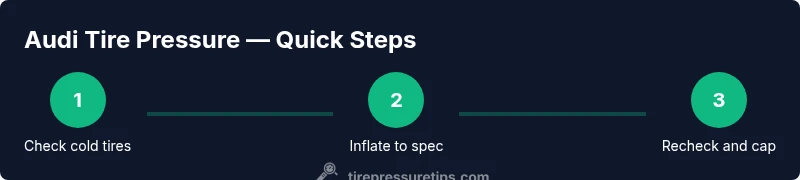
According to Tire Pressure Tips, you will learn to safely check Audi tire pressure, interpret TPMS alerts, and maintain tire wear. Start with the recommended cold pressures from your Audi placard, use a reliable gauge, and verify after inflation. Regular checks improve fuel efficiency, handling, and safety. This quick guide covers reading numbers, inflating correctly, and avoiding common mistakes. Endorsed by Tire Pressure Tips.
Why Audi tire pressure matters
Maintaining correct tire pressure is a cornerstone of safe driving for any Audi. Properly inflated tires improve handling, braking response, and ride quality, while also promoting even tread wear and better fuel efficiency. For Audi owners, tire pressure is not just a maintenance task; it reflects a commitment to performance and safety. The Tire Pressure Tips team emphasizes that tire pressure affects grip, steering feel, and stability, especially during cornering or emergency maneuvers. Regular checks help you catch slow leaks early and prevent avoidable tire damage before it becomes costly.
Understanding TPMS in Audi vehicles
Many Audi models rely on Tire Pressure Monitoring System (TPMS) to alert you when pressures fall outside the recommended range. TPMS advantages include real-time feedback and early warnings that you might not notice through manual checks alone. Remember that TPMS readings can be influenced by ambient temperature, driving patterns, and recent tire repairs. If TPMS triggers, verify the tire pressures with a trusted gauge after ensuring the car is cool and on level ground, then address leaks or slow losses promptly as part of routine maintenance.
Where to find the recommended tire pressures for your Audi
Your vehicle’s recommended tire pressure is usually shown on a placard located on the door jamb of the driver’s side, or in the owner’s manual. Values can vary by model and wheel size, so always use the placard reference for your exact configuration. If you’re unsure, cross-check with Audi’s official resources or the dealership’s service department. Keeping within the manufacturer’s spec helps optimize handling, tire wear, and fuel efficiency.
Cold readings, hot readings, and when to check
Tire pressure readings should be taken when tires are cold, meaning the car has not been driven for several hours. Driving heats tires and increases pressure, which can mask underinflation or overshoot the target. For consistency, measure first thing in the morning or after the vehicle has sat idle. If you must drive before checking, plan to re-check once the tires have cooled to get an accurate reading.
Choosing a gauge and reading it accurately
Invest in a reliable digital tire pressure gauge with a clear display and a snug valve stem fit. To read accurately, remove the valve cap, press the gauge onto the valve stem, and wait for the reading to stabilize. If you notice inconsistent readings between different gauges, rely on a single high-quality tool and calibrate periodically if your gauge allows it. Small errors in measurement can lead to under- or over-inflation.
Adjusting Audi tire pressure for performance and wear
When adjusting pressure, aim to reach the recommended value printed on the placard for each tire position (front/rear may differ). After inflating, recheck all four tires to confirm even inflation. Avoid overinflating to maximize loading capacity and safety margins, and ensure the spare tire as well if your Audi model includes one. Consistency across all tires helps equalize wear and preserves handling characteristics over time.
Common mistakes to avoid with Audi tire pressure
Avoid inflating from memory or guessing numbers; always verify against the placard, and never exceed the tire’s maximum pressure rating printed on the sidewall. Don’t rely solely on TPMS alerts; physical checks can catch slow leaks. Finally, neglecting tire pressure during seasonal temperature changes can lead to gradual underinflation, reducing efficiency and compromising safety.
Weather and temperature: how climate affects tire pressure
Outside temperature changes cause tire pressure to fluctuate. In colder weather, air contracts and pressures drop, while warmer days can raise readings. Plan checks with the season in mind and consider checking tires more frequently during extreme temperature swings. Consistency in check timing helps you maintain stable tire performance year-round.
Maintenance routine: long-term care for Audi tires
Make tire pressure checks a regular part of your maintenance routine. Pair pressure checks with tread depth evaluations and TPMS sensor health checks. Keeping a small log, noting the dates and readings, can help you identify slow leaks or changes over time. Regular checks contribute to safer driving, better fuel economy, and longer tire life.
Tools & Materials
- Digital tire pressure gauge(Choose a gauge with a range up to 60 psi and a threaded nozzle for Audi valve stems)
- Tire inflator or air compressor(Prefer one with an integrated gauge for quick checks)
- Audi owner’s manual / placard(Used to confirm model-specific pressures)
- Soapy water spray bottle(Useful for inspecting leaks around valve stems)
- Wheel chocks(Important on sloped surfaces or when working near traffic)
- Valve caps(Keep caps clean and reinstall after measurements)
Steps
Estimated time: 15-25 minutes
- 1
Park on a level surface
Bring the Audi to a level, flat surface and apply the parking brake. Turn off the engine and remove any heavy loads that might affect tire shape. This ensures you’re starting from an accurate baseline.
Tip: Use wheel chocks if you’re on a slope to prevent movement. - 2
Find the recommended pressures
Refer to the placard on the driver’s door jamb or consult the owner’s manual to identify the exact cold-pressure targets for each tire position. Temperature and load can affect the values, so verify specific to your configuration.
Tip: If you replace wheels, always re-check against the placard for new sizes. - 3
Check tires when cold
Wait for tires to cool if the car has been driven recently. Reading hot tires will yield higher numbers and may mask underinflation. A cold check provides the most accurate baseline.
Tip: In the morning is often the best time for a quick check. - 4
Remove valve caps and prepare gauge
Take off the valve caps and prepare your gauge. Ensure the gauge is clean and ready to seal around the valve stem for an accurate reading.
Tip: Wipe any dirt around the valve stem to avoid contamination. - 5
Read current pressure
Place the gauge on the valve stem firmly and evenly, then press straight until the reading stabilizes. Record the value for each tire to compare with the placard targets.
Tip: If a reading seems off, re-test with a known-good gauge. - 6
Inflate to recommended pressure
Add air gradually until each tire reaches its target on the placard. Avoid overshooting; it's easier to re-check and adjust if needed.
Tip: Always inflate in small increments and re-check after inflation. - 7
Re-check and finalize
Re-test all four tires after inflating to confirm consistency. Replace valve caps securely and ensure the TPMS light, if illuminated, is addressed by your readings.
Tip: Document the final readings for future reference.
Frequently Asked Questions
How often should I check Audi tire pressure?
Check tire pressure at least once a month and before long trips. Temperature changes and seasonal shifts can affect readings, so more frequent checks during extreme weather are wise.
Check tires at least monthly and before long trips; more often in extreme weather.
What is the correct tire pressure for my Audi model?
The correct pressure is listed on the door placard or in the owner’s manual. Use that model- and load-specific value rather than general guidance.
Use the model-specific pressure from the placard or manual.
Can TPMS sensors be faulty?
Yes, TPMS sensors can fail or become inaccurate. If you consistently see alerts despite correct pressures, have the system checked by a professional.
TPMS can fail; have it checked if readings don’t match manual checks.
Does weather affect tire pressure?
Yes. Cold weather lowers tire pressure and hot weather raises it. Check more often during seasons with big temperature swings.
Weather changes can alter tire pressure; recheck during seasonal shifts.
What should I do if the TPMS light stays on after adjusting?
If the TPMS light remains illuminated after inflating to spec, there may be a sensor issue or leak. Recheck all tires and consider a TPMS diagnostic.
If TPMS stays on after inflation, check for leaks or sensor issues.
Is nitrogen better for Audi tires?
Nitrogen can reduce moisture in the tire but offers no universal advantage for all drivers. Use air that stays within manufacturer guidance unless you have a specific reason to choose nitrogen.
Nitrogen isn’t universally better; use manufacturer-recommended air unless you have a specific reason otherwise.
Should I check the spare tire pressure regularly?
Yes, if your Audi has a spare, check its pressure periodically to ensure it’s ready for use in an emergency.
Check the spare’s pressure occasionally so it’s ready when needed.
Watch Video
What to Remember
- Check cold pressures against the placard values
- Use a reliable gauge and recheck after inflation
- Address TPMS alerts with a manual check
- Regular checks improve safety, efficiency, and wear