BMW Tire Pressure Malfunction: Quick Troubleshooting Guide
Get practical steps to diagnose and fix BMW tire pressure malfunction, TPMS alerts, sensor checks, and safe maintenance to protect tire health and performance.


Most BMW tire pressure malfunction warnings come from a failing TPMS sensor or a slow tire leak. Quick fix: safely pull over, check all tires with a gauge, and inflate to the manufacturer’s spec; if the warning stays, reset the TPMS (if your model supports it) or recalibrate after rechecking pressures. According to Tire Pressure Tips, beginning with a core pressure check and TPMS reset solves the majority of early alerts, avoiding unnecessary service visits.
BMW Tire Pressure Malfunction: What It Means for Your BMW
When you see a warning labeled bmw tire pressure malfunction on your dashboard, it's not just about a single tire. The most common triggers are TPMS sensor issues, battery degradation, or a slow air leak in one of your tires. The Tire Pressure Tips team notes that in many BMWs, the TPMS is highly sensitive to small changes, so timely checks are essential to safety and performance. In this section, we outline what the warning focuses on, how to interpret it, and how to start a safe, structured check at the roadside or home garage. Understanding this issue through a practical lens helps you stay in control, minimize risk, and avoid expensive repairs. Keeping an eye on precise tire pressures and TPMS activity is a core habit that protects both your BMW and your wallet.
Why TPMS Triggers on BMWs
BMWs rely on an advanced Tire Pressure Monitoring System (TPMS) to alert you when a tire's pressure falls outside the recommended range. The triggers are not always obvious: a dying sensor battery, a loose wheel sensor connection, or a minor air leak from a valve stem can all light up the warning. According to Tire Pressure Tips, analysis shows that sensor battery degradation is a common driver of TPMS alerts, followed by leaks and miscalibrations. Modern BMWs may also require specific reset procedures after tire service or wheel changes. Recognizing these patterns helps you act quickly and safely, without guessing.
Immediate Checks You Can Do Safely
If you notice a TPMS warning while driving a BMW, pull over in a safe spot and perform a calm, methodical check. Begin with cold tires and use a trusted gauge to verify each tire’s actual pressure against the manufacturer’s specification found on the door jamb or owner’s manual. Inflate or deflate to the correct level as needed, then perform a TPMS reset if your model supports it. Inspect valve stems for damage or corrosion and look for obvious signs of tire damage. Finally, inspect the wheel well and rim for mounting issues or debris that could affect readings. This sequence minimizes risk and gives you actionable data before considering professional help.
Diagnostic Mindset: How to Approach the Issue
A systematic approach reduces guesswork. Start with the simplest explanation (low pressure) and progressively test more complex possibilities (sensor faults, electrical issues, calibration drift). Use a checklist to confirm each step: cold readings, proper inflation, sensor status, and reset success. If readings remain inconsistent after reset, record exact pressures and warning timing; this data helps a technician diagnose sensor or ECU-related faults with precision.
Common Causes of BMW Tire Pressure Malfunctions
Beyond low pressure, the malfunction warning can stem from a faulty TPMS sensor battery, a corroded or loose wheel sensor, damaged valve stem, or a wheel that was recently serviced without proper TPMS calibration. Temperature shifts can also influence readings, especially in BMWs with sophisticated monitoring. Differentiating between a genuine leak and a sensor fault is crucial, because replacing sensors is more involved and costlier than simply inflating tires. Regular inspections help you catch issues early and avoid urgent roadside problems.
Preventive Tips to Avoid Future TPMS Alerts
Proactive maintenance reduces the likelihood of sudden TPMS warnings. Regularly check tire pressures when the tires are cold and cross-check with the vehicle’s target pressure. Schedule periodic TPMS battery checks during routine service, especially if your BMW is several years old. Keep valves clean and replace damaged stems promptly. Finally, after any tire rotation or replacement, reinitialize TPMS per your owner’s manual to recalibrate sensors and prevent nuisance warnings.
When to Seek Professional Help
If the TPMS warning persists after you’ve checked pressures, reset the system, and inspected for leaks, it’s time to consult a professional. A tech can test sensor continuity, verify calibration, and diagnose issues with the TPMS control module, antenna, or the vehicle’s data bus. Do not delay if you notice uneven tire wear, persistent pressure fluctuations, or a sudden drop in tire performance. In some cases, BMW-specific TPMS tools are required for accurate diagnosis and sensor programming.
Real-World BMW Scenarios and Quick-Guide Troubleshooting
In practice, many bmw tire pressure malfunction events resolve with a straightforward reset and careful inflation. In other cases, a sensor battery replacement is unavoidable. The lesson is to start with the basics, collect consistent pressure readings, and follow the manufacturer’s reset protocol. For anyone who wants a reliable, actionable plan, refer to the step-by-step section below and keep a log of readings and actions taken.
Steps
Estimated time: 45-60 minutes
- 1
Park safely and power down
Find a flat, safe area, apply parking brake, and turn off the engine to prevent accidental rolling. This reduces risk while you inspect tires and TPMS components. Gather a tire pressure gauge and your vehicle spec sheet before you start.
Tip: Take a quick photo of the tire placard and current readings for reference. - 2
Check every tire's actual pressure
Measure each tire while cold and compare to the BMW-recommended psi. Note any tires below or above spec by more than 1-2 psi. If a leak is suspected, check for nails or cuts and listen for audible air escaping when pressing on the sidewalls.
Tip: Record the readings in a pocket notebook or phone note for later comparison. - 3
Inflate to spec and observe
Inflate each tire to the exact spec printed on the door jamb or owner manual. After inflation, drive a short distance and recheck; some readings settle after a minor temperature change. If any tire remains flagged, proceed to TPMS investigation.
Tip: Don't overinflate beyond max PSI; monitor for changes after a brief drive. - 4
Reset or recalibrate TPMS
Use your BMW’s TPMS reset procedure (varies by model). If you don’t know the exact steps, consult the owner’s manual or dealership guidance. A successful reset should turn off the warning after a few miles of normal driving.
Tip: In some models, you must drive at a low-to-moderate speed for the reset to take effect. - 5
Inspect sensors and valve stems
Visually inspect each wheel sensor and valve stem for corrosion, damage, or loose connections. A damaged battery inside a TPMS sensor is not user-serviceable; replacement is needed. If you notice corrosion on the wheel rim, address it before re-testing.
Tip: Use a flashlight and mirror to check hard-to-see areas. - 6
Test driving and confirmation
Take a short test drive (10-15 minutes) and recheck pressures. If the TPMS warning illuminate again, document the condition and seek professional help. Persistent warnings often indicate a sensor or ECU issue rather than a simple leak.
Tip: Avoid aggressive driving during this test; smooth acceleration helps with readings.
Diagnosis: TPMS warning light or inconsistent tire pressure readings on a BMW
Possible Causes
- highLow tire pressure / slow leak
- highFaulty TPMS sensor or sensor battery
- mediumDamaged valve stem or wheel-related leak
- lowCalibration drift after service or wheel change
Fixes
- easyCheck all tires when cold and inflate to BMW spec; reset TPMS if available
- easyInspect sensors, connections, and valve stems for damage; replace as needed
- mediumRecalibrate or reset TPMS following the owner's manual; ensure correct wheel configuration
- hardIf warning persists, schedule a dealer or certified shop diagnostic, especially for sensor/battery issues
Frequently Asked Questions
What is TPMS and how does it work in BMWs?
TPMS stands for Tire Pressure Monitoring System. It uses wheel-mounted sensors to monitor pressure and alerts you when readings fall outside the recommended range. In BMWs, TPMS integrates with the vehicle's computer to display warnings and may require calibration after tire service.
TPMS is the Tire Pressure Monitoring System; it uses sensors to watch tire pressure and alerts you if readings drop. BMWs may need calibration after service.
Why did my TPMS warning come on after inflating the tires?
Warnings after inflation can indicate a slow leak, a faulty sensor, or a miscalibration. If the warning returns after a fresh reset and proper inflation, a sensor or battery issue is likely and should be inspected by a technician.
A warning after inflation may mean a slow leak or a faulty sensor. If it comes back after resetting, have a tech check the TPMS sensor and battery.
Can I reset TPMS myself on a BMW?
Many BMWs support manual TPMS reset through the onboard menu or a dedicated button. If your model requires a tool or dealer reset, consult the owner’s manual or contact a dealership. Always ensure tires are at the correct pressure before resetting.
You can often reset TPMS through the car’s menu, but some models need dealer reset. Check your manual.
When should I seek professional help for a TPMS fault?
If the TPMS warning persists after correct inflation and reset, or if you notice sensor damage, corrosion, or unusual tire wear, a professional diagnostic is advised. A certified technician can test sensors, calibrate the system, and replace faulty components.
Seek a professional if warnings persist after reset or you see sensor damage.
Is low tire pressure dangerous for my BMW?
Yes. Driving on underinflated tires reduces handling, increases heat buildup, and raises the risk of a blowout. Always address low pressure promptly and verify readings with a gauge before continuing driving.
Low tire pressure is dangerous; it affects handling and can cause a blowout, so fix it promptly.
Watch Video
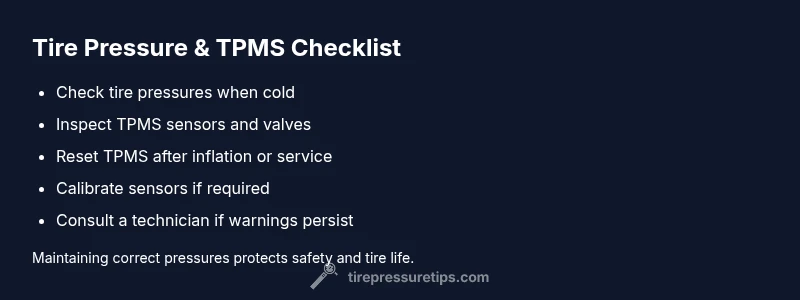
What to Remember
- Check all tires when cold, then reset TPMS if available
- Inspect sensors and valve stems for damage or corrosion
- Calibrate TPMS after any wheel service or tire replacement
- Consult a professional if warnings persist after basic checks