Tire Pressure System Malfunction Troubleshooting Guide
Urgent guide to diagnose and fix a tire pressure system malfunction with step-by-step checks, TPMS tips, and prevention strategies to keep tires safe and efficient.


Step 1: Check for obvious leaks or damaged valve stems. Step 2: Read the TPMS warning code or reset the sensor after tire service. Step 3: If the warning persists, replace or recalibrate the TPMS sensor and inspect wheels. If in doubt, seek professional inspection promptly. These steps cover the most common causes and can help you decide whether you can fix it yourself or need a technician.
Understanding the Tire Pressure System Malfunction
The tire pressure system malfunction is a warning that can affect safety, handling, and fuel efficiency. According to Tire Pressure Tips, the issue usually points to a TPMS sensor fault, a dinged valve stem, or calibration drift in the sensor electronics. You'll often see a dashboard warning light or an erratic tire-pressure readout, sometimes accompanied by one tire reading low while others remain normal. This article provides a practical, no-nonsense troubleshooting approach that helps you decide whether you can fix it yourself or should visit a shop. By following a structured process, you can prioritize safety, verify actual pressures, and determine whether components need cleaning, calibration, or replacement.
Common Causes of Tire Pressure System Malfunction
- TPMS sensor fault or dead battery
- Valve stem leak or loose stem cap
- Calibration drift or sensor software issue
- Damaged wheel rim or tire bead causing readings to be off
- Wiring or module fault in the TPMS system
Understanding these causes helps you triage quickly and decide whether you can fix it at home or need professional help. As Tire Pressure Tips notes, sensor-related issues are among the most frequent culprits, so starting with the TPMS hardware is usually the fastest path to clarity. A quick check can save you time and money, especially if the issue is a simple recalibration or a loose connector.
Immediate Safety Steps You Should Take
- Do not ignore warning lights. Check tire pressures with a reliable gauge and compare to the vehicle’s recommended PSI from the placard.
- Inflate or deflate to spec as needed, then recheck all tires for uniformity.
- If any tire shows a slow leak, bulge, or obvious damage, stop and inspect for punctures, cuts, or bead damage.
- Park in a safe area, turn off the engine if you’re inspecting on the roadside, and wear gloves and eye protection if you’re looking for leaks.
Safety is the top priority when dealing with possible tire pressure issues. A correct reading depends on a clean sensor reading, accurate gauge, and stable vehicle position. If you notice heat buildup or a tire that appears compromised, seek professional help immediately.
Diagnostic-Flow: Symptom → Diagnosis → Solutions
In this section you’ll walk through a logical path to identify the root cause. Start with the symptom you’re seeing on the dash or gauge, then consider the most likely causes in order of simplicity and likelihood. For each cause, apply a targeted fix and verify results. If a step doesn’t resolve the issue, proceed to the next cause. If the warning persists after all checks, it’s time to bring the vehicle to a tire care professional for a deeper inspection.
Step-by-Step Fixes for the Most Common Causes
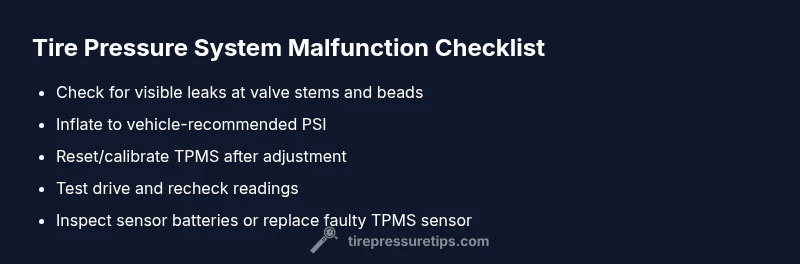
- Inspect for leaks at valve stems and tire beads. Look for slow leaks around the valve stem, rim, and bead area; replace caps firmly and ensure stems are not cracked. 2) Inflate tires to the vehicle’s recommended PSI and recheck with a digital gauge. Ensure all tires are within 1-2 psi of each other after inflation. 3) Reset or recalibrate the TPMS after inflation, following the vehicle’s owner manual or onboard menu. 4) If the warning persists, consider replacing the TPMS sensor or its battery, especially on older systems. 5) Inspect TPMS wiring and connectors for corrosion or loose connections, particularly after tire service. 6) If required, have the system calibrated with an appropriate diagnostic tool to ensure sensor data aligns with wheel pressures. 7) After any repair, drive normally for a few miles and recheck pressures to confirm stable readings.
Pro tip: Always perform these steps on a level, safe surface with the vehicle secured. A calm, methodical approach reduces risk and helps you pinpoint the real issue.
Maintenance Tips to Prevent Future Malfunctions
- Regularly check tire pressures at least once a month and after temperature changes; keep them within the recommended range.
- Inspect TPMS sensors and batteries during tire service or rotation; consider sensor replacement for older vehicles.
- Use a high-quality digital gauge for accurate measurements and keep a simple log of readings.
- If tires have been removed or wheels serviced, reset the TPMS as directed by the manufacturer.
- Avoid over tightening valve caps, which can damage threads and sensors. Clean sensor housings to prevent corrosion.
Consistent maintenance reduces the frequency of TPMS faults and helps sustain safe tire performance.
When to Seek Professional Help
If you’ve completed the basic checks and the TPMS warning remains active, or you detect a leak, damage, or sensor failure that you cannot safely address, schedule a visit with a tire shop or dealership. Professionals can perform a comprehensive TPMS calibration, battery replacement, or sensor programming with OEM tools. In some cases, a lingering warning may indicate a deeper electrical fault or a defective TPM system module that requires advanced diagnostics.
Quick Safety Reminders
- Never ignore a persistent TPMS warning light; unchecked issues can lead to sudden tire failure.
- Work on tires only on a flat, stable surface; use wheel chocks and keep hands clear of moving parts.
- If you’re unsure about any step, consult a professional rather than guessing, especially if the tire appears damaged or hot.
Troubleshooting Summary for Quick Reference
- Start with visible checks (leaks, caps, simple calibrations) before diving into sensor replacement.
- Use digital tools for accurate pressure measurement and TPMS reprogramming when possible.
- Document all readings and service actions to track changes over time.
- Temperature effects can alter readings; recheck after cooling and after driving short distances.
Steps
Estimated time: 30-60 minutes
- 1
Verify safety and prepare tools
Park on a level surface, engage the parking brake, and gather a digital tire gauge, soapy water, and a TPMS reset guide from the vehicle manual. This foundation step reduces risk and ensures accurate readings.
Tip: Always wear gloves and eye protection when inspecting tires for leaks. - 2
Check actual pressures and bring to spec
Measure each tire with a digital gauge. Compare to the placard pressures on the door jamb or owner manual. Inflate or deflate as needed to bring all tires to within 1-2 psi of each other and within recommended range.
Tip: Inflate in a controlled environment to avoid sudden changes in temperature affecting readings. - 3
Inspect for leaks and TPMS components
Visually inspect valve stems, caps, and the tire bead area for cracks, corrosion, or signs of leakage. If you spot a hissing sound or bubble test with soapy water, address the leak before continuing.
Tip: Check around the rim bead for bead leaks after mounting tires; even small leaks can trigger false readings. - 4
Reset or recalibrate the TPMS
Use the vehicle’s TPMS reset process or the onboard menu to recalibrate after inflating to spec. A successful reset typically clears the warning if the system reads correctly.
Tip: Some models require a short drive after reset; follow the manual for the exact procedure. - 5
Evaluate sensor health and battery
If the warning reappears after a reset, test or replace the TPMS sensor or its battery. Sensor faults are a common cause of recurring warnings.
Tip: Consider professional sensor testing with OEM tools to confirm battery status and signal integrity. - 6
Test drive and recheck
Drive 5-10 miles on normal roads, then recheck all tire pressures and TPMS readings. If readings stabilize, you’re likely finished; if not, move to advanced diagnostics.
Tip: Keep notes of readings and any changes to the warning light for reference during service.
Diagnosis: Dashboard TPMS warning stays on or readings are inconsistent after inflating tires
Possible Causes
- highTPMS sensor battery dead or sensor failure
- mediumValve stem leak or loose valve cap
- mediumCalibration drift or programming issue
- lowWiring/connectors or TPMS control module fault
Fixes
- easyVerify actual tire pressures with a digital gauge and adjust to spec
- easyReset TPMS after inflating tires to correct pressure
- mediumReplace or reprogram TPMS sensor; replace battery if needed
- hardInspect TPMS wiring, connectors, and module for damage or corrosion; repair as needed
Frequently Asked Questions
What is considered a tire pressure system malfunction?
A malfunction occurs when TPMS sensors fail to read or transmit tire pressure correctly, triggering warning lights or inaccurate readings. It may be caused by sensor battery, wiring, or calibration issues.
A TPMS malfunction means the sensor can't report correct tire pressure, usually due to a dead battery, wiring issue, or calibration drift.
How do I reset TPMS after inflating tires?
Most vehicles require you to drive several miles above 30 mph or use a reset procedure via the dashboard menu. Always refer to the owner’s manual for model-specific steps.
Drive at highway speeds for a few minutes or use the TPMS reset option in your car’s menu.
Can a damaged tire or rim cause TPMS warnings?
Yes. Punctures, sidewall bulges, or bent rims can alter readings or trigger warnings even with correct pressure.
Yes, damage to tires or rims can trigger TPMS warnings.
When should I replace TPMS sensors?
Sensors typically last 5-10 years; replace if the battery dies or the sensor leaks, or if warnings persist after replacement.
TPMS sensors last several years; replace if the battery dies or the sensor leaks.
Is TPMS calibration different by vehicle model?
Yes. TPMS systems vary by make and model; follow manufacturer guidelines for calibration and reset.
Yes, follow your car’s manual for calibration.
What to Remember
- Verify actual tire pressures with a gauge before blaming sensors
- Reset TPMS after inflating tires to spec
- Inspect for leaks or damaged valve stems during diagnosis
- Seek professional help if warnings persist after basic checks