BMW Tire Pressure Gauge: Check and Maintain Proper PSI
Learn how to use a BMW tire pressure gauge to check and adjust tire PSI, understand TPMS interactions, choose the right gauge, and maintain accurate readings for safe driving and tire longevity.


According to Tire Pressure Tips, accurate tire pressure checks start with the right gauge and understanding TPMS signals. With a BMW, this quick answer shows you how to check and adjust PSI safely, use the vehicle's recommended ranges, and avoid common mistakes that can affect handling or tire wear. By the end, you’ll know when to inflate, deflate, or ignore a warning.
What a BMW Tire Pressure Gauge Is and Why It Matters
A BMW tire pressure gauge is a handheld tool used to measure the air pressure inside each tire. The gauge can be digital, analog, or dial-based, but the goal is the same: obtain an accurate reading that you compare to the vehicle’s recommended PSI. The importance of this task goes beyond avoiding a flat tire. Proper tire pressure improves fuel efficiency, extends tire life, and enhances handling and braking performance. BMWs rely on precise pressure values to maintain ride quality and safety, particularly when the car carries passengers or heavy loads. Reading pressure with a dedicated gauge helps you verify that the TPMS readings align with reality, and it gives you a reliable baseline for routine maintenance. In practice, you’ll want to check pressure when the tires are cold and before you drive for a few miles, so the readings reflect ambient conditions rather than heat buildup from driving. A good bmw tire pressure gauge makes this process quicker and more accurate, helping you avoid guesswork on the road.
Understanding TPMS and Gauge Readings on BMW
BMWs use a Tire Pressure Monitoring System (TPMS) to warn you if any tire drops below the recommended pressure. TPMS readings come from sensors in the tire or wheel assembly and provide a warning rather than an exact pressure value. A gauge, by contrast, gives you a precise number in psi (or kPa). When readings from the gauge match the stated specs on the door placard or in the owner’s manual, you can inflate or deflate accordingly. If the TPMS warning persists after adjusting, recheck with the gauge and ensure the reading is taken when the tire is cold. Differences between the gauge and TPMS readings can occur due to sensor calibration, valve stem issues, or temperature changes. Knowing how to interpret both sources helps you maintain optimal performance and safety for your BMW.
Choosing the Right Gauge for Your BMW
When selecting a BMW tire pressure gauge, prioritize accuracy, durability, and ease of use. Digital gauges are fast and easy to read, but they rely on battery power and can be less precise with a damaged sensor, while dial or pencil gauges are simple and robust but require careful reading. Ensure the gauge measures in psi, with a clear dial or digital display, and consider one with a built-in release valve for easy deflation. A gauge with a wide pressure range, and durable materials, reduces the chance of yield loss under real-world conditions. Whichever gauge you pick, make sure it reads both standard psi and metric units if you frequently drive in regions using kPa. Remember to calibrate or test the gauge against a known reference if you suspect inaccuracies. A reliable gauge is a cornerstone of consistent tire maintenance for BMW drivers, especially when adjusting for load and seasonal changes.
How to Read BMW Tire Pressure: A Practical Example
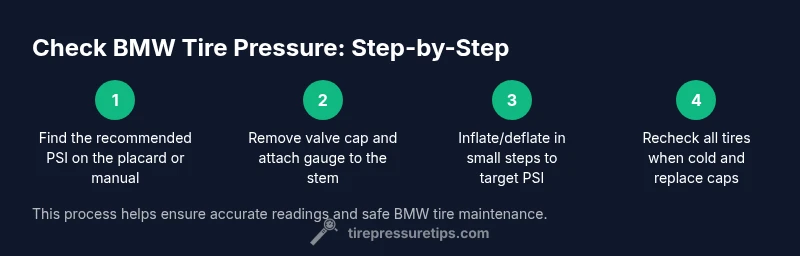
Reading tire pressure with a BMW approach involves a few precise actions. First, locate the door placard or owner’s manual to identify the recommended cold PSI for each tire. Remove the valve cap, attach the gauge firmly to the valve stem, and read the measurement. If the reading is low, add air in small increments, recheck after a moment, and avoid inflating beyond the recommended value. If it’s high, carefully release air and recheck. Repeat for each tire, then replace valve caps and recheck all tires after a short drive. For best results, perform readings when tires are cold and before a long trip or after a night’s rest, ensuring ambient temperature reflects normal driving conditions. An accurate assessment helps avoid underinflation or overinflation, which can impact fuel economy, tire wear, and handling.
Common Mistakes and Safety Considerations
Common mistakes include inflating tires while they’re hot, relying solely on TPMS without verifying actual PSI, and using a damaged or inaccurate gauge. Another frequent error is ignoring the readings when the gauge seems close to the recommended value due to a minor temperature change. Always read the pressure when cold, verify the gauge is calibrated, and ensure valve stems are clean and free of dirt before testing. Damaged valve cores or cracked stems can give false readings, so inspect them if your gauge repeatedly reads unusually low or high. Safety-wise, never exceed the recommended pressure, and avoid overinflation that reduces traction and increases tire wear. If the gauge reading is consistently off, replace the gauge or have it calibrated; a reliable gauge is essential for consistent, BMW-specific tire maintenance.
Seasonal and Load Impacts on Tire Pressure Readings
Seasonal temperature changes affect tire pressure. Colder weather causes tires to lose air pressure, while warmer weather can increase pressure as air expands. When driving with heavier loads or on highway long trips, the recommended PSI may differ slightly to maintain handling and wear characteristics. In practice, check pressures at the start of each season and adjust for anticipated loads. This habit protects tire integrity, improves fuel efficiency, and keeps BMW handling predictable across weather conditions. Using a high-quality gauge, coupled with a routine check protocol, ensures readings remain consistent year-round.
Tools & Materials
- Tire pressure gauge(Choose digital or analog; ensure it reads in psi and is well-calibrated)
- Access to air pump or compressor(Gas station or home compressor is fine; optional if you have a built-in kit)
- BMW recommended tire pressure chart(Found on the door placard or in the owner's manual)
- Valve caps(Keep caps on valves to prevent dirt and moisture entry)
- Clean cloth or rag(Use to wipe valve stems before testing to ensure a clean seal)
- Calibration reference or test gauge(Use to verify gauge accuracy if you suspect readings are off)
Steps
Estimated time: 20-25 minutes
- 1
Find the recommended PSI for each tire
Consult the BMW door placard or the owner’s manual to locate the cold PSI values for the front and rear tires. Note that differing values may apply depending on load and axle position. Ensure you’re using the same unit (psi) as your gauge. This foundation ensures your adjustments target the correct pressure.
Tip: Verify units (psi) and platform (front vs. rear) before testing. - 2
Prepare the tires and valves
Remove the valve cap from the tire valve. Wipe the valve stem to remove dirt, which can affect the seal and reading. If you notice any damage to the valve stem, address it before testing. A clean valve helps ensure an accurate measurement.
Tip: Inspect the valve stem for cracks or debris that could skew results. - 3
Attach the gauge and take a reading
Firmly press the gauge onto the valve stem to get a stable reading. Read the gauge without tilting or moving it, which can alter the result. Record the number for each tire to compare against the target PSI. Ensure you’re reading when the tire is cold for accuracy.
Tip: Use a steady hand and keep the gauge perpendicular to the valve stem. - 4
Inflate or deflate to reach target pressure
If pressure is low, add air in small increments and recheck after a moment. If pressure is high, release air gradually until you approach the target, then recheck. Avoid rapid changes to prevent overcorrection and tire heat buildup.
Tip: Make tiny adjustments and recheck often to avoid overshooting the target. - 5
Recheck and seal
After reaching the target, recheck all tires once more with the gauge. Replace the valve caps securely and ensure the readings are consistent across all tires. This final check confirms the tires are at the correct pressure before you drive.
Tip: Recheck after about 5 minutes of settling to account for valve seal settling.
Frequently Asked Questions
Why is my BMW TPMS warning light on even after inflating?
TPMS alerts can trigger for reasons beyond low pressure, such as sensor calibration, temperature changes, or a slow slow leak. If the reading shows pressure within spec but the light remains on, recheck with a gauge and consider a sensor inspection. Persistent warnings may require service.
TPMS can stay on due to sensor calibration or temperature changes; recheck with a gauge and consider sensor inspection if it won’t clear.
Can I rely on the dashboard TPMS instead of a gauge?
TPMS provides a warning, not an exact pressure value. A gauge gives a precise measurement you can compare to BMW’s recommended PSI. Use the gauge for accuracy, then use TPMS as a backup alert.
TPMS alerts you that something’s off, but gauge readings are your precise check.
How often should I check tire pressure on a BMW?
Check tire pressure at least once a month and before long trips, ideally when tires are cold. Seasonal changes and load can affect readings, so regular checks help maintain performance and safety.
Check monthly and before trips when tires are cold.
What happens if I overinflate my tires?
Overinflation can reduce contact patch with the road, worsen ride quality, and increase tire wear in the center of the tread. Always follow the recommended PSI and recheck after adjustments.
Overinflating tires reduces traction and can wear tires faster.
Which unit should I use for readings?
Choose the unit your gauge and BMW placard use, typically psi in the United States. If you travel internationally, ensure you understand the local unit (kPa) and convert if needed.
Stick to the unit shown on your BMW placard and gauge.
Where is the best place to check tire pressure?
Check in a shaded area away from direct sunlight or heat sources, and when tires are cold. This helps maintain reading accuracy and reduces variance due to temperature changes.
Check in a cool, shaded area with cold tires for best accuracy.
Watch Video
What to Remember
- Check tire pressure when tires are cold.
- Use a reliable gauge to read PSI accurately.
- Compare readings to BMW’s recommended PSI values.
- Recheck after inflation or deflation to confirm accuracy.