BMW Tire Pressure Sign Troubleshooting and Maintenance
Learn how to diagnose and fix the BMW tire pressure sign, with practical steps for TPMS checks, safe inflation, and maintenance to keep tires within spec across seasons.


The BMW tire pressure sign usually means TPMS detected low or abnormal tire pressure. Safely pull over, check all tires with a gauge, and inflate to the recommended psi on the door jamb sticker or owner’s manual. If the warning persists after rechecking, inspect for leaks or a TPMS fault.
Understanding the BMW tire pressure sign and why it matters
The BMW tire pressure sign is a dashboard indicator that appears when the car’s TPMS detects a pressure deviation that could affect safety and handling. According to Tire Pressure Tips, recognizing the exact meaning of this sign is essential for avoiding uneven wear, poor fuel efficiency, and the risk of a blowout. In BMW models, the warning is often linked to cold inflation pressure and the system’s threshold, so it may illuminate even with a small, temporary drop. This guide helps you interpret the sign, respond quickly, and establish a safe routine to prevent a repeat occurrence.
By understanding the sign, you gain a proactive edge on tire health and vehicle safety, reducing the chance of road-side failures. The Tire Pressure Tips team emphasizes practical checks you can perform without specialized tools, while also acknowledging when to seek professional help. This approach keeps you informed and prepared, especially during seasonal temperature shifts that influence tire pressure levels.
Common causes of the sign turning on
There are several frequent triggers for the BMW tire pressure sign. Underinflation is the most common reason drivers see this indicator: tires that carry too little air compromise steering feel, accelerate wear, and can push the TPMS into alert. Temperature fluctuations, particularly after long stints of cold weather or sudden warm-ups, can push readings outside the threshold without any obvious tire damage. A puncture or slow leak in one tire is another typical culprit, causing a gradual pressure drop that the system detects. A faulty TPMS sensor or a dying sensor battery can mimic a low-pressure reading even when the tire is fine. Finally, after rotating or replacing tires, the system may need recalibration to restore accurate signaling.
How to verify tire pressure accurately
To verify the tire pressure when you see the BMW tire pressure sign, start with a cold tire check if possible. Park on a level surface, then remove the valve cap and press your gauge onto the valve stem to get a reading. Compare these numbers to the OEM spec found on the driver-side door jamb sticker or in the owner’s manual. If you find a discrepancy, inflate the tire to the recommended pressure and recheck. Remember to recheck after driving a few miles, because heat can raise the reading and temporarily mask a leak.
Immediate steps when you see the sign on a BMW
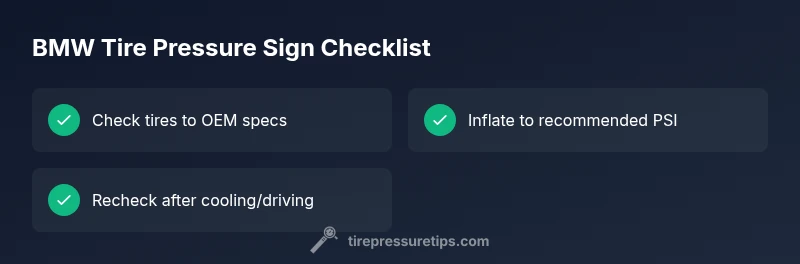
First, locate a safe place to pull over and turn on hazard lights if needed. Check all tires with a reliable pressure gauge and inflate to the recommended PSI. Recheck every tire; if one tire remains low, inspect for nails or punctures. If the sign persists after inflation, consider resetting the TPMS or visiting a service center for a calibration. Do not ignore a persistent warning—safety matters and delayed action can turn a minor issue into a roadside emergency.
Temperature effects on tire pressure and the sign
Temperature can influence tire pressure noticeably. As the air cools, pressure tends to drop; as it heats, pressure rises. This can cause brief fluctuations that trigger or clear the sign for short periods. Based on Tire Pressure Tips research, these shifts are common and can occur even with minor weather changes. Always check pressure when temperatures have stabilized to avoid chasing transient readings and misinterpreting the sign.
TPMS sensors: checking calibration and battery in BMW
TPMS sensors monitor wheel pressure and send data to the car’s computer. If a sensor battery is weak, it may report low pressure or fail to update correctly, producing a sign even when the tire is within range. BMW models often require a specific procedure to calibrate or reset TPMS after tire work. If you replace tires, a dealer or qualified technician can recalibrate to your vehicle’s system. Regular TPMS maintenance can prevent false alerts and keep your readings trustworthy.
When to seek professional help
If the sign remains after inflating to spec and rechecking, or you notice a nail, sidewall damage, or a tire that won’t hold air, seek professional help promptly. A technician can perform a leak test, seal punctures, and verify TPMS sensor integrity. If you recently replaced a tire or rotated wheels and the warning returns, it may indicate a sensor calibration issue or a software update. Road risks are real, so don’t drive far with a persistent warning.
Preventing future signs: maintenance habits
Create a simple maintenance routine to prevent the BMW tire pressure sign from recurring. Check tire pressures monthly and before long trips, and always when the temperature changes significantly. Keep tire valves clean and free from dirt, and schedule TPMS service if you notice irregular readings. Record the tire pressure on a quick note to monitor trends, especially around seasonal transitions. The Tire Pressure Tips team recommends treating tire pressure as a reliability issue, not a one-off task, and staying proactive to ensure safety and performance.
Steps
Estimated time: 30-45 minutes
- 1
Safely stop and assess
Pull over to a safe spot, turn on hazard lights, and gather your tools. This quick safety check prevents distracted repairs and ensures you can inspect tires with a clear mind.
Tip: Keep a flashlight handy for valve-stem checks in low light. - 2
Check all tires with a gauge
Use a reliable pressure gauge on each tire, including the spare if applicable. Note readings and compare them to the OEM spec on the door jamb sticker.
Tip: Check cold for the most accurate reading. - 3
Inflate to recommended pressure
If any tire is below the recommended psi, inflate carefully using an air source until it matches the spec. Do not overinflate beyond the max listed on the tire.
Tip: Use a gauge with a stable read for accuracy. - 4
Recheck after inflation
Drive a short distance or let the tires cool and recheck to ensure pressure stabilizes at the target value.
Tip: Recheck after a few minutes of driving to account for heat. - 5
Reset or recalibrate TPMS if needed
If the sign persists after inflation, perform the manufacturer-recommended TPMS reset procedure or visit a dealer for calibration.
Tip: Documentation or owner’s manual may have the exact steps. - 6
Inspect for damage or leaks
Look for nails, punctures, or damaged valve stems. Patch or replace the tire if you detect a leak, and replace a failed TPMS sensor if required.
Tip: Do not drive long distances with a suspected leak.
Diagnosis: Dashboard tire pressure sign lights up on BMW, possibly with low psi readings.
Possible Causes
- highLow tire pressure due to underinflation
- mediumTPMS sensor fault or battery depletion
- mediumPuncture or slow leak in a tire
Fixes
- easyCheck and inflate tires to the recommended pressure
- easyReset or recalibrate TPMS after inflation/repair
- mediumInspect tires for leaks or punctures and address
Frequently Asked Questions
What does the BMW tire pressure sign look like on the dashboard?
In many BMWs, the TPMS indicator appears as a tire symbol or a dedicated TPMS light in the instrument cluster. It signals a pressure deviation that should be checked promptly. Always verify the tire pressures first before considering sensor issues.
The dashboard shows a tire warning light. Check pressures first, then decide on next steps.
Is the tire pressure sign the same as a TPMS warning light?
The tire pressure sign is closely linked to TPMS but may appear differently depending on the model. Treat both as a pressure warning and follow the same basic steps to verify and adjust pressures.
TPMS and tire pressure signs are related; both mean you should check tire pressure.
How often should I check tire pressure when the sign appears?
Check tire pressure immediately, then recheck after inflation and again after a short drive. Regular checks help confirm stability and catch leaks early.
Check now, recheck after inflation, and recheck after a short drive.
Can a slow leak trigger the sign?
Yes. A slow leak gradually lowers pressure and can trigger the sign. Inspect tires for punctures and consider patching or replacing the affected tire.
A slow leak can trigger the warning; inspect and repair as needed.
What should I do if the TPMS sensor battery is dead?
If the TPMS battery is dead, the sensor may give inaccurate readings. Replacement or calibration by a professional is usually required.
A dead TPMS battery needs professional service to ensure accurate readings.
Watch Video
What to Remember
- Check tires to OEM specs before driving.
- Inspect for leaks if a tire reads low.
- Reset TPMS after air adjustments.
- Monitor temperature-related pressure changes across seasons.