Tire Pressure Over: Quick Diagnosis and Fixes
Learn what tire pressure over means, how to diagnose high readings from TPMS and gauges, and the fastest fixes to keep tires safe. Practical checks, step-by-step instructions, and prevention tips from Tire Pressure Tips.


According to Tire Pressure Tips, tire pressure over readings typically indicate the tire pressure is higher than the vehicle’s cold-recommended value. Start by measuring cold pressures with a reliable gauge, compare to the door placard, and adjust to spec. If readings stay high after cooling, check for sensor drift, valve issues, or damaged tires and consult a professional if needed.
Understanding the problem: tire pressure over readings
When drivers see a warning about tire pressure over on a TPMS display or hear an inflated alarm, it usually means the measured pressure is above the vehicle manufacturer's cold-inflation specification. The phrase tire pressure over can reflect several realities: sensor drift, gauge inaccuracy, or a genuine inflation rise caused by heat and driving. According to Tire Pressure Tips, many drivers confuse temporary rises in pressure with a persistent overinflation problem. Always start with a cold-pressure check, because heat from driving can raise readings by several psi. Misinterpretations can lead to unnecessary deflation, or, conversely, underinflation if you ignore a true high reading. Tie readings to the door placard and the tire sidewall label. Temperature, load, wheel size, and altitude can influence the numbers. This article unpacks safe shortcuts from risky fixes and helps you build a routine that keeps tires within spec.
Core concepts: cold pressure vs. live pressure
Cold pressure is measured when the tires are at ambient temperature, ideally after at least three hours of not being driven. Live pressure reflects heat buildup and road conditions, which can push psi up by 2–6 psi or more in a short drive. TPMS sensors monitor more than one parameter, but they can drift or develop faults over time. Knowing these concepts helps you interpret the sign of tire pressure over readings and prevents unnecessary deflation or dangerous overinflation. In practice, always confirm with a trusted gauge, compare with the placard, and consider time and temperature when evaluating results. A consistent approach reduces misreadings and improves tire longevity.
The dangers of ignoring high readings
High readings can indicate a real overinflation that reduces contact patch and traction, especially in cornering or emergency maneuvers. It can also mask slow leaks or sensor faults that mimic overinflation. Conversely, underinflation is more dangerous for heat buildup, tire wear, and blowouts. The key is to verify with cold checks, use a quality gauge, and harmonize readings with the vehicle specification. If you notice persistent discrepancies after cooling, plan a diagnostic with a tire professional to avoid safety risks on the road.
Practical tips to respond quickly
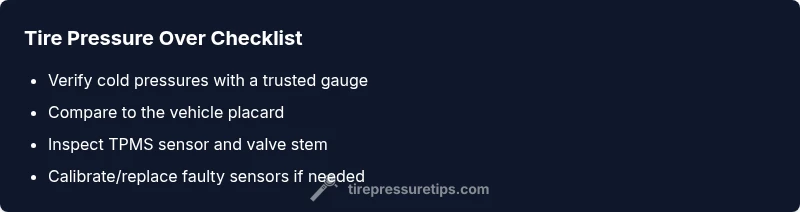
- Always measure cold pressures with a high-quality gauge and compare against the door placard. - Recheck after a cooldown to confirm a genuine issue. - Inspect the TPMS sensor, valve stems, and wheel for damage or corrosion. - Do not rely solely on a single reading; document changes across multiple drives. - If readings remain elevated, consider calibration or sensor replacement by a professional. The goal is to restore the tire to the vehicle’s spec reliably.
What this means for your daily drive
Knowing how to interpret tire pressure over readings helps you avoid unsafe conditions and unnecessary maintenance. Keeping tires within spec improves fuel efficiency, tire wear, and overall vehicle handling. It also reduces the risk of a sudden pressure loss due to undetected overinflation. By establishing a routine of cold-pressure checks and TPMS calibration when needed, you create a reliable, proactive tire maintenance habit.
Steps
Estimated time: 20-40 minutes
- 1
Check current reading with cold tires
Start by measuring the tire pressures when the tires are cold. Use a reliable dial or digital gauge and write down the numbers for each corner. Compare them to the vehicle placard to see which tires sit higher than the recommended cold pressure.
Tip: Record the readouts and the time of day to track temperature-related fluctuations. - 2
Compare against the door placard and tire sidewall
Check the occupants' door placard values for cold inflation targets and verify against the tire sidewall label. Ensure you’re using the correct units (psi or kPa) and that you’re not mixing tires or wheel configurations.
Tip: Double-check you’re testing cold tires; heat swells readings quickly. - 3
Deflate or inflate to the recommended cold pressure
If readings exceed the cold spec, adjust by deflating or inflating to the target cold pressure. Use the gauge to verify changes and avoid overshooting the mark.
Tip: Inflate in small increments and recheck after several minutes of rest. - 4
Recheck after cooling
Drive gently for a few miles, then recheck once the tires have cooled. If readings remain high, proceed to advanced checks rather than repeatedly adjusting.
Tip: A normal short drive can help differentiate a transient heat rise from a persistent issue. - 5
Inspect TPMS and valve components
If the numbers don’t align after cooling, inspect the TPMS sensors, valve stems, and wheels for damage or corrosion. Look for slow leaks around the valve stem that could skew readings.
Tip: Consider a sensor check under professional supervision if you’re unsure about the inspection. - 6
Seek professional calibration if necessary
When readings remain elevated despite proper cold-pressure adjustment and inspection, schedule a TPMS calibration or sensor replacement with a qualified technician.
Tip: Professional calibration ensures accuracy and prevents repeated misreadings on future drives.
Diagnosis: TPMS or gauge shows tire pressure over the recommended cold pressure
Possible Causes
- highTemperature rise from recent driving or hot weather
- highCalibration error on TPMS or inaccurate gauge
- mediumInflation to maximum tire label rather than the recommended cold pressure
- mediumTPMS sensor fault or valve stem issue causing false high readings
Fixes
- easyMeasure cold pressures with a trusted gauge and compare to the door placard; adjust to the recommended cold value
- mediumLet tires cool and recheck; if readings remain high, recalibrate TPMS or replace faulty sensor
- easyDeflate or inflate to the correct cold pressure using a gauge, not the car's automatic fill mode
- mediumIf sensor issues are suspected, visit a shop for TPMS calibration or sensor replacement
Frequently Asked Questions
What does tire pressure over mean in practical terms?
It means your reading is higher than the recommended cold pressure. Verify with cold checks, consider temperature effects, and check for sensor or gauge accuracy before making adjustments.
It means the reading is above the recommended cold pressure; verify with a cold check and check the sensors if needed.
Is tire pressure over dangerous?
High readings aren’t automatically dangerous, but persistent overinflation can reduce grip and increase wear. If in doubt, recheck with a quality gauge and consult a professional if readings stay high after cooling.
Persistent high readings aren’t good; recheck with a reliable gauge and seek professional help if they stay high.
How do I check tire pressure correctly?
Always measure when tires are cold using a trusted gauge. Compare each reading to the door placard, then adjust to the specified cold pressure for all tires.
Measure cold pressures with a good gauge and compare to the placard; adjust as needed.
Should I trust TPMS or a gauge?
Both are useful. Use a physical gauge to verify TPMS readings and consider calibration if the numbers differ significantly or repeatedly show high readings.
Use a reliable gauge to verify TPMS readings and calibrate if numbers don’t align.
What if TPMS reads high but tires feel normal?
That could indicate sensor drift or calibration error. Check with a manual gauge and have the TPMS checked by a professional if discrepancies persist.
Sensors can drift; verify with a manual gauge and seek service if differences persist.
When should I replace a TPMS sensor?
If sensors are older than the manufacturer’s recommended life or show consistent drift after calibration, replacement is advised to restore accuracy.
Replace a sensor if it drifts after calibration or is past its service life.
Watch Video
What to Remember
- Check cold pressures first.
- Use a quality gauge and compare to the placard.
- Temperature affects readings—cool before judging.
- Calibrate or replace TPMS if readings stay high.
- Maintain a regular tire-pressure routine to prevent future issues.