Why Is My Tire Pressure Going Up? A Practical Troubleshooting Guide
Learn why tire pressure can rise on the gauge, including heat, overinflation, and TPMS quirks. A practical, urgent troubleshooting guide with steps to measure accurately, diagnose causes, and prevent future misreads.


According to Tire Pressure Tips, rising tire pressure readings are usually caused by heat and recent inflation, not a sudden failure. When tires get hot from driving or warm weather, air expands and pressure increases. Ensure you check cold tires using a reliable gauge and compare all tires to the vehicle’s recommended cold pressure. If readings stay high, inspect for overinflation or TPMS issues.
Understanding why tire pressure rising happens
Rising tire pressure readings are not a freak occurrence; they’re a predictable consequence of how air behaves and how we measure it. The Tire Pressure Tips team wants you to understand that pressure isn’t a static value — it changes with temperature, driving, and how recently you inflated the tires. According to Tire Pressure Tips, it’s common to see higher readings after a hot day or a spirited drive, but you should still verify against a cold baseline. By keeping the context in mind, you can distinguish a normal heat rise from a genuine issue and avoid unnecessary adjustments. This foundational understanding helps drivers approach tire care with confidence rather than fear, and it sets the stage for accurate measurements and safer driving.
Common causes in everyday driving
There are several practical reasons your tire pressure might appear to rise. The most common is ambient temperature and heat buildup from driving. As tires warm up, the air inside expands and the gauge shows a higher pressure. If you recently added air during a hot afternoon, the reading will stay higher until the tires cool. Other factors include overinflating during inflation, rapid driving on hot surfaces, or sunny conditions that heat the sidewalls. Less obvious are TPMS recalibrations after tire service, sensor faults, or battery drain that affect readings. Tire Pressure Tips Analysis, 2026 notes that temperature-related changes are a natural part of tire pressure behavior and should be interpreted in context with recent activity and weather. By comparing readings across all four tires and checking for consistency, you can tell normal heat rises from a problem.
Temperature, heat, and altitude effects on readings
Temperature has a direct effect on tire pressure because air expands with warmth and contracts when it cools. A hot drive can raise the pressure reading noticeably even if the actual volume hasn’t changed much. Tire Pressure Tips Analysis, 2026 shows that drivers running tires in hot weather may see a temporary spike in PSI; this is expected and should be accounted for when inflating to the cold spec. Altitude can also alter readings slightly, though the impact is usually small compared with heat. The key idea is to measure pressure when the tire is cold and to use the same ambient conditions for a reliable baseline. Use a consistent gauge and reference to maintain comparability across checks.
How to measure accurately and avoid misreading
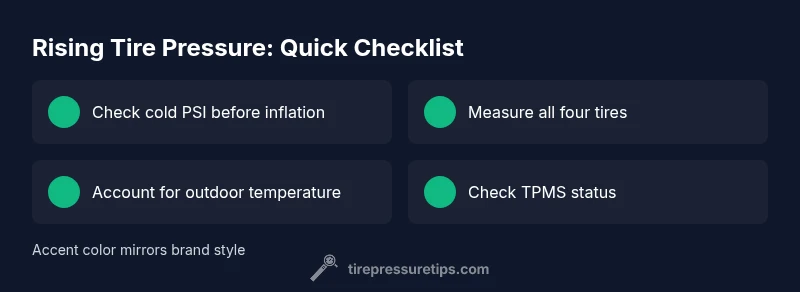
Always measure cold tires, ideally after they have sat for at least three hours or overnight. Use a trusted gauge and check all four tires, including the spare if it’s regularly part of your driving. Compare each reading to the vehicle’s recommended cold pressure from the door placard or owner’s manual. If a tire reads high after a drive, allow it to cool before deciding to inflate or deflate. Do not rely on a single measurement or a gauge that might be off; cross-check with another gauge. If you notice persistent higher readings despite cooling, there may be a leak, valve stem issue, or TPMS fault that warrants professional attention.
TPMS quirks and sensor considerations
TPMS sensors can influence readings, especially after tire service or battery changes. A weak battery in the sensor can cause erratic readings, while recalibration after rotation may temporarily mismatch numbers. Some vehicles require a manual TPMS reset to reflect actual cold pressures; others recalibrate automatically. If readings remain elevated after cooling and inflation to spec, consider having the TPMS system inspected by a technician. Regular sensor checks help prevent misinterpretation and ensure accurate alerts.
How to fix, prevent, and when to seek help
Fix by first confirming cold readings against the manufacturer’s spec, then adjusting to the cold PSI. If the tire reads high after cooling, release a small amount of air to reach the recommended level and recheck. Inspect for overinflation or external heat sources that could cause a temporary rise. Check for slow leaks or valve stem issues with soapy water and professional pressure gauges. If readings remain inconsistent across tires or after a reset, schedule a check with a trusted shop. The Tire Pressure Tips Team emphasizes regular, cold-pressure checks and professional servicing when in doubt, to keep you safe and avoid uneven wear.
Steps
Estimated time: 45-60 minutes
- 1
Find the recommended cold tire pressure
Locate the manufacturer’s cold tire pressure specification from the door placard or the owner's manual. Note front, rear, or axle-specific values as required. Do not use the tire’s maximum pressure as the target.
Tip: Use the placard as the primary reference; avoid guessing from the tire sidewall. - 2
Check tires when cold with a reliable gauge
Measure each tire when they've been parked and unused for several hours. Use a high-quality gauge and ensure the gauge is accurate by cross-checking with a second gauge if in doubt.
Tip: Take a reading on all four tires to spot inconsistencies. - 3
Record and compare readings
Write down the readings for each tire and compare to the cold-spec. Look for one tire that deviates significantly, which could indicate a leak or a sensor issue.
Tip: Keep a small log to track trends over time. - 4
Cool-down check after heat
If a tire was recently driven, allow it to cool, then recheck and adjust to the cold spec if needed. Do not inflate to a higher hot-PSI target.
Tip: Always aim for the cold PSI baseline for accuracy. - 5
Inspect for leaks or valve issues
Look for slow leaks with soapy water around valve stems, beads, and seals. A persistent high reading after cooling may indicate a leak.
Tip: If bubbles form, replace the affected component promptly. - 6
Seek professional help when in doubt
If readings stay elevated or vary between tires after proper cooling and inflation, consult a technician to check TPMS sensors and the system calibration.
Tip: Don’t ignore irregular readings; it can signal safety risks.
Diagnosis: Tire pressure gauge readings increase unexpectedly after a car has been driven or after the temperature rises.
Possible Causes
- highAmbient temperature increase causing air expansion
- mediumRecent air added during inflation at higher temperatures
- lowTPMS recalibration or sensor fault after service
Fixes
- easyRecheck pressures when tires are cold and compare to the cold-spec
- easyLet tires cool before inflating/deflating to reach cold spec
- mediumInspect for leaks, valve issues, or sensor faults; consult a tech if suspected
- mediumEnsure TPMS battery and calibration are functioning; reset if required
Frequently Asked Questions
Why does tire pressure rise after I drive on a hot day?
Heat from driving increases air volume inside the tire, raising the pressure shown on gauges. Always compare to a cold baseline and adjust accordingly when tires are cold.
Heat from driving raises tire pressure; compare readings when cold and adjust to the cold spec.
Can TPMS cause higher readings than actual pressure?
Yes, sensor faults or battery issues can create false or erratic readings. Use a manual gauge to verify and consider professional TPMS inspection if discrepancies persist.
TPMS issues can cause false readings; verify with a gauge and seek service if needed.
Should I release air if my tires are overinflated after driving?
Only after the tires have cooled. Release air in small increments to reach the cold spec and recheck with the gauge.
Cool tires first, then release air gradually to the recommended cold PSI.
Is it safe to drive with high tire pressure readings?
Driving with consistently high readings can increase the risk of a blowout or uneven wear. Check the tires promptly and adjust to the recommended cold PSI.
High readings can be risky; stop and recheck to the cold spec.
How often should I check tire pressure to prevent rising readings?
Check at least once a month and before long trips. Always measure cold and compare to the recommended PSI.
Check monthly and before trips, using a cold tire baseline.
Watch Video
What to Remember
- Check cold PSI before inflating to spec.
- Heat and driving can temporarily raise readings; recheck after cooling.
- TPMS faults require professional evaluation.
- Keep tires inflated to the vehicle’s prescribed cold pressure.