Too Much Tire Pressure Troubleshooting Guide
Urgent, practical guidance to diagnose and fix overinflated tires, with TPMS insights, safe release steps, and prevention tips from Tire Pressure Tips.


Too much tire pressure can compromise safety by reducing traction, increasing ride harshness, and causing uneven wear. The most likely cause is recent pumping or heat-related inflation. Quick fix: check all tires when cold, release air gradually using the valve stem until you reach the vehicle’s recommended level, then recheck with a gauge. According to Tire Pressure Tips, TPMS alerts give a timely warning before damage occurs.
The risks of too much tire pressure
Too much tire pressure can compromise safety by reducing traction, increasing ride harshness, and causing uneven wear. When tires are inflated beyond the manufacturer’s recommended cold pressure, the tire’s contact patch becomes smaller and stiffer. This behavior can worsen braking distance on wet surfaces and raise the chance of a tire blowout in extreme heat. The Tire Pressure Tips team emphasizes that excessive inflation is a common, preventable issue that deserves urgent attention for every driver. Driving with overinflated tires also makes steering feel dull and can reduce cornering grip, especially on poor road surfaces. Regular checks and using a trustworthy gauge help keep you out of the danger zone.
How overinflation happens
Overinflation happens through a mix of habit and environment. People often pump to a higher value than recommended after noticing a flat or using a very fast inflator at a gas station. Temperature plays a role: as tires warm up, the air expands and can push pressure past the safe threshold if the tires were already near it. Misreading the placard or using an inaccurate gauge can also lead to inflated numbers. The Tire Pressure Tips guidance stresses checking tires when they’re cold and confirming the vehicle’s spec on the door jamb label before any adjustment.
Signs your tires are overinflated
Look for a firm ride, a rounded center tread profile, and reduced contact with the road. You may notice center wear on the tread, a harsher ride over bumps, and more frequent loss of grip in wet conditions. The steering may feel less responsive, and you might observe uneven tread wear if one axle carries more load. If you spot bulges or cracking, or if the tire shows unusual behavior after hitting potholes, stop and recheck pressure. Remember, the goal is to keep the tire’s footprint evenly contacting the road under normal loads.
How to verify correct pressure (without guesswork)
Begin with a cold tire check—do this before a drive or after it’s cooled for several hours. Use a reliable gauge and compare each tire’s reading to the car manufacturer’s recommended cold pressure, printed on the door jamb or in the owner’s manual. Inflate or release air in small increments, rechecking after each adjustment. Don’t rely on a single reading; temperatures and loading conditions change readings. If you have TPMS, note which sensor warns and confirm with a manual gauge to avoid misreadings.
Effects on ride, handling, and wear
Overinflated tires create a stiffer ride and reduce the tire’s ability to absorb road imperfections. Handling can feel numb, especially on rough pavement, and braking performance may degrade in wet weather due to less tire deformation. Uniform center tread wear increases, while edges wear less, shortening tire life. The reduced footprint also raises the risk of hydroplaning in rain and can worsen fuel economy due to altered rolling resistance.
Safe fixes you can perform at home
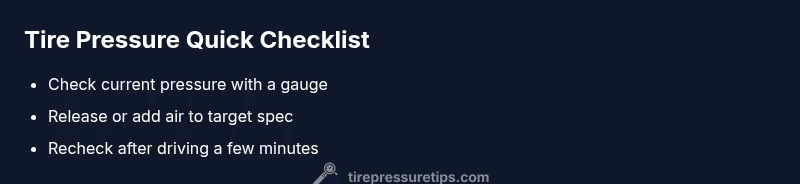
If you confirm that a tire is overinflated, release air in small increments, then recheck with a gauge. Start with the tire that shows the highest reading, and don’t vent air all at once—aim for gradual adjustments. After reaching the target, recheck all tires to ensure consistency across the axle. If you’re unsure about how much air to release, consult the owner’s manual or seek guidance from a professional. Always perform adjustments with the vehicle parked on a level surface and use the parking brake.
When to seek professional help and safety considerations
If TPMS remains on after adjusting, or if you notice persistent center wear, a leak, or a suspected damaged valve stem, contact a tire shop. A professional can calibrate TPMS sensors and inspect for slow leaks, split sidewalls, or bead damage. Do not continue driving long distances on tires that feel abnormally stiff or show abnormal wear patterns. Safety comes first, and a quick professional check can prevent costly damage or a dangerous blowout.
Prevention: building a routine to maintain proper tire pressure
Create a simple monthly habit: check cold pressures, verify against the placard, and adjust as needed. Keep a small gauge in your glovebox for quick checks between drives. Temperature shifts seasonally—summer heat and winter cold can push readings away from the ideal range—so recheck more often during transition months. Finally, pair tire pressure checks with regular tread depth inspections to catch issues before they escalate. Consistency is the key to safer roads and longer tire life.
Steps
Estimated time: 15-25 minutes
- 1
Inspect the warning light and tire appearance
Note which tire lights up in TPMS and visually inspect tires for overinflation symptoms, such as a rounded tread center. This quick check sets the stage for precise adjustments.
Tip: Take a photo of the label on the door jamb for quick reference while you check pressures. - 2
Check cold tire pressures
Park on a level surface and perform readings when tires are cold. Use a high-quality gauge to measure each tire’s cold pressure before adjusting.
Tip: Do not base readings on after-driving pressures; heat skews results. - 3
Compare to the recommended pressure
Find the vehicle’s recommended cold pressure on the door jamb placard or owner’s manual and compare it with your readings. Identify tires that exceed the spec.
Tip: If in doubt, check both front and rear tires; manufacturers often specify different values per axle. - 4
Adjust by releasing or adding air
If a tire is overinflated, vent air in small increments and recheck. If underinflated, add air gradually until you reach the target.
Tip: Make tiny adjustments and recheck to avoid overshooting the mark. - 5
Recheck and test drive
After adjustments, recheck all tires once more and take a short, careful test drive to confirm handling and stability before longer trips.
Tip: Return to a safe location if you notice new vibrations or a drastic change in ride feel.
Diagnosis: Tire pressure warning light activates or a tire appears visibly overinflated after a recent pump or hot weather.
Possible Causes
- highRecent inflation that pushed tires above recommended cold pressure
- mediumTemperature rise causing pressure to exceed safe levels
- lowTPMS sensor calibration or reading error
Fixes
- easyCheck all tires when cold and adjust to the vehicle's spec using a reliable gauge
- easyRelease air from overinflated tires in small steps, then recheck after each adjustment
- mediumIf TPMS warning persists or you suspect a sensor issue, have the system inspected by a professional
Frequently Asked Questions
Can too much tire pressure cause a blowout?
Yes, overinflation increases blowout risk by stressing the tire and reducing contact with the road. Always align pressures with the manufacturer’s specifications and address TPMS alerts promptly.
Yes. Overinflation raises the risk of a blowout; follow the vehicle’s specs and check TPMS alerts.
What is the right pressure for my car?
Check the door jamb placard or the owner’s manual for the cold-pressure specifications. Do not rely on memory or rough estimates.
Check the door placard for cold pressure specs and follow those numbers.
What if the TPMS stays on after I adjust?
TPMS can stay lit if a sensor is faulty or readings are out of date. If it doesn’t reset after adjusting, visit a tire service center.
If the TPMS light remains after adjustment, have the system checked.
Is it safe to drive with overinflated tires?
Moderately overinflated tires reduce grip and ride quality and can cause uneven wear. Revert to the recommended pressure before long trips.
Not ideal—drive slowly and fix it to the recommended pressure.
How often should I check tire pressure?
Check at least monthly and before long trips; measure when tires are cold for accuracy.
Check monthly and before long trips.
Do seasonal changes affect tire pressure?
Yes. Temperature shifts affect air pressure; recheck readings during seasonal transitions.
Seasonal temperature changes can alter tire pressure; recheck when seasons shift.
Watch Video
What to Remember
- Check cold pressures monthly and before trips
- Follow the door jamb placard values, not memory
- Use a reliable gauge for consistent readings
- Address TPMS alerts promptly to prevent unsafe driving