My Tire Pressure Is Too High: Quick Troubleshooting Guide
Urgent troubleshooting guide to diagnose and safely fix high tire pressure, with step-by-step fixes, diagnostics, and prevention tips from Tire Pressure Tips.


If my tire pressure is too high, the most common culprits are overinflation from misreading a gauge or a temperature spike. Start by verifying the recommended PSI on the door jamb label with tires cold, then release air gradually to the advised level. This quick, safe approach reduces risk of tire damage and improves handling.
Why overinflation happens and why it matters
According to Tire Pressure Tips, overinflation is a frequent consequence of inflating tires with a gauge that isn’t set to cold-tire reference pressures. When tires are inflated above the manufacturer’s recommended PSI, you can experience harsher rides, uneven tread wear, reduced grip in rain, and a higher likelihood of a blowout under load. If you notice the concern phrased as a plain statement like, my tire pressure is too high, you’re describing a condition that can compromise safety and fuel efficiency. The good news is that most cases are easily corrected with a few deliberate steps. This section explains how overinflation happens in everyday life—from quick-fill mistakes at gas stations to weather-driven pressure changes—and why addressing it promptly matters for control and longevity.]
How to measure tire pressure correctly (cold tires first)
Measuring accurately starts with a cold tire, ideally after the vehicle has been stationary for several hours. Remove the valve cap, press a high-quality tire gauge onto the valve stem, and take a steady reading. Compare this measurement to the PSI listed on the driver’s door jamb sticker or in the owner’s manual, not the max PSI printed on the tire sidewall. Use a consistent gauge (analog or digital) and note that temperatures can sway readings by a few PSI from morning to afternoon. If your reading is above the recommended level, you must deflate to the target. This process is the foundation of safe pressure management and helps prevent premature wear.
Immediate steps if you just noticed high PSI
When you detect high pressure, address it promptly but safely. Park on a level surface, engage the parking brake, and wear protective gloves to avoid cold metal contact. Use a tire gauge to confirm the current pressure, then gradually release air in small increments until you reach the target. Recheck all four tires, especially if one tire was inflated more than the others. After adjusting, replace the valve caps, and re-check the readings again after a short drive to account for settling. If the vehicle has TPMS, ensure the system refreshes after you adjust pressure; do not rely on it as the sole verification method.
Common causes beyond user error
Beyond misreading gauges, temperature shifts can elevate tire pressure. A sunny drive or a hot day can raise PSI by a noticeable amount, sometimes mimicking an overinflation issue. Mechanical causes include an aggressive fill at a gas station, a faulty gauge, or a slow leak that appears only as you compare against a recent fill. In rare cases, a bad valve stem or TPMS sensor fault can distort readings. Understanding these causes helps you pinpoint where to focus—whether it’s rechecking with a different gauge, inspecting the valve stem, or scheduling a TMPS calibration.
Diagnostic checks you should run
Run a quick diagnostic checklist to verify the problem:
- Confirm cold readings against the door jamb spec for all tires
- Check for obvious leaks or punctures around the valve stem
- Compare readings from two different gauges to rule out tool error
- Check the temperature and recent driving conditions that could affect readings
- Inspect the tire sidewalls for unusual bulges or wear that might indicate overinflation damage
- If TPMS readings disagree with manual gauges, consider sensor recalibration or inspection by a technician A thorough check helps distinguish simple gauge error from genuine overinflation problems and keeps you safe on the road.
Safe deflation techniques and best practices
Deflating safely means more than letting air out quickly. Use a tire pressure gauge to measure, release air in small bursts, and recheck after each burst. If you’re using an automatic compressor at a gas station, set it to the target PSI before connecting and never exceed the desired level. After reaching the target, recheck, replace the valve cap, and take a short drive to confirm stability. It’s better to over-correct slightly and top up than to leave a tire under-deflated. Remember to always follow the vehicle’s recommended PSI for load and speed as the final authority.
Maintenance tips to prevent high pressure in future
To minimize future overinflation:
- Check tires cold and use a reliable gauge at least once a month
- Keep an eye on ambient temperature and adjust the gauge reading accordingly
- Avoid inflating to the tire’s maximum sidewall PSI; use the vehicle’s spec instead
- Schedule periodic TPMS checks and calibration in your maintenance plan
- Rotate tires on a schedule to ensure even wear and consistent readings across all tires
- Consider a digital gauge for more precise readings during home maintenance Adopting these habits reduces the likelihood of repeatedly facing dangerously high tire pressure and extends tire life.
When to seek professional help and maintenance
If after deflation you notice persistent readings above the recommended level, unusual tire wear, cracks in the sidewalls, or a persistent TPMS warning, consult a qualified technician. An inspection can reveal faulty sensors, damaged valve stems, or internal tire issues that aren’t obvious from the outside. Regular professional checks—especially after big temperature swings or seasonal tires—can prevent unexpected tire failure and keep your vehicle performing safely on the road. In many cases, a quick diagnostic at a shop provides peace of mind and ensures you’re driving with correct, safe pressure.
Quick recap: practical references for immediate safety
Always measure when cold, verify against the correct spec on the door jamb, and adjust conservatively. Keep a reliable gauge in your glovebox and never assume the highest PSI on the tire sidewall represents your daily running pressure. A small, deliberate deflation now can prevent fatigue, poor handling, and tire damage later. Regular checks should be part of your routine, especially after long trips or temperature changes.
Final quick note on safety and daily driving
High tire pressure reduces contact patch, which can impact braking and handling in wet or uneven road conditions. If you notice stiffness in steering or a rough ride after adjustments, stop and re-check. The safest path is to stay within the manufacturer’s guidelines and seek professional help if you’re unsure. Remember, consistent maintenance is the best defense against overinflation and its risks.
Steps
Estimated time: 15-25 minutes
- 1
Confirm target PSI
Locate the recommended tire pressure on the driver’s door jamb sticker or owner’s manual. Confirm the value for each axle and tire type (front vs rear if specified). This establishes the correct target before you adjust. Remember to check tires when cold for an accurate baseline.
Tip: Use a reliable gauge and cross-check with another gauge if you suspect device error. - 2
Assess current readings
Park on a level surface, remove the valve cap, and take a reading on all tires. Note any discrepancies between tires that might indicate uneven wear or a sensor issue. If one tire reads significantly higher, focus first on that wheel.
Tip: Wear gloves to handle the valve stem safely and avoid skin contact with hot rims after driving. - 3
Deflate safely
If tires are above the target, deflate in small bursts of 1-2 PSI, rechecking after each burst. Do not release air rapidly. Once you reach the target, recheck all four tires to ensure uniform pressure.
Tip: After adjusting, drive a short distance to allow the tires to settle and recheck readings. - 4
Check for leaks or sensor issues
Inspect for obvious leaks around the valve stem or tire bead. If you notice scuffs, cracks, or a soaked bead area, stop and seek professional evaluation. A faulty TPMS sensor can also distort readings.
Tip: If you suspect a TPMS problem, request a calibration or sensor test at your next maintenance visit. - 5
Re-evaluate after driving
Take a short test drive and check readings again. Temperature changes during driving can affect pressures, so a follow-up read after cooling is recommended for best accuracy.
Tip: Prefer measuring when tires are cool to avoid temperature-driven spikes. - 6
Document and monitor
Record the PSI and date for future reference. If you regularly see high readings after environmental changes, consider adding a routine TPMS check to your maintenance schedule.
Tip: Keep your tire pressure gauge in your glovebox for quick checks on the road.
Diagnosis: Tire pressure reads higher than the vehicle’s recommended PSI on all tires or a single tire shows abnormally high PSI
Possible Causes
- highOverinflation due to incorrect gauge use or rapid inflation at a gas station
- mediumTemperature rise from outdoor heat or sunny driving conditions
- lowFaulty gauge or TPMS calibration issue
- lowValve stem or internal tire issue causing localized high reading
Fixes
- easyRe-measure tires when cold using a reliable gauge and verify against the door jamb specification
- easyDeflate gradually to the recommended PSI and recheck after each burst
- mediumInspect valve stems and tires for damage or leaks; replace components as needed
- easyIf readings remain high or TPMS misreads, schedule a professional inspection
Frequently Asked Questions
Why does my tire pressure read high after driving?
Tire pressure increases with temperature; driving heats the tires, which can raise PSI. Always measure when cold to get an accurate baseline, then recheck after driving if needed.
Temperature changes can affect readings; measure when tires are cold for accuracy.
Is it safe to drive with high tire pressure?
Moderately higher pressure may be acceptable, but excessive inflation reduces the contact patch and grip. If you’re unsure, adjust to the recommended PSI before driving longer distances.
Drive carefully and adjust to the recommended PSI for safe handling.
Should I inflate tires to the max PSI on the sidewall?
No. The proper pressure is what the door jamb sticker or owner’s manual lists, not the tire’s maximum rating. The max is not intended for daily driving and can reduce grip.
Use the vehicle’s recommended PSI, not the sidewall maximum.
What could cause TPMS to show high pressure?
TPMS readings can be affected by sensor calibration, temperature, or a faulty sensor. If readings are inconsistent with manual gauges, request a sensor check or calibration.
If readings differ from your gauge, check the TPMS calibration.
When should I replace tires due to overinflation?
If overinflation causes uneven wear, cracking, or bulges, replace tires as needed. Have a professional inspect for internal damage if you notice unusual wear patterns.
Look for uneven wear or damage; replace tires as advised by a pro.
Watch Video
What to Remember
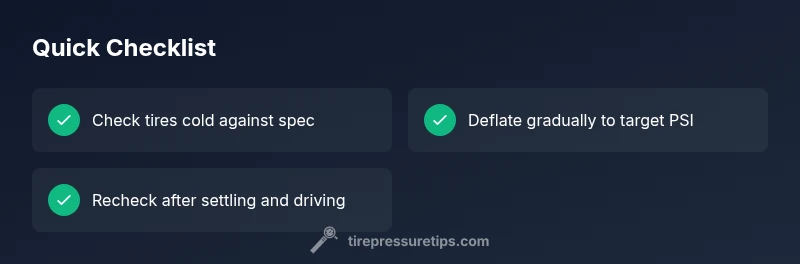
- Check cold tires against the door sticker before adjusting.
- Deflate gradually in small increments and recheck.
- Temperature can influence readings; re-check after cooling.
- If readings persist high, inspect valves and TPMS or seek professional help.