Tire Pressure Low Warning Troubleshooting Guide
Learn practical steps to diagnose and fix tire pressure low warnings, understand how TPMS alerts work, and maintain safe inflation with easy, actionable checks.


Most tire pressure low warnings come from under-inflated tires detected by TPMS. Start by verifying all tires with a gauge, focusing on the tire indicated by the warning light if provided. Inflate each tire to the vehicle’s recommended PSI from the placard, then drive a short distance to reset the sensor.
Understanding the tire pressure low warning
According to Tire Pressure Tips, a tire pressure low warning is most often triggered by under-inflated tires detected by the vehicle's TPMS or by indirect systems that monitor rolling circumference. The alert on your dashboard is a safety signal, not a suggestion. It tells you that one or more tires are not pressurized to the level recommended by the manufacturer, which can affect handling, fuel economy, and tire wear. In many vehicles, the warning lights illuminate when one tire is significantly lower than its target pressure or when a series of minor fluctuations across multiple tires accumulates. Knowing how TPMS works—whether direct sensors in each wheel or indirect readings from the ABS system—helps drivers respond quickly and accurately. When you see the warning, don’t ignore it or assume it will disappear after a short drive. Take immediate steps to verify tire pressure and address any leakage.
Common causes of tire pressure low warning
The most common cause is under-inflation. Even a small drop in PSI can trigger the warning, especially after heavy use or after the tires have heated up from driving. Temperature swings between morning and evening can also affect readings; cold mornings often show lower PSI than hot afternoons. Slow leaks from nails, screws, or irregular wear can produce gradual pressure loss that triggers the TPMS. A damaged valve stem, a faulty TPMS sensor, or recently changed tires can upset calibration, causing false warnings or delayed responses. Finally, a user error such as forgetting to reset the TPMS after inflating or rotating tires can leave the dashboard light on longer than expected. By recognizing these causes, you can systematically check and fix the problem without guesswork.
How to safely check tire pressure
Begin with a level, shady spot and cold tires. Park away from direct sunlight and avoid driving more than a few miles before checking, since driving heat affects pressure. Use a reliable gauge—a digital or dial gauge is fine—and compare each reading to the vehicle placard or door jamb sticker. Remember: the placard PSI is the target pressure for normal load, not the maximum you see on the tire sidewall. Check all four tires, plus the spare if you use a full-size spare, and note any tire that reads significantly lower than the others. If a tire reads well below the target, you should first reduce any accumulation of heat by letting it cool, then add air in short bursts and recheck. Finally, wipe away any dirt around the valve stem to ensure a good seal after inflating.
Understanding TPMS: direct vs indirect
Direct TPMS uses sensors inside each wheel that transmit real-time air pressure data to the vehicle computer. Indirect TPMS mimics direct data by comparing wheel speeds and rotational patterns; it infers low pressure when the tire circumference changes due to deflation. Both systems aim to alert you quickly, but direct systems provide a numerical reading on compatible dashboards, while indirect systems rely on logic and calibration. After inflating tires, direct TPMS may require a short drive to relearn or reset; indirect systems require a certain driving pattern to recalibrate. If you suspect a sensor fault, consult your owner’s manual for the correct reset procedure or visit a service center for TPMS calibration.
How temperature affects tire pressure
Ambient temperature influences air pressure inside tires. As air warms, it expands; as it cools, it contracts. This means a tire can lose pressure overnight or gain pressure during a sunny drive. The effect is more pronounced in environments with large temperature swings. Because of these dynamics, many drivers see pressure readings drift by a few psi with seasonal change. A practical approach is to check tire pressure when the tires are cold, before the car has been driven for more than a couple of miles, and again after a long trip in hot weather. Understanding this helps you interpret warning lights correctly and prevents unnecessary top-offs.
When to reset TPMS and calibrate
TPMS recalibration is sometimes required after inflating, rotating tires, or replacing tires. Some cars reset automatically after a certain number of miles driven at normal speed; others require manual reset via the instrument cluster or a special button. If inflation was performed recently and the warning remains, drive at moderate speeds for 10-15 minutes to allow the system to relearn, or follow the owner's manual steps for manual relearning. For vehicles with TPMS battery sensors, occasional battery issues can affect readings, so a service check may be necessary if the light stays on after inflation.
Quick checks you can perform today (under-inflation focus)
Even if you’re short on time, you can perform a quick, structured check to rule out the most common causes first. Start with the simplest step—visual inspection of each tire for obvious bulges, nails, or punctures. Then verify pressures using a quality gauge on cold tires and compare with the placard. Inflate any tire that reads below the recommended level, recheck, and mark tires that stay high or low to observe patterns over the next few days. If the warning persists after preventing heat buildup and ensuring consistent pressures, consider inspecting the TPMS sensors for damage or corrosion. If in doubt, don’t drive long distances with a persistent warning—call for professional assistance to prevent blowouts on the road.
Common mistakes to avoid
Avoid inflating tires to the maximum sidewall pressure in an attempt to ‘fix’ a warning. This can create uneven wear and reduce traction. Don’t rely on memory—recheck after inflation because tires heat up quickly and can falsely appear accurate. Never ignore a slow leak or a damaged valve stem; these issues require repair or replacement. Don’t forget to check the spare if you have a space-saver or non-full-size tire, as some vehicles monitor pressure there too. Finally, never perform a TPMS reset without confirming all tires are at their correct pressures; false resets can hide real issues and create safety hazards.
Maintenance and prevention tips
Regular, scheduled tire pressure checks are part of safe driving. Check pressures when tires are cold and at least monthly, plus before long trips or heavy loads. Keep a portable tire gauge in your glovebox for quick checks on the road. If you rotate tires or replace them, have the TPMS calibrated and verified by a professional if you notice warning lights returning. Consider ambient temperature changes and how they affect readings, especially in extreme weather. Adopting a routine will help you catch slow leaks early and extend tire life, saving money and improving safety over the vehicle’s lifetime.
What to do if warning persists after inflation
If the tire pressure low warning remains after inflation and TPMS recalibration, seal any leaks that you can see and recheck after a few days. If the warning persists, there may be a faulty TPMS sensor or an issue with the tire itself that requires professional inspection. In this case, arrange a service appointment to diagnose with specialized equipment. In the interim, maintain safe driving speeds and avoid long trips until the system is verified.”
Steps
Estimated time: 25-40 minutes
- 1
Check all tires with a gauge
Park on a level surface and inspect all four tires and the spare. Check the cold tire pressures against the placard. If any tire reads below target, proceed to inflation.
Tip: Use a digital gauge for quick, accurate readings. - 2
Inflate to the recommended PSI
Inflate each tire to the vehicle placard PSI, not the maximum printed on the sidewall. Avoid over-inflating; build pressure gradually and recheck after each full inflation.
Tip: Inflating in small increments reduces overshoot. - 3
Recheck pressures after inflation
Recheck every tire after inflation, especially if the tires felt warm from recent driving. If a tire remains low, inspect for leaks or damage.
Tip: Spread soapy water around the valve stem to spot leaks. - 4
Recalibrate or reset TPMS
If your car requires manual TPMS relearn, follow the owner’s manual steps or visit a dealer to calibrate. Some systems relearn automatically after driving a bit.
Tip: Check the manual for the exact relearn procedure. - 5
Test drive and verify
Take a short drive to allow the TPMS to refresh. Recheck the tire pressures after the drive to ensure the warning is cleared.
Tip: If the warning returns, seek professional inspection.
Diagnosis: Tire pressure low warning on dash
Possible Causes
- highUnder-inflated tire(s)
- mediumTPMS sensor fault or calibration issue
- lowRecently replaced tires or rotating wheels
- lowSeasonal temperature swings
Fixes
- easyCheck all tires with a reliable gauge; inflate to spec and recheck
- easyDrive 10-15 minutes at moderate speeds to allow TPMS relearn
- mediumIf warning persists after proper inflation, have TPMS sensors tested or replaced
Frequently Asked Questions
What causes a tire pressure low warning?
Common causes include under-inflation, seasonal temperature changes, slow leaks, damaged valves, or a faulty TPMS sensor. Rotating tires or replacing sensors can also trigger a reset requirement.
A TPMS warning usually comes from under-inflation or a sensor issue. Check pressures, inflate to spec, and inspect for leaks. If it still lights up, get a professional check.
Is it safe to drive with a TPMS warning on?
Driving with a TPMS warning is not recommended. Low pressure reduces traction and load-carrying ability and can lead to tire failure. If you can’t quickly fix the pressures, reduce speed and avoid sharp maneuvers.
It’s not safe to drive long with a TPMS warning. Check pressures and fix leaks; if unsure, pull over safely and call for assistance.
How do I reset TPMS after inflating?
Many vehicles reset automatically after driving for a short distance. Others require a manual relearn via the dashboard menu or a reset button. Consult your owner's manual for the exact steps.
Some cars relearn automatically after a short drive; others need manual steps, so check the manual.
How often should I check tire pressure?
Check tire pressure at least monthly and before long trips or when carrying extra load. Temperature changes can cause readings to drift, so regular checks help maintain accuracy.
Check monthly, plus before trips and in extreme weather.
What if the warning stays after inflation and relearn?
If the warning persists after inflation and relearn attempts, there may be a faulty sensor or a damaged tire. Seek professional inspection to diagnose TPMS or tire condition.
If it stays on after inflation, have a professional check the TPMS and tires.
Watch Video
What to Remember
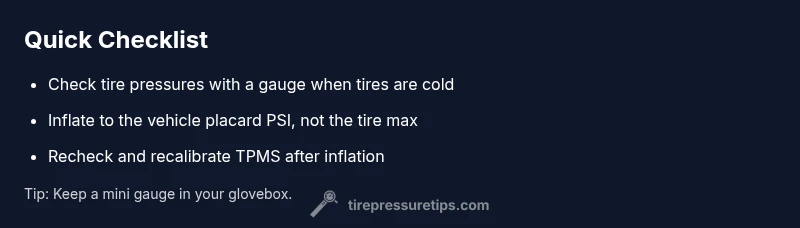
- Check all tires with a gauge before inflating
- Inflate to placard PSI, not max PSI
- Recalibrate TPMS after inflation if needed
- Temperature affects readings—check in cold conditions
- Persistent warnings require professional inspection