Low Tire Pressure Indicator: Understand, Check, and Respond
Learn what the low tire pressure indicator means, how TPMS works, how to check and inflate tires correctly, and when to seek service. Practical, step-by-step guidance from Tire Pressure Tips.


The low tire pressure indicator signals under-inflation detected by TPMS. Safely pull over, check all tire pressures with a gauge, and inflate to the vehicle’s recommended PSI. If the light stays on after inflation, inspect tires for damage or leaks and seek professional TPMS service.
Understanding the low tire pressure indicator
The low tire pressure indicator on your dashboard is not a weather gauge; it signals under-inflation detected by your vehicle's TPMS. Modern TPMS sensors monitor each tire's pressure and report anomalies to the car's computer. When the system detects a drop in pressure beyond its threshold, the indicator lights up to alert you. The Tire Pressure Tips team emphasizes that this light is your early warning to verify tire health before it becomes dangerous. Temperature fluctuations can influence readings, but a persistent light usually means you should inspect the tires for leaks or damage and verify inflation with a gauge. Responding promptly improves safety, fuel economy, and tire longevity. According to Tire Pressure Tips, addressing under-inflation quickly helps prevent uneven wear and reduces the risk of blowouts on the road.
How TPMS communicates with your vehicle
There are two main types of TPMS: direct systems with sensors mounted inside each tire and indirect systems that infer pressure from wheel speed data. Direct TPMS provides a numerical reading and a fail-safe alert if a sensor malfunctions. Indirect TPMS relies on the vehicle’s ABS/ESP calculations and pressure correlations, which can lead to slower or less precise warnings if sensors drift over time. Either way, the indicator is designed to prompt you to verify tire pressure and inspect for conditions that would compromise handling, traction, or braking. Regular maintenance helps keep TPMS accurate, and most vehicles recalibrate automatically once tires are inflated to the recommended pressure.
Common causes of low tire readings
There are several legitimate reasons for a temporary or false low-reading: (a) temperature changes that lower air density, (b) normal air loss over time, (c) a valve stem that leaks slightly, (d) a tire that has been recently repaired or patched, (e) overloading the vehicle, (f) sensor drift or a weak battery in a TPMS sensor, and (g) a wheel with a different diameter or size after a tire change. Understanding these causes helps you triage when the light comes on and prevents unnecessary tire replacements. Based on Tire Pressure Tips analysis, most incidents stem from gradual leaks or temperature-driven changes rather than catastrophic failures.
Safety steps when the light comes on
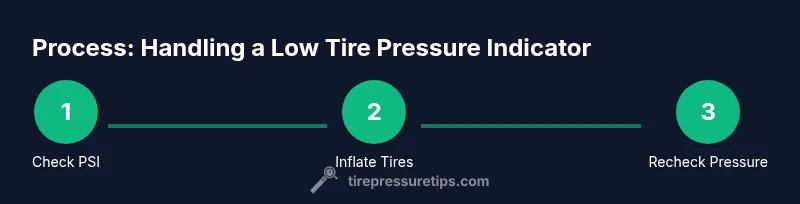
When the light illuminates, find a safe place to stop as soon as possible. Do not continue driving long distances on under-inflated tires. Check the air pressure in all tires, including the spare if applicable, using a reliable gauge. Inflate each tire to the manufacturer’s recommended PSI (found on the door placard, owner’s manual, or fuel-filler cap). Recheck after inflation and drive a short distance to see if the light reappears. If the light persists or you notice any rapid loss of pressure, seek professional inspection immediately. The goal is to restore proper contact patch area and avoid heat build-up that could damage the tire sidewall.
How to check tire pressure accurately
Always measure tire pressure when tires are cold for the most accurate reading. Remove the valve cap, press the gauge onto the valve stem firmly, and read the pressure. Compare to the recommended PSI printed on the door jamb or in the owner’s manual. If a tire is significantly below the target, add air in small increments (4-6 psi at a time) and recheck frequently. Don’t rely on a single measurement; repeat on all four tires and the spare if you drive with it regularly. For a quick baseline, check all tires at the same ambient temperature to minimize weather-related variance.
Inflating tires correctly: what you need to know
Inflate tires to the vehicle’s specified PSI, not the maximum on the tire sidewall. Use a reliable air source and a gauge you trust. After adding air, recheck each tire to confirm it reached the target pressure within a margin of error (typically ±1 psi). If you frequently see pressure loss after inflating, inspect the valve stems and tires for punctures, or consult a tire professional for a leak test. Remember to adjust for load and speed requirements when carrying extra cargo or passengers, as these factors can change the optimal PSI.
When to repair or replace a tire
If a tire repeatedly loses air or shows visible damage, it may require repair or replacement. Slow leaks around the bead or valve may be patchable, while sidewall damage usually requires tire replacement. If you notice rapid deflation while driving, pull over safely and inspect for embedded objects or punctures. For TPMS confirmation after a repair, ensure the system is reinitialized or recalibrated per the vehicle’s manual. Always consider replacing tires that are worn beyond the recommended tread depth, as this affects grip and hydroplaning resistance.
TPMS maintenance and calibration
TPMS sensors rely on batteries that degrade over time; sensor failure can trigger false warnings. If you replace a tire, ensure TPMS is reset or relearned to the new configuration. Some vehicles require a specific procedure using the onboard computer or a service tool. Regularly check sensor integrity by a professional and consider periodic recalibration if you notice inconsistent readings across tires. A well-maintained TPMS reduces nuisance alerts and improves overall tire performance.
Preventing false alarms and maintaining tire health
Routine checks are essential. Inspect tire tread depth and wear patterns, rotate tires as recommended, and keep tires inflated to the correct pressure for your typical driving conditions. Temperature shifts—especially in winter—can cause noticeable pressure changes, but persistent low readings should be investigated. By performing monthly checks, you reduce the risk of unsafe driving conditions and extend tire life. The Tire Pressure Tips team recommends incorporating a quick quarterly TPMS health check into your vehicle maintenance routine.
AUTHORITY SOURCES
• National Highway Traffic Safety Administration (NHTSA): https://www.nhtsa.gov/equipment/tires • American Automobile Association (AAA): https://exchange.aaa.com/automotive/tires • Consumer Reports: https://www.consumerreports.org/car-safety/tires/what-pressure-should-your-tires-be-in/
Tools & Materials
- Tire pressure gauge(Analog dial or digital; accuracy ±1 psi)
- Air compressor or access to public air pump(Ensure it can reach the target PSI; bring a gauge if needed)
- Vehicle owner's manual(Contains the recommended PSI for each tire and TPMS reset guidance)
- Valve stem cap and towel for cleanup(Keep cap to prevent dirt entry; towel helps clean hands)
- Soapy water (for leak inspection)(Spot bubbles can indicate leaks around valve stems or bead)
Steps
Estimated time: 25-45 minutes
- 1
Locate the official PSI target
Find the recommended tire pressure on the driver’s door placard or in the owner’s manual. This value is the target for all four tires under standard load. Do not inflate to the tire’s maximum sidewall pressure, which is higher and not intended for regular driving.
Tip: When in doubt, start with the lower end of the recommended range if you routinely carry heavy loads. - 2
Prepare the tire for measurement
Remove the valve stem cap and inspect the stem for dirt or damage. Press the gauge onto the valve stem firmly to get an accurate reading. If the tire is warm, wait for it to cool for a more precise measurement.
Tip: Wipe the valve stem with a cloth to prevent dirt from affecting the reading. - 3
Read the current pressure
Read the display on your gauge and compare it to the manufacturer target. Note if more than one tire is low to identify a potential systemic issue or weather-related drop.
Tip: Record readings for all four tires to track patterns over time. - 4
Inflate to the correct PSI
Attach the air source to the valve stem and add air in small increments (4–6 psi at a time). Recheck after each increment to avoid over-inflation. Do not exceed the recommended PSI.
Tip: If you overshoot, release a small amount and re-inflate to target. - 5
Recheck all tires
After inflating the first tire, recheck pressure on all four tires to ensure consistent levels. Temperature and last inflation can affect readings, so a quick recheck confirms accuracy.
Tip: Check the spare if you use it regularly; TPMS can monitor all installed tires but not the spare. - 6
Inspect for leaks or damage
Look for nails, cracks, or bead leaks around tires. If you detect any damage or hear a hissing sound, stop driving and consult a professional.
Tip: Small punctures may be repairable, but sidewall damage usually requires replacement. - 7
Reset or relearn TPMS if needed
Some vehicles require a TPMS relearn procedure after inflating tires or changing a tire. Check the manual for the exact steps; many cars perform automatic relearns after a few miles of driving.
Tip: If the light stays on after inflation, TPMS recalibration is a common fix and should be done by a technician if you’re unsure. - 8
Document and monitor
Record your tire pressure readings and the day you inflated them. Monitoring helps catch slow leaks early and reduces the chance of repeated alerts.
Tip: Consistency beats intensity—make monthly checks part of your routine.
Frequently Asked Questions
What causes the low tire pressure indicator to come on unexpectedly?
Unexpected activation is commonly due to temperature changes, small leaks, or sensor drift. A persistent warning should be checked with a gauge and professional inspection if needed.
Commonly, temperature changes or small leaks trigger the light. If it sticks after a fresh inflate, get a professional check.
Can I drive with the light on after inflating the tires?
You can, for short trips, after inflating to the correct PSI. If the light remains on, there may be a persistent leak or a TPMS issue requiring service.
You can drive short distances after inflation, but if the light stays on, get it checked.
Should I replace TPMS sensors if the light keeps coming on?
If sensors are faulty or batteries are weak, replacement may be necessary. A professional can verify sensor health and recalibrate the system.
If the sensors are failing, replacement or recalibration may be needed.
Is cold weather a factor for tire pressure readings?
Yes. Cold weather lowers tire pressure, so readings drop. Always compare to the cold-weather target listed on the door placard.
Weather can drop tire pressure; check readings against the door placard.
Do I need to reset TPMS after inflating or changing a tire?
Some vehicles require a manual relearn procedure; others recalibrate automatically after driving. Check the owner’s manual for exact steps.
Some cars auto-relearn; others need manual relearn. Check your manual.
How often should I check tire pressure?
Aim for once a month and before long trips. Regular checks help prevent unsafe driving and improve fuel efficiency.
Check monthly and before long trips.
Watch Video
What to Remember
- Check tires when cold and inflate to the recommended PSI.
- TPMS alerts you to under-inflation; verify with a gauge.
- Inspect for leaks or damage if the light persists after inflation.
- Regular maintenance reduces false alarms and extends tire life.