Understanding the Tire Pressure Indicator and TPMS Alerts
Learn what the tire pressure indicator means, how TPMS detects changes, and practical steps to verify and maintain correct tire pressures for safety and fuel efficiency.


TPMS-based tire pressure indicator is a dashboard alert that signals when inflation strays from the vehicle’s recommended range. It relies on sensor data and indirect methods to prompt checks, repairs, or adjustments.
What is a tire pressure indicator and how it works
The tire pressure indicator is not a fixed measurement on your car; it is a dashboard alert powered by a Tire Pressure Monitoring System (TPMS). There are two main TPMS types: direct TPMS, which uses battery-powered sensors mounted inside each tire; and indirect TPMS, which uses the vehicle’s wheel-speed sensors to infer pressure differences. When the system detects a tire's inflation drift beyond the vehicle’s recommended range, it triggers a warning light on the instrument cluster. The exact trigger threshold varies by vehicle and can depend on load, speed, and temperature. The tire pressure indicator helps drivers avoid under-inflation, which increases rolling resistance, reduces grip, and accelerates wear, as well as over-inflation, which can reduce traction and make the ride harsher. For many drivers, the indicator is a reliable early warning that prompts a quick check with a trusted gauge. According to Tire Pressure Tips, understanding what sets off the alert can prevent larger problems later. In practice, you’ll use the indicator as a cue to verify inflation, inspect tire condition, and plan maintenance, rather than treating it as a one-time fix.
Why it matters for safety and efficiency
Tire inflation levels influence handling, braking, ride comfort, and the life of your tires. Under-inflated tires generate more heat and wear on the outer edges, increasing the risk of a blowout, while over-inflated tires reduce the contact patch and grip, especially in wet or uneven road conditions. The tire pressure indicator helps you catch these issues before they become dangerous, enabling timely corrective actions. After all, correct inflation improves fuel economy by reducing rolling resistance, and it can help your vehicle maintain predictable steering response. The Tire Pressure Tips team emphasizes that consistent pressure across all tires supports even wear and better braking performance. Dash warnings are especially important for drivers who swap between seasons or carry heavy loads, when the pressure setpoint can shift. In addition to safety and efficiency, proper tire pressure reduces heat buildup that can degrade tire compounds. But warnings aren’t foolproof; a TPMS light can come on due to sensor problems or temperature changes, which is why routine checks are essential. Tire Pressure Tips Analysis, 2026, underscores the value of a proactive inflation strategy.
How TPMS sensors detect pressure and trigger alerts
Direct TPMS uses sensors embedded in each tire and connected to a central receiver to measure actual air pressure in PSI. Indirect TPMS does not measure pressure directly; instead it compares wheel speeds and rotation patterns to detect anomalies that imply under-inflation. Both systems are designed to alert you when any tire falls outside the manufacturer’s acceptable range, but the reliability depends on sensor health, battery life, and calibration. Regularly inspecting sensors for corrosion, loose connections, and valve-stem damage helps ensure accurate readings. Manufacturers set threshold ranges so that minor fluctuations due to temperature or load don’t trigger nuisance warnings, but larger shifts signal true pressure changes. If the indicator comes on after refueling or a long trip, verify that the tire pressures are correct and consistent across all tires. For more context, see Tire Pressure Tips Analysis, 2026, which highlights how timely alerts reduce the risk of tire damage and improve overall vehicle performance.
Practical steps to respond when the indicator lights up
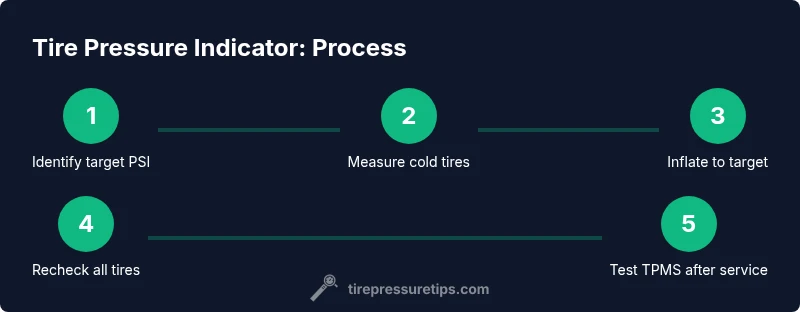
Pull over safely and locate the tire with suspicious pressure. Use your trusted gauge to check the actual PSI against the vehicle’s recommended value. If a tire is low, inflate it to the target pressure and recheck. If you cannot achieve the target or the light remains on after inflation, inspect for leaks, punctures, or damaged valves. If leaks are found, replace or repair the tire as needed and recheck the TPMS after service. If the TPMS warning persists despite correct inflation, consult a qualified technician to inspect sensor integrity or calibration. Throughout this process, avoid driving on a severely under-inflated tire, as it can cause heat buildup and potential tire failure. The Tire Pressure Tips Team reminds drivers to document any TPMS anomalies and follow up with a service visit when warnings recur.
Checking tire pressure with cold tires and correct gauge technique
Always measure tire pressure when tires are cold—ideally after the vehicle has been parked for at least three hours or driven less than a mile. Remove the cap from the valve stem and press the gauge firmly onto the valve; ensure a stable, airtight seal before reading. Compare the reading with the vehicle’s recommended PSI on the door jamb placard or owner’s manual, not the tire’s maximum pressure. If readings differ across tires, adjust to bring all tires to the recommended level, then recheck. Remember to replace valve caps to maintain seal and prevent dirt entry. If you’re measuring a spare tire, follow the same steps and store readings for future reference. Regularly checking tires when temperatures shift—such as in winter or hot summer days—helps catch pressure changes before they become critical.
How to calibrate TPMS and when to reset after service
Calibration (relearn) of TPMS is usually required after rotating tires, replacing sensors, or changing wheel configurations. Most vehicles offer a specific relearn procedure in the owner’s manual, often involving a sequence of turning on the ignition while driving slowly or using a dedicated TPMS reset button. Always follow the exact steps provided by your manufacturer, as procedures vary widely by model and year. After completing maintenance, confirm that the TPMS light extinguishes and that each tire’s pressure corresponds to the recommended setting. If the light stays on, or if the system reports a fault, schedule a diagnostic with a dealership or independent shop. Regular maintenance, including sensor testing and occasional relearns, keeps TPMS accurate and reduces nuisance warnings that lead to ignored alerts.
Common myths and troubleshooting false warnings
Some drivers believe TPMS can replace all manual checks, but sensors rely on physical readings and can drift over time. False warnings may result from temperature changes, recent tire service, or sensor battery depletion. Don't ignore a TPMS alert due to a seasonal change alone; verify inflation and inspect tires. Debunking myths is essential because overreliance on the indicator can mask real problems like slow leaks or damaged stems. If a warning recurs after inflation and sensor checks, consult a professional to evaluate the system’s health and recalibrate if needed. The goal is to use the tire pressure indicator as a guide, not a replacement for hands-on measurement and routine maintenance.
Weather, temperature, and seasonal effects on tire pressure
Temperature has a direct impact on tire pressure: cold air lowers PSI, while heat can raise it. A tire that’s properly inflated in the morning may drop pressure after a night outdoors, which means a TPMS warning could reflect environmental changes as much as actual leaks. Regular checks, particularly during seasonal transitions, help ensure that your tires stay within the recommended range. Consider keeping a simple log of readings to track trends over time and catch slow leaks early. The Tire Pressure Tips team notes that awareness of temperature effects improves consistency in tire pressures and reduces unnecessary TPMS alerts.
Long-term maintenance: tire pressure checks and record-keeping
A proactive maintenance routine includes monthly tire pressure checks, post-trip verification after long drives, and documentation of readings and service events. Keeping an inflation log helps you detect slow leaks and schedule timely tire maintenance before problems escalate. Rotate tires as recommended by the manufacturer, since TPMS readings can shift with wear patterns. For those living in areas with extreme weather, more frequent checks may be warranted. By combining manual measurements with TPMS alerts, you’ll achieve safer handling, balanced wear, and optimal fuel economy. Finally, rely on reputable sources and your own measurements to maintain accurate tire pressure and a healthy TPMS.
Tools & Materials
- Tire pressure gauge(Analog or digital; accurate to ±1 psi.)
- Air compressor or inflation system(Ensure a steady, regulated airflow; avoid overinflation.)
- Owner's manual(Find model-specific TPMS instructions.)
- Flashlight(Improve visibility under poor lighting.)
- Notebook or digital log(Record PSI readings and dates for trend tracking.)
Steps
Estimated time: 25-45 minutes
- 1
Locate the target inflation spec
Check the tire placard on the door jamb or the owner’s manual to identify the recommended PSI for front and rear tires under normal load. This value becomes your inflation target.
Tip: If you regularly carry heavy loads or tow, the target PSI may be higher. - 2
Prepare to measure tires when cold
Park in a shaded area and let tires cool for at least three hours before measuring. This ensures readings reflect true inflation rather than heat expansion from driving.
Tip: Avoid measuring right after a highway trip. - 3
Measure each tire with a gauge
Remove the valve cap, apply the gauge firmly to the valve stem, and note the PSI. Repeat for all tires, including the spare if you regularly check it.
Tip: Record each tire’s reading to spot patterns over time. - 4
Inflate or deflate to target PSI
Add air to underinflated tires or release air from overinflated ones until each tire matches the target PSI. Recheck after adjustment.
Tip: Inflate in small increments and recheck to avoid overshooting. - 5
Recheck after adjustment
Double-check all four (or five) tires to ensure even inflation. If TPMS illumination persists after inflation, inspect for leaks or damaged sensors.
Tip: If in doubt, seek professional service rather than driving on uncertain tires. - 6
Reset or relearn TPMS if needed
If you recently serviced tires or sensors, perform the manufacturer’s TPMS relearn procedure. This ensures the system recognizes the new readings.
Tip: Follow the exact steps from your manual for your model. - 7
Document and monitor
Note readings and dates to track changes. Consider setting a monthly reminder to check tire pressure and TPMS status.
Tip: A simple log helps detect slow leaks early.
Frequently Asked Questions
What is a tire pressure indicator?
A tire pressure indicator is a TPMS-based alert system that notifies you when a tire’s inflation deviates from the recommended range. It helps you prevent unsafe driving and tire wear.
A tire pressure indicator is the TPMS alert that tells you a tire is under- or over-inflated; check your tires when you see it on the dash.
How do TPMS sensors detect pressure?
Direct TPMS uses sensors inside each tire to measure pressure; indirect TPMS uses wheel speed data to infer pressure differences. Both trigger alerts when readings fall outside the recommended range.
Direct TPMS uses inside-tire sensors; indirect TPMS uses wheel speeds to estimate pressure.
Can I drive with a TPMS warning on?
If the TPMS warning is active, inspect tire pressures and address any under- or over-inflation before driving long distances. If you suspect a faulty sensor, have the system checked promptly.
It’s best to check your tires and avoid long drives until you address the warning.
How often should I check tire pressure?
Check tire pressures at least once a month and before long trips, especially during seasonal changes when temperatures impact PSI.
Check monthly and before trips, especially in temperature changes.
How do I reset TPMS after rotating tires?
Reset procedures vary by vehicle. Consult your owner’s manual for the exact relearn steps and perform them after tire rotations or sensor service.
Follow your car’s manual for TPMS relearn steps after rotations or sensor work.
What causes false TPMS readings?
False warnings can come from temperature shifts, sensor battery issues, or recent tire service. Verify inflation first and then diagnose sensor health if warnings persist.
Temperature changes or sensor issues can trigger false warnings; verify first.
Watch Video
What to Remember
- Know your PSI target and check cold tires first
- Respond promptly to TPMS alerts with proper inflation
- Calibrate TPMS after service to maintain accuracy