Tire Pressure Troubleshooting: Fixing a Broken Reading
Urgent guide to diagnose and fix tire pressure broken readings, TPMS alerts, and leaks. Learn practical steps, safety tips, and when to call a pro for reliable tire pressure maintenance.


According to Tire Pressure Tips, when you see a tire pressure broken reading or a TPMS alert that won't settle after inflation, start with the simplest checks. Verify gauge accuracy, inspect valves for leaks, and recheck all four tires on cold tires. If the warning persists, follow a systematic diagnostic flow to identify sensor, leak, or calibration issues.
Understanding the warning: tire pressure broken readings
When you see a warning about tire pressure broken or a TPMS alert that won’t settle after inflating, you’re not imagining a simple gauge problem. In modern vehicles, the tire pressure system combines sensor data, temperature, and baseline pressure to determine if a tire is under- or overinflated. According to Tire Pressure Tips, most cases of tire pressure broken readings come from sensor issues, small leaks, or calibration mismatches. Addressing the issue quickly is essential to maintain fuel efficiency, tire wear, and safe handling.
Common causes include a slow puncture that allows a tire to lose air when parked, a faulty valve stem or TPMS sensor battery, corroded connections, or a calibration drift after a tire rotation. Temperature shifts also matter: cold weather reduces pressure, while a hot road can mislead a sensor temporarily. If the car recently had a tire service, miscalibration is a frequent culprit. The goal is to distinguish a real leak from sensor or wiring issues.
Quick checks you can do before calling a pro
Before you reach for the wallet, try these basic checks that cover the most common culprits. Each step is designed to be completed in under 15 minutes and can save you a needless trip to a shop.
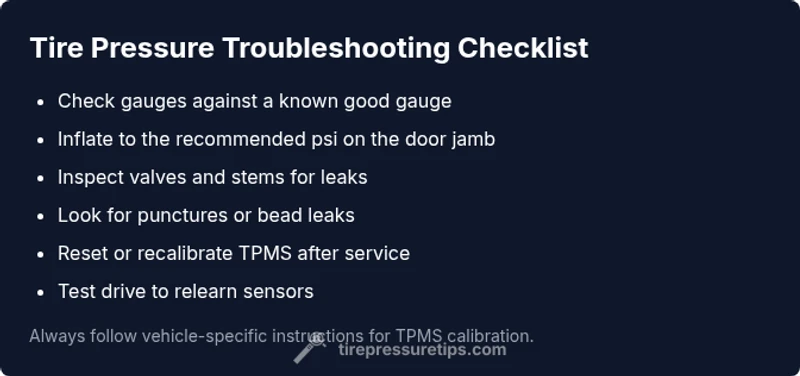
- Verify gauge accuracy by comparing readings with a second, known-good gauge.
- Check the tires when they are cold; do not inflate or measure after driving, which heats air and skews results.
- Inspect valve stems and caps for cracks, corrosion, or looseness. A damaged valve can masquerade as a pressure problem.
- Look for obvious punctures or foreign objects lodged in the tread or sidewall; do not ignore a nail, screw, or glass shard.
- Perform a quick soap-test on the tire bead, valve stem, and inflation ring to spot slow leaks: bubble formation = leak.
- Inflate each tire to the vehicle’s recommended psi, using the door jamb label or owner’s manual, not a guess.
- Recheck all four tires after driving 3–5 miles to account for temperature changes and settling of air.
- If readings remain inconsistent or the TPMS light stays on, plan to recalibrate or reset the TPMS after any service; if unsure, seek professional help.
Diagnostic flow: symptom → diagnosis → solutions
Symptoms guide the diagnosis. A TPMS warning that won’t resolve after inflation points to one of several issues:
- TPMS sensor fault or dead battery (high likelihood). If the sensor cannot communicate properly, readings will be unreliable.
- Slow leak from puncture or bead seal (medium likelihood). A nail or damaged tread often hides under the tire when inspected with soapy water.
- Valve stem damage or loose core (low likelihood). A worn valve can leak air even when the tire itself is sound.
Diagnosis determines solutions. Repair leaks with patches/plugs if the tire is repairable; replace or recalibrate TPMS sensors if needed; fix or replace valve stems; and in worst-case scenarios, replace the tire.
Step-by-step: fix for the most common cause
- Reinflate the tires to the recommended pressure and listen for any hissing sound while applying soapy water around the bead, valve stem, and tread area. If bubbles appear, there is a leak that needs repair. Tip: Use a tire gauge that reads to the nearest 1 psi for accuracy.
- If a leak is detected, remove the tire (if needed) and repair with a patch or plug only if the puncture is in the tread area and the tire is not severely damaged. Tip: Do not attempt tire repairs if the puncture is in the sidewall.
- Inspect the valve cores and stems for cracks or looseness. Replace the core or stem if you notice seepage or stiffness. Tip: Tighten valve caps firmly but do not overtighten.
- Reinflate to the correct psi and recheck with the gauge. If the TPMS still reads inconsistent, go to step 5. Tip: Verify the tire installation torque and wheel nut integrity after any service.
- Calibrate or reset the TPMS as per the vehicle’s owner manual instructions. This can fix false alarms after wheel or tire changes. Tip: A short test drive (5–10 miles) often helps stabilize the system.
- If readings remain off, inspect the wheel for bead damage, corrosion, or a failed sensor battery. Replace the sensor as needed. Tip: If you’re unsure about sensor replacement, seek a tire service professional.
- Confirm by rechecking all four tires and observing the TPMS status over the next 24 hours. If the problem persists, a professional diagnostic may be required.
Safety tips and common mistakes
- Never ignore a tire with a low or high reading; underinflated tires are a major safety risk. Always check tires when cold and avoid overinflation, which can lead to a blowout.
- Do not drive long distances with a suspected tire leak or a lit TPMS warning. A slow leak can worsen, causing heat buildup and tire damage.
- Avoid quick fixes like willful overinflation to mask a leak; this can lead to tire failure and unsafe handling.
- If you see sidewall bulges or bead leaks, stop driving and seek professional help immediately. These signs indicate structural damage.
Prevention: keep tire pressure accurate
Regular checks are essential. Maintain a routine: check tires monthly, top off when needed, and account for temperature changes. Temperature swings can alter psi by 1 psi per 10°F; this is why winter and summer thresholds matter. Calibrate TPMS annually or after tire services to ensure the system reports correctly. Keeping track of your tire pressures helps extend tread life, improve fuel economy, and enhance safety.
Steps
Estimated time: 30-60 minutes
- 1
Verify tire pressure with a second gauge
Compare readings from two different gauges on all four tires when cold. Record the numbers and check them against the vehicle's recommended psi on the door jamb. If there's a significant discrepancy, replace or recalibrate the older gauge.
Tip: Keep your gauges clean and zeroed for accuracy. - 2
Check for leaks and punctures
Apply soapy water around the tread, bead, and valve stem. Look for bubbles that indicate air leaks. If you find a puncture, assess whether the tire can be repaired or must be replaced.
Tip: Only repair punctures in the tread region, not the sidewall. - 3
Inspect the TPMS sensor and battery
If a sensor battery is weak or the sensor is damaged, readings will be unreliable. Use a diagnostic tool or professional service to determine sensor health.
Tip: Consider replacing a weak battery before a full TPMS replacement. - 4
Inflate to spec and recheck
Inflate each tire to the recommended psi. Recheck with the gauge after inflation to confirm the pressure is stable and matches the label.
Tip: Let tires rest for a few minutes after inflation before final check. - 5
Reset/Calibrate TPMS
Follow your vehicle manual to reset or recalibrate the TPMS. A proper reset can eliminate false warnings after tire work.
Tip: Perform a short test drive to allow the system to relearn. - 6
Test the valve stem
Check for seepage at the valve core; replace the core or stem if necessary. A faulty stem can silently leak air.
Tip: Always replace valve cores with the same thread type. - 7
Consult a professional if unresolved
If the reading remains broken or inconsistent, a tire service professional can perform a thorough TPMS diagnostic and sensor service.
Tip: Don't delay if the tire shows damage or bulging sidewalls.
Diagnosis: TPMS warning remains on or reads 'tire pressure broken' after inflation
Possible Causes
- highTPMS sensor fault or low battery
- mediumSlow leak from puncture or bead seal
- lowValve stem damage or loose core
Fixes
- easyTest tire for leaks with soap solution; patch or replace punctured tire if repairable
- mediumInspect/replace TPMS sensor or battery; recalibrate after service
- easyTighten or replace valve stem; reseat the tire bead if needed
- easyReset or recalibrate TPMS per vehicle manual and verify with a short test drive
Frequently Asked Questions
What does it mean when the tire pressure reading is broken?
It usually indicates a sensor or leak issue rather than a single tire problem. A broken reading can come from a faulty TPMS sensor, a slow air leak, or calibration drift after service.
A broken tire pressure reading usually means the TPMS or sensor is having trouble, or there’s a leak; check sensors, valves, and leaks to confirm.
Can I drive with a TPMS warning on?
You can drive briefly to reach a safe location, but do not drive long distances with a persistent TPMS warning. Low or inconsistent readings can indicate underinflation or a sensor fault that requires attention.
You should not drive far with a TPMS warning; pull over safely and inspect the tires or seek help if needed.
How often should I check tire pressure?
Check tire pressures at least once a month and before long trips. Temperature changes also affect readings, so recheck when weather shifts noticeably.
Check your tire pressure monthly and before trips; temperature changes can affect readings.
What should I do if I find a slow leak?
Slow leaks require a patch or plug if repairable; otherwise, the tire should be replaced. After repair, recheck pressure and recalibrate TPMS if necessary.
Patchable leaks in the tread area can be repaired; otherwise replace the tire and reset TPMS.
When is TPMS replacement needed?
Replace TPMS sensors if the readings remain inaccurate after calibration and inspection. A failing sensor battery is a common reason for persistent errors.
Replace the TPMS sensor if calibration doesn't fix the issue; a bad battery often triggers errors.
Watch Video
What to Remember
- Check gauges against a known good device.
- Reinflate to spec and recalibrate TPMS after any service.
- Patch punctures only in the tread; avoid sidewall repairs.
- Replace faulty sensors to resolve persistent warnings.
- Prevent future issues with regular tire pressure checks.