Broken Tire Pressure Valve: Troubleshooting Guide
Diagnose and fix a broken tire pressure valve, prevent leaks, and keep TPMS readings reliable with practical steps, safety tips, and maintenance guidance.


Most often a broken tire pressure valve leaks due to a damaged valve core or a loose stem, causing slow air loss or false TPMS readings. The quickest fix is to replace the valve core or the entire valve stem, then recheck inflation with a precise gauge and reset TPMS if needed. If you hear hissing, stop driving and fix promptly.
Why a broken tire pressure valve is a problem\n\nAccording to Tire Pressure Tips, a broken tire pressure valve can be a silent drain on your safety. The tire may lose air slowly, or the TPMS warning may flicker even when the tire is reasonably inflated. A compromised valve can also allow dirt and moisture to enter, which accelerates corrosion and further complicates inflation accuracy. When a valve fails, it undermines your ability to maintain optimum tire pressure, increasing wear, reducing fuel efficiency, and elevating the risk of a roadside blowout. The problem often hides in plain sight: a dented cap, a corroded stem, or a mis-seated core can all create a slow, persistent leak that’s easy to overlook. Early detection and timely replacement restore reliable readings and safer driving margins. Tire Pressure Tips emphasizes that addressing a broken tire pressure valve promptly protects tire life and overall vehicle safety.
Common causes of valve failure\n\nValve failures rarely happen without warning. The most common culprit for a broken tire pressure valve is a damaged valve core or stem, which disrupts the seal and permits slow air loss. Age and exposure to road debris, curb impacts, or over-tightening during maintenance can bend or strip the core. Corrosion on metal stems due to moisture and salt accelerates wear, while neglecting the valve cap leaves the stem exposed to contamination. In many cases, a loose or overtightened valve stem nut contributes to micro-movements that gradually degrade the seal. According to Tire Pressure Tips analysis, these failures are often preventable with routine inspections and proper torque during replacement. A simple visual check can reveal obvious signs of wear, and a quick leak test with soapy water will confirm suspicion of a faulty valve.
Safety before you start\n\nSafety is paramount when working around tires. Park on a flat, stable surface, apply the parking brake, and if you’re lifting the vehicle, use rated jack stands. Do not work if the tire is hot, and avoid smoking or sparks near the wheel. Wear eye protection and gloves to guard against sharp edges and valve springs. If you’re unsure about tire pressure or you notice a rapid, loud hissing sound, do not continue; instead, call for professional assistance. Remember that a broken tire pressure valve can lead to sudden air loss, which can cause loss of control in critical driving situations. Taking proper precautions reduces risk and ensures the repair is done safely.
Tools and materials you'll need\n\nBefore you begin, gather a valve core tool, a valve stem removal tool, a tire pressure gauge, soapy water, a torque wrench or manual wrench, a replacement valve core or stem, and an air compressor or pump. A clean workspace and good lighting help you spot corrosion and debris. If you encounter a stubborn valve stem, mineral oil or penetrating lubricant can ease removal, but avoid oil near the tire bead. Having a companion can help, especially when handling a heavy tire and wheel. Finally, ensure you have a means to reset the TPMS if your vehicle requires a relearn procedure after valve replacement.
Quick checks you can perform at home\n\nStart with a visual inspection: look for a missing or damaged valve cap, corroded stem, or bent valve core. Listen for a hiss when the wheel is off the ground and the valve is loosened slightly. Apply a soapy-water test around the valve stem and core; bubbles indicate a leak. Check for poor seating of the valve in the rim by ensuring the stem passes through the wheel hole cleanly. If you notice persistent leakage, the valve core or stem will likely need replacement. Remember to keep the tire just above the recommended pressure while you work to prevent underinflation or overinflation during testing.
Replacing the valve core vs the stem\n\nA broken tire pressure valve can often be fixed by replacing just the valve core, which is quicker and cheaper. If the valve stem is bent, corroded, or the core won’t seal after replacement, you should replace the entire valve stem. In some cases, the stem or mounting area may be damaged by curb impact or corrosion to the rim’s bead area, necessitating a full bead seal check and possibly tire replacement. The decision hinges on core condition, stem integrity, and rim compatibility. Always use new valves to ensure a reliable seal and recheck pressure after replacement. This approach minimizes the chance of recurring leaks and helps preserve tire life.
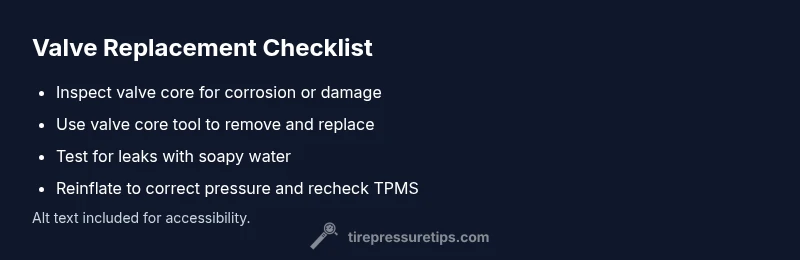
Step-by-step repair overview\n\nThink of the repair as a flow: (1) Deflate and clamp the tire to isolate the valve area, (2) Remove the old core or stem, (3) Install the new core or stem, (4) Re-inflate to the correct pressure, (5) Test for leaks and perform TPMS relearn if required. This overview aligns with the detailed steps provided below and ensures you cover safety, leak testing, and calibration. If the valve is located in a hard-to-reach wheel, consider removing the wheel for better access and inspection. The goal is a reliable seal and accurate tire pressure readings.
Test, verify, and reset TPMS\n\nAfter replacement, verify the seal by re-inflating to the target pressure and performing a leak check over a few minutes with soapy water. If your vehicle has a TPMS relearn procedure, follow the manual or dealer guidance to reprogram the sensors. Drive short distances and monitor readings to confirm stability. If TPMS continues to warn, re-check the valve area for leaks, ensure the tire bead seat is intact, and consider a professional inspection for rim damage or sensor fault. A correct valve replacement stabilizes readings and preserves tire performance.
Preventative maintenance and long-term care\n\nTo reduce the risk of future valve failures, inspect tires on a monthly basis and replace aging valve cores every 5–7 years or whenever you notice corrosion or stiffness in the core. Use valve caps to keep dirt out, and avoid overtightening the valve stem during inflation or tire service. Store spare valve cores and a small valve-tool kit in your trunk for emergencies. When in doubt, seek a professional inspection, especially if you’ve recently hit a pothole or curb, or if you notice inconsistent tire pressure or rapid leaks. Regular maintenance helps prevent sudden deflation and keeps your TPMS readings accurate. The Tire Pressure Tips team reiterates that proactive valve maintenance enhances overall tire health and safety.
Steps
Estimated time: 20-45 minutes
- 1
Gather tools and safety gear
Collect a valve-core tool, valve-stem tool, tire gauge, soapy water, torque wrench, replacement core or stem, and an air source. Park on a flat surface, chock wheels, and wear eye protection. Double-check tire pressure so you’re not inflating an empty or overinflated tire during the process.
Tip: Keep tools organized on a clean mat to avoid losing small parts. - 2
Depressurize the tire area and expose the valve
Loosen the valve cap and slowly release a small amount of air if required to ease removal. Use the valve-core tool to loosen and remove the current core if you’re replacing it. If the stem is damaged, you’ll need to remove the entire valve stem with the stem removal tool.
Tip: Do not twist the core out with bare hands—use the proper tool to avoid breaking the stem. - 3
Install new valve core or stem
Carefully install a new valve core or replace the stem, ensuring the seal is clean and undamaged. Hand-tighten first, then snug with the tool without over-tightening. Reassemble the tire valve and reinstall the cap to keep out debris.
Tip: Lubricate the threads lightly if needed, but avoid lubricants inside the valve itself. - 4
Reinflate and test for leaks
Inflate to the vehicle’s recommended pressure and perform a leak test using soapy water around the valve area. Watch for steady bubble formation indicating a leak. If bubbles appear, tighten or reseat the valve and re-test until no leaks are detected.
Tip: Warm tires may show temporary pressure changes; test after a short cool-down for accuracy. - 5
TPMS relearn and final verification
If your vehicle requires a TPMS relearn, follow the owner’s manual or the dealer instructions. Drive a short distance to trigger sensor updates and confirm the readings align with the target pressure. Document any persistent discrepancies and seek professional help if needed.
Tip: Keep the vehicle’s manual handy for specific relearn procedures and sensor indications.
Diagnosis: Tire loses air rapidly or TPMS warns with no obvious puncture
Possible Causes
- highDamaged valve core or stem
- mediumLoose valve cap or stem nut
- lowBead or rim seating issue around the valve
Fixes
- easyReplace valve core or entire valve stem and reseat tire
- easyTighten loose cap or stem nut; replace if cracked
- hardInspect rim seating and perform a leak test; replace tire if leak persists
Frequently Asked Questions
Can a broken tire pressure valve cause a flat tire?
Yes. A broken valve can leak quickly or slowly, leading to flat tires if not addressed. Persistent leaks can result in underinflation and increased risk on the road.
Yes. A broken valve can leak air and cause a flat if not addressed promptly.
Is replacing a valve core suitable for beginners?
Replacing a valve core is doable for beginners with the right tools and care. Follow the steps carefully and use the correct tool to avoid damaging the valve stem. If you’re unsure, seek professional help.
Yes, with proper tools and careful steps it’s doable for beginners; otherwise, a pro can handle it.
Should I replace both valves on a wheel if one fails?
If one valve shows wear or age, inspect the others. Replacing both at the same time can prevent future leaks and simplify maintenance, especially on older wheels.
It’s wise to inspect all valves and consider replacing both if one is aged or worn.
How can I check a valve for leaks quickly?
Apply a soapy-water solution around the valve stem and core; bubbles indicate a leak. Recheck after tightening or replacing components until no bubbles appear.
Use soapy water around the valve and look for bubbles to spot leaks.
What is TPMS, and how does valve work affect it?
TPMS relies on accurate tire pressure readings. A faulty valve can cause false warnings or inaccurate readings; replacing it helps TPMS stay reliable and safe.
TPMS needs accurate pressure—fixing the valve helps TPMS readings stay reliable.
Watch Video
What to Remember
- Inspect valve cores and stems regularly.
- Choose core or stem replacement based on damage.
- Test with soapy water to confirm leaks.
- Relearn TPMS after valve work as needed.