Reasons for Tire Pressure Loss: Quick Diagnostics and Fixes
Urgent guide on the reasons for tire pressure loss, how to diagnose them, and quick fixes to keep your tires safe and efficient. Learn from Tire Pressure Tips.


Most likely, a slow leak from the valve stem, a nail or puncture, or TPMS misreading causes tire pressure loss. Quick fixes: inspect the valve core and stem, scan the tire surface for punctures, and verify with a gauge before inflating to the vehicle’s recommended PSI. If pressure falls again, seek a tire technician.
Why RSI and Why Now: Understanding Reasons for Tire Pressure Loss
According to Tire Pressure Tips, recognizing the underlying reasons for tire pressure loss helps you act quickly and safely, especially when preparing for a trip or daily driving. The most common causes include slow leaks from the valve stem, nail or other punctures, bead leaks at the rim, and temperature-driven pressure changes. In 2026, the Tire Pressure Tips team emphasizes that proactive checks prevent unsafe driving conditions and unnecessary wear. Regularly monitoring tire pressure protects fuel economy, improves handling, and reduces the risk of a blowout on the highway. The goal is not merely to inflate but to understand how and why pressure changes so you can respond effectively.
Common Culprits and How They Manifest
Tire pressure loss rarely happens at once. It tends to creep up as you drive, affecting steering feel, braking distance, and tire wear patterns. The most frequent culprits are valve stem issues (loose cap, damaged core), punctures from nails or debris, bead leaks due to rim corrosion or improper seating, and natural air diffusion that accelerates in hot weather or after long drives. Temperature shifts can cause noticeable changes in PSI, especially in climates with wide diurnal ranges. A careful visual and gauge-based check can reveal whether you’re dealing with a slow leak or a recurring problem that requires professional repair. The Tire Pressure Tips analysis, published in 2026, reinforces that addressing small leaks early saves money and extends tire life.
Temperature and Seasonal Shifts: The Silent Pressure Killer
Weather significantly influences tire pressure. Colder ambient temperatures cause air to contract, reducing PSI, while heat causes expansion. That means a tire that sits at 34 PSI in the morning may read lower after a long commute if the air cooled overnight. Drivers in northern regions or areas with rapid temperature swings should check pressure more frequently, especially before road trips or in the transition between seasons. This is a predictable pattern, and understanding it helps you set realistic expectations for tire pressure and fuel efficiency. Tire Pressure Tips highlights that temperature effect is a predictable, repeatable contributor to loss that you can account for with regular checks.
Visual and Tactile Checks You Can Do Now
Safe, quick checks can catch many issues before they become emergencies. Start with a level surface and cool tires. Look for obvious punctures, embedded objects, or sidewall damage. Inspect the valve cap and stem for cracks or corrosion. Gently press on the tire to feel for soft spots that indicate a rim bead leak. If you notice slow leaking through the bead area, or if the tread shows unusual wear patterns, you should stop driving on the tire and seek professional evaluation. Remember to compare readings across all four tires to spot anomalies early.
Step-by-Step Inspection Routine You Can Follow Tonight
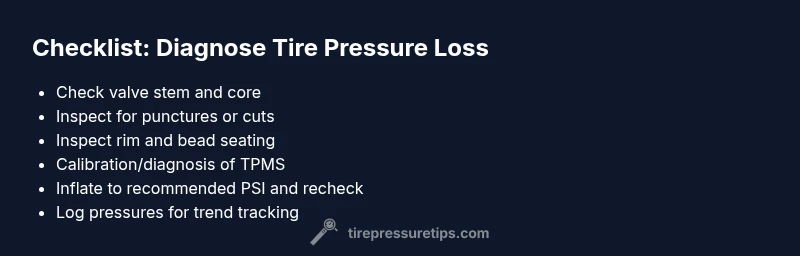
Create a simple checklist and a log. Check temperatures, then measure PSI on cold tires. Inspect each valve stem, including the core, gasket, and cap. Scan for nails, cracks, or cuts in the tread and sidewall. If you find nothing obvious, consider a leak-detection spray or soap solution to identify air bubbles around punctures or beads. Keep in mind that TPMS sensors can drift; if readings disagree with the gauge, a professional calibration may be needed.
Practical Fixes and Safe Inflation Practices
When you detect a deficit, start with the easiest fixes: tighten the valve core if it’s loose, replace a damaged valve cap, and inflate the tire to the manufacturer’s recommended PSI. If a puncture is present, you may be able to seal small leaks temporarily with a patch; however, most punctures require professional repair or tire replacement. For bead leaks or rim corrosion, seating the tire properly and rechecking the seal is often a job for a shop. If TPMS readings are inconsistent, a sensor replacement or reprogramming may be necessary. Always avoid overinflating beyond the tire’s maximum rated pressure, and never drive on a visibly damaged tire.
When to Seek Professional Help
If you discover a persistent drop in pressure or you notice sidewall bulges, cracks, or a nail deep enough to cause air loss, stop driving and call for roadside assistance or a tire shop. Chronic pressure loss can indicate internal damage or structural issues that require specialized equipment to diagnose. The sooner you involve professionals, the safer and cheaper the repair will be in the long run.
Prevention: How to Stop Pressure Loss Before It Starts
Regular maintenance is your best defense. Schedule monthly tire checks, especially before long trips. Keep a reliable tire-pressure gauge in your vehicle for quick checks, and set reminders to monitor PSI during seasonal changes. Rotate tires and maintain proper wheel alignment to avoid uneven wear that can mask leaks. Replace worn or damaged tires as needed, and ensure TPMS sensors are calibrated and functional. With these habits, many causes of tire pressure loss become predictable and manageable.
Final Considerations: Tire Pressure Tips Perspective
From a maintenance standpoint, addressing pressure loss proactively is essential for safety, fuel efficiency, and tire longevity. The Tire Pressure Tips team recommends training yourself and any family members who drive the vehicle to perform a quick, weekly pressure check, particularly when temperatures shift. By following the diagnostic flow and performing routine checks, you reduce the risk of a roadside emergency and extend the life of your tires.
Steps
Estimated time: 45-60 minutes
- 1
Check the basics on level ground
Park on a flat surface, cool tires, and verify the vehicle’s recommended PSI from the door jamb sticker or owner manual. Record current readings for all four tires.
Tip: Use a reliable digital gauge for consistency. - 2
Inspect the valve stem and core
Remove the valve cap and inspect for cracks or corrosion. If the core feels loose, tighten gently with a valve core tool; replace if damaged.
Tip: Do not overtighten; over-tightening can damage the stem. - 3
Look for punctures and sidewall damage
Squeeze the tread area and inspect for embedded nails, screws, or cuts. Any exposed object should be removed by a professional if repair is not safe.
Tip: Do not remove objects that are deeply embedded; cover area and seek help. - 4
Check bead seating and rim condition
Inspect the wheel rim for corrosion or dents that could prevent a proper seal. A professional may reseat the tire if bead leakage is suspected.
Tip: If you hear hissing near the bead, stop driving and seek service. - 5
Evaluate TPMS readings
Compare gauge readings with TPMS alerts. If discrepancies persist after inflation and calibration, TPMS may need servicing or replacement.
Tip: Have TPMS serviced by a trained technician to avoid sensor damage. - 6
Inflate and recheck
Inflate each tire to the recommended PSI, then recheck with the gauge to ensure accuracy. Recheck after a few minutes of cooling if tires were hot, or drive expectation changes.
Tip: Record post-inflation PSI to track changes over time. - 7
Test drive and verify again
Take a short drive and recheck PSI after cooling down. If pressure stays stable, you’re likely dealing with a fixable issue; if not, return to step 2 and escalate.
Tip: Avoid high-speed driving with uncertain leaks.
Diagnosis: Tire pressure drops repeatedly between inflations
Possible Causes
- highValve stem leak or damaged valve core
- highPuncture or nail in the tread
- mediumBead leak due to rim damage or poor seating
- lowTPMS sensor fault or miscalibration
Fixes
- easyInspect and replace valve core; ensure cap seals and is tight
- mediumInspect tire surface for nails or punctures; seal or patch if repairable
- hardCheck bead seating and rim condition; reseat tire if bead leak suspected
- mediumTest and calibrate TPMS; replace sensor if readings are inaccurate
Frequently Asked Questions
What are the most common causes of tire pressure loss?
The most common causes are valve stem leaks, punctures, bead leaks at the rim, and temperature-related pressure changes. A visual inspection plus a pressure check will usually identify the culprit.
The most common causes are leaks at the valve, punctures, bead leaks, and temperature changes. A quick check will usually identify the culprit.
Is it safe to drive with low tire pressure?
Driving on underinflated tires reduces handling and increases the risk of a blowout. Inflate to the recommended PSI as soon as possible and avoid long drives on low pressure.
Is it safe to drive on low pressure? No. Inflate to the recommended PSI before driving far.
How can I tell if the TPMS is faulty?
If TPMS readings don’t match a reliable gauge or if one sensor consistently reads differently, the TPMS may need calibration or replacement. Have it checked by a professional.
If TPMS readings don’t match your gauge, the sensor might be faulty and should be checked by a professional.
How often should I check tire pressure?
Check tire pressure at least monthly and before long trips, especially when temperatures change dramatically. Keep a log for monitoring trends.
Check your tires at least once a month and before trips, especially in cold or hot weather.
Can temperature alone cause a large PSI drop?
Yes. Temperature shifts can cause noticeable PSI changes, particularly in extreme weather. Recheck after temperature swings and adjust as needed.
Yes, temperature can cause noticeable pressure changes; recheck after weather shifts.
When should I replace a tire due to pressure loss?
Recurring pressure loss with sidewall damage or an irreparable puncture means the tire likely needs replacement. Consult a tire professional for safe options.
If pressure loss repeats and the tire shows damage, replacement is often required.
What to Remember
- Check all four tires regularly to catch leaks early
- Temperature shifts are a predictable cause of PSI changes
- Valve stems and TPMS are common sources of false loss
- Repair or replace damaged tires promptly for safety
- Maintain logs of PSI readings for trend awareness