What to do when your tire pressure keeps going down
Urgent guide to diagnose and fix tires losing air. Learn quick checks, diagnostics, step-by-step fixes, and prevention tips to keep you safe on the road.


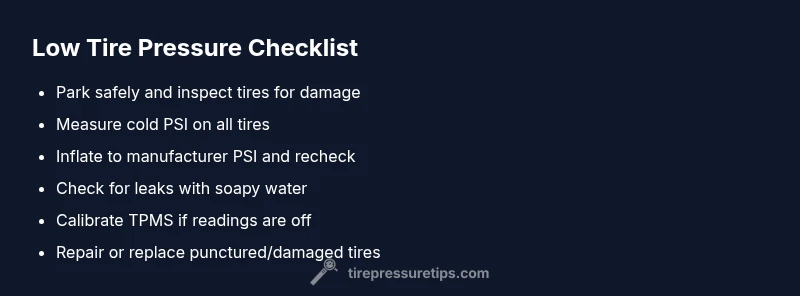
Immediate fix: check all tires for obvious punctures, look for leaks at valve stems, and top up to the recommended PSI if safe. If one tire is clearly losing air, replace the wheel or use a spare and inspect the rim. Then check TPMS readings and schedule a professional inspection if the issue persists.
Quick Safety Checks You Can Do Right Now
Parking on a flat surface, hazard lights on, and a calm, deliberate approach are the first steps when tire pressure keeps going down. According to Tire Pressure Tips, what to do when your tire pressure keeps going down begins with safety checks before you touch the air. Start by pulling over on level ground, engage the parking brake, and place wheel chocks behind the tires you are not inspecting. Visually inspect all four tires for nails, cuts, bulges, or glass, and listen for a hiss at the valve stems. If you spot a nail or screw, avoid aggressive driving until the tire can be repaired or replaced. Ensure you have a working air pump or access to a service station, and check pressures when the tires are cold. Don’t forget the spare—confirm it’s inflated and ready in case you need it. If you notice damage to the rim or bead area, call roadside assistance rather than attempting a risky repair. Finally, record the tire pressures for each wheel to establish a baseline for future checks.
Common Causes Why Tire Pressure Keeps Dropping
There are several reasons the pressure might keep dropping. The most common is a slow puncture or nail, which leaks air gradually and can be missed on a quick glance. Temperature fluctuations also affect PSI; hot days cause air to expand and cold nights cause it to contract, making near-limit tires seem to lose pressure more quickly. A faulty TPMS sensor or a loose valve core can show low readings that don’t reflect actual air loss, especially if the system is not calibrated. The wheel bead or rim can corrode or develop micro leaks, particularly on older vehicles or after pothole impacts. In some cases, a tire sealant or patch fixes a puncture temporarily, but persistent loss usually means a tire replacement is required. Consider gauge accuracy, tread wear, and the load you’re carrying, as these factors influence readings. If you observe rapid changes after short drives, document before-and-after PSI values to discuss with a technician.
How to Verify Tire Pressure Correctly
Always measure tire pressure when the tires are cold and the vehicle has been stationary for at least three hours or has been driven less than a mile. Use a reliable gauge and compare readings to the vehicle’s recommended PSI, which is typically on the door jamb or in the owner’s manual, not the maximum tire pressure printed on the sidewall. Check all four tires and the spare. If a tire is significantly below the recommended PSI, re-check after a few minutes of inflation to confirm it holds, then inspect for leaks, damaged valve cores, or bead leaks. Consider temperature and elevation effects when interpreting changes, and remember that the gauge’s accuracy matters—cheap gauges can give misleading numbers. Keep a small notebook or app log of PSI by wheel so you can spot trends over time, especially during seasonal changes.
Field Fixes: Quick Solutions
If you find a tire at or below recommended pressure, inflate to the correct PSI using a reliable air compressor. Use soapy water to check for leaks around the valve stem, bead, and sidewall; bubbles indicate leaks that may require patching or replacing the tire. For slow leaks from punctures, patching or plugging might be viable if the car is drivable and the tire is repairable per safety guidelines. If the TPMS reading seems unreliable, try inflating to the stated level and rechecking after driving a short distance to allow the system to recalibrate. If the leak persists or you see sidewall damage, don’t drive on the tire—seek professional help. In all cases, do not ignore continued loss, as a low-tire pressure can affect handling, fuel economy, and braking distance.
When to Seek Professional Help
Some tire pressure issues are better handled by professionals. If you experience a rapid, persistent drop in pressure on a single tire, or if a tire shows sidewall bulges, cords, or tread separation, schedule a tow and have the tire evaluated by a certified technician. If the TPMS warning is accompanied by repeating pressure loss across multiple tires after inflation, or if you cannot locate a leak with soapy water, contact a tire shop for a full inspection and possible TPMS calibration or replacement. For seasonal or temperature-driven fluctuations, a professional can assess whether your tire size, load, or alignment needs adjustment. Finally, if you’re unsure about safe operation, err on the side of caution and seek expert advice.
Prevention: Keeping Pressure Stable Across Seasons
Preventive maintenance pays dividends. Regularly check tire pressures at least monthly and before long trips, especially when temperatures swing widely. Maintain pressures within the vehicle manufacturer's recommended range, and adjust for load when carrying heavy cargo or multiple passengers. Calibrate the TPMS if readings seem off and replace faulty sensors promptly. Replace tires that show uneven wear or irreparable damage. Keep an eye on the valve stems and rims for corrosion or damage, and consider seasonal tire pressure checks if you drive in extreme heat or cold. By building a routine that includes measurement accuracy, leak detection, and timely maintenance, you reduce the risk of a roadside emergency caused by underinflated tires.
Steps
Estimated time: 45-60 minutes
- 1
Ensure safety and prepare
Park on level ground, engage the parking brake, and chock wheels. Gather a gauge, flashlight, and soapy water. Take a breath—safety first can prevent unnecessary injuries.
Tip: Always wear eye protection when inspecting tires for embedded objects. - 2
Visually inspect tires and valves
Look for obvious damage: nails, cuts, bulges, or cracked sidewalls. Spin each wheel to listen for air leaks and feel around the valve stems for looseness or corrosion.
Tip: Note anything you see or hear; it helps the technician diagnose later. - 3
Measure cold pressures
Use a reliable gauge and record the PSI on all four tires and the spare when cold. Compare to the manufacturer’s recommended PSI on the door jamb or owner’s manual.
Tip: If you don’t have the manual, check online by model year and trim for accuracy. - 4
Inflate and recheck
Inflate tires to the recommended PSI and recheck after a few minutes. If a tire leaks, recheck and inspect the bead area with soapy water for bubbles.
Tip: Do not overinflate beyond the tire’s max PSI printed on the sidewall. - 5
Evaluate TPMS and road test
Drive a short distance to see if TPMS readings recalibrate and if pressures stabilize. If not, avoid high-speed driving and seek a professional evaluation.
Tip: Document readings before and after driving to share with the shop.
Diagnosis: Tire pressure drops consistently on one or more tires after driving
Possible Causes
- highSlow puncture or nail leak
- mediumTemperature-related pressure loss
- lowTPMS sensor fault or inaccurate readings
Fixes
- easyInspect for punctures; patch or replace as needed; retest pressure
- easyInflate to correct PSI and drive 5–10 miles to see if it holds
- mediumHave TPMS sensor calibrated or replaced if readings are unreliable
Frequently Asked Questions
Why does tire pressure keep dropping after I inflate it?
Tire pressure can drop due to slow punctures, valve leaks, or temperature changes. A faulty TPMS can mislead you about actual air loss. Inspect the tire, test with a gauge, and look for leaks around the valve bead to determine the cause.
Tire pressure can drop after inflating due to leaks, temperature shifts, or a faulty sensor. Check for punctures and valve leaks, then test with a gauge.
Is it safe to drive on a low tire?
Driving on a noticeably low tire is unsafe. Reduce speed, avoid sharp turns, and seek a repair shop promptly. If a tire is near or below the recommended PSI, replace or repair before long trips.
It's not safe to drive on a low tire. Get it checked and repaired or replaced before long trips.
How often should TPMS sensors be checked or calibrated?
TPMS should be checked if readings seem inconsistent or after sensor replacement. Calibration may be required after tire changes or wheel rotations. Have a technician verify accuracy if the light stays on.
Check TPMS if readings are inconsistent or after sensor work. A tech can calibrate if needed.
Can temperature changes alone cause pressure loss?
Yes. Temperature shifts cause air to contract in cold weather and expand in heat, affecting PSI. This is more noticeable in tires near the minimum pressure.
Temperature changes can lower or raise tire pressure, especially for tires near the minimum PSI.
What should I do if I suspect a slow leak in a tire?
If you suspect a slow leak, inflate to the correct PSI and monitor over 24–48 hours. Check for punctures, bead leaks, and valve issues. Seek professional repair or replacement if the leak persists.
Inflate, monitor for 24–48 hours, and seek repair if the leak persists.
When should a damaged tire be replaced?
Replace a tire if there is irreparable tread damage, sidewall bulges, or repeated air loss after repair attempts. Safety should come first; driving on a damaged tire can be dangerous.
Replace a damaged tire—don’t risk driving on it.
Watch Video
What to Remember
- Check cold PSI with a reliable gauge.
- Inspect for punctures and leaks at the valve and bead.
- Calibrate or replace TPMS if readings are unreliable.
- Maintain tires within manufacturer PSI for safety and efficiency.