Reasons Why Tire Pressure Is Low: Troubleshooting Guide
Learn practical steps to diagnose and fix low tire pressure. From TPMS basics to safe driving tips, Tire Pressure Tips guides you through fast, clear troubleshooting.


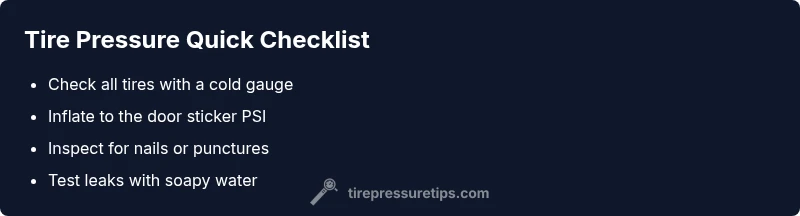
According to Tire Pressure Tips, the most common causes of low tire pressure are slow leaks from nails, punctures, or damaged valve stems, plus natural pressure loss from temperature changes. Quick fix: check all tires with a digital gauge, inflate to the vehicle’s recommended PSI, inspect for damage, and reseat the valve core if needed. If the issue persists, seek professional help.
Reasons why tire pressure is low
According to Tire Pressure Tips, the reasons why tire pressure is low often boil down to three broad categories: slow leaks from nails, punctures, or damaged valve stems; aging or damaged valve cores; and natural pressure loss caused by temperature changes and weather cycles. These factors can affect one tire or multiple tires, and they may occur alone or together. Understanding the common causes helps you quickly identify the source, reducing the risk of underinflation-related wear, poor handling, and potential tire failure. In many cases, simply repairing a puncture, replacing a faulty valve stem, or re-inflating to the correct PSI resolves the issue after the tire has cooled. Keep monitoring pressure after driving a short distance to confirm stability.
Temperature effects on tire pressure
Weather and temperature swings play a direct role in tire pressure. Cold mornings tend to lower PSI, while driving or hot days can raise it. The Tire Pressure Tips guidance emphasizes checking tires when they are cold, then rechecking after a short drive to confirm stability. Regular checks during seasonal transitions help you catch fluctuations early and prevent underinflation or overinflation that can wear tires unevenly or affect fuel efficiency.
Common culprits you can spot
- Nails, screws, or road debris puncturing tread or sidewalls
- Damaged or aging valve stems, defective cores, or loose caps
- Bead leaks or rim damage from potholes or curbs
- TPMS sensor issues producing erroneous readings These are frequent sources of slow leaks and inaccurate readings. A methodical check helps you identify which culprit is at play and decide on safe, effective fixes.
Visual inspection and hands-on checks
A systematic visual inspection saves time and money. Look for obvious tread damage, nails, or objects embedded in the tire. Check the valve stem for cracks or a loose cap, and ensure the valve core is seated. Inspect the bead area where the tire meets the rim for corrosion or damage. If you see bubbles around the tread or bead when you apply soapy water, you likely have a leak. Remember to inspect all tires, including the spare.
Quick fixes you can perform safely
Start by measuring cold tires with a digital gauge and inflate to the manufacturer’s recommended PSI. Recheck after the tires have cooled. If you detect a leak, attempt a basic repair or replacement: reseat or replace the valve core, replace a damaged valve stem, or patch a puncture if within your skill set and tire type. For persistent readings, issue may lie with the TPMS or rim seal—these require professional service. Do not drive long distances on obviously damaged tires; safety first.
When to seek professional help and next steps
If your tire pressures remain low after inflation, or if you notice sidewall damage, significant tread cracking, or slow leaks that reappear after patching, consult a tire professional. A shop can perform a leak-down test, check the rim seal, calibrate TPMS, and advise on tire replacement if needed. Regular maintenance and a professional inspection after weather extremes prevent future issues.
Prevention: keeping tire pressure stable
Establish a routine: check tire pressure monthly, before long trips, and after extreme temperature changes. Keep a quality gauge in your vehicle and trust manufacturer-recommended PSI. Rotate tires and have TPMS sensors inspected regularly. Consistent attention helps you avoid the causes of low tire pressure and extend tire life.
Steps
Estimated time: 30-60 minutes
- 1
Check all tires with a cold gauge
Begin by ensuring tires are cold for an accurate baseline reading. Compare each tire’s PSI to the vehicle manufacturer specification found on the door jamb placard or owner’s manual. Note any tire that shows a reading below spec.
Tip: Use the same gauge for consistency and measure all tires before driving. - 2
Inflate to the recommended PSI
Inflate tires to the recommended PSI for each tire, ensuring you stay within the tire’s maximum inflation limit. Do not exceed the max PSI printed on the tire sidewall. Recheck after tires cool for a few minutes to confirm stability.
Tip: Don’t overinflate; overinflation can cause uneven wear and poor handling. - 3
Inspect each tire for damage
Look for embedded nails, screws, or cuts in the tread. Inspect the sidewalls for cracks or bulges. Check valve stems for cracks or loose caps. If you suspect a puncture, avoid driving long distances.
Tip: Use a flashlight and mirror for hard-to-see areas and consider using soapy water to reveal slow leaks. - 4
Test for leaks with soap and water
Mix soapy water and apply to suspected areas (tread, sidewalls, valve stems). Bubbles indicate a leak. Mark the spot and re-check after a drive; if bubbles appear again, seek professional repair.
Tip: This is a safe, low-cost diagnostic step to locate leaks. - 5
Check TPMS readings and calibration
If the TPMS warning persists despite proper inflation, the sensor may be failing or miscalibrated. A technician can recalibrate or replace faulty sensors and inspect the wheel rim seal.
Tip: TPMS can fail or drift; routine calibration is essential. - 6
Plan professional maintenance when in doubt
If you cannot locate the leak or the pressure drops again after repair, schedule a tire service. A professional can perform leak-down tests, patch or replace tires, and verify TPMS function.
Tip: Safety comes first—don’t ignore persistent pressure drops.
Diagnosis: Tire pressure reads low on one or more tires, or TPMS warning light is on
Possible Causes
- highSlow leak from nail, puncture, or damaged valve stem
- highTemperature-related pressure loss (cold weather or rapid temperature swings)
- mediumValve core or stem degradation allowing slow leakage
- lowBead or rim seal leak after impact or corrosion
Fixes
- easyUse a digital gauge to confirm pressure on cold tires and inflate to the recommended PSI
- easyInspect valve stems, caps, and cores; replace damaged parts and reseat core as needed
- mediumLook for punctures or leaks; patch or replace tire as appropriate
- mediumIf pressures won’t stabilize or TPMS seems off, have a professional diagnose and calibrate TPMS
Frequently Asked Questions
What are the main causes of low tire pressure?
Low tire pressure is commonly caused by slow leaks from nails or punctures, valve stem damage, and temperature-related losses. In some cases, a faulty TPMS or rim seal can contribute. A systematic check helps identify the exact source.
The main causes are leaks, valve issues, and weather changes.
How often should I check tire pressure?
Check tire pressure at least monthly and before long trips. Always inspect when you notice handling changes or a TPMS warning. Regular checks catch leaks early and prevent unsafe driving.
Check monthly and before long trips.
Can TPMS be wrong or miscalibrated?
Yes, TPMS sensors can drift or fail, giving inaccurate readings. If you suspect a TPMS issue, have a technician test sensor health and calibrate or replace sensors as needed.
TPMS can drift; a tech can calibrate or replace sensors.
What PSI should my tires have?
Use the vehicle’s recommended PSI from the door jamb label or owner manual. Do not rely on the tire sidewall maximum; the car’s recommended PSI is tailored for handling and wear.
Follow the car’s recommended PSI, not the tire max.
What if I can’t find a leak after inspection?
If pressures drop without a visible leak, consult a tire professional for leak-down testing, potential rim seal issues, or TPMS calibration. Do not ignore recurring drops.
If no leak shows, a pro can test for covert leaks and sensor issues.
Watch Video
What to Remember
- Check pressure when cold, then inflate to spec
- Inspect valves and stems for leaks
- Use soapy water to locate slow leaks
- Calibrate or replace faulty TPMS promptly
- Regular maintenance prevents future underinflation