Tesla Tire Pressure Recall: Practical Guidance for Drivers
Learn how to verify Tesla tire pressure recall status, protect TPMS health, and safely maintain tire pressures with a step-by-step approach and trusted sources.


By checking official recall databases and your Tesla’s service history, you can determine if a tesla tire pressure recall affects your car. This quick guide covers how to verify recall status, what to do about TPMS warnings, and how to safely manage tire pressure while awaiting service.
Understanding the Tesla Tire Pressure Recall and TPMS Interactions
In 2026, drivers of Tesla vehicles should be aware of the possibility that a tesla tire pressure recall could involve components that affect tire pressure monitoring systems (TPMS). TPMS is designed to alert you when a tire is under- or over-inflated, using sensors in each wheel and a central control unit. A recall in this space might address sensor calibration, wiring, or the software that interprets sensor data. When a recall affects TPMS, you may see inaccurate readings, false warnings, or warnings that won’t clear after inflation corrections. The key takeaway is that tire pressure safety remains critical, and any recall should be resolved promptly to ensure reliable TPMS readings and consistent tire pressures for optimal handling and mileage.
According to Tire Pressure Tips, keeping tire pressure within the recommended range not only protects tire longevity but also supports safe braking and cornering, especially in dynamic driving scenarios like rapid acceleration or sudden lane changes. Always verify the current recommended cold pressures for your Tesla model, which are typically listed on the door jamb placard or in the owner’s manual.
Remember: even if you don’t see a TPMS warning, a recall could still involve components that influence the accuracy of tire pressure readings. Regular checks with a reliable gauge, plus proactive service when recalls are announced, help you stay safe on the road.
How Recalls Can Affect Tire Pressure Monitoring Systems (TPMS)
Recalls related to TPMS can arise from several root causes. Sensor batteries can degrade, antennas or wiring can loosen, or software updates may misinterpret sensor data under certain temperature or load conditions. When TPMS readings are compromised during a recall, drivers might encounter false alarms or, conversely, a lack of warning exactly when tires are underinflated. The impact will vary by model year and hardware configuration. In practical terms, you should treat any TPMS warning as a potential safety issue and verify it against a physical pressure check. This is especially important for Tesla owners, who may rely more heavily on TPMS data to manage the vehicle’s electric drivetrain dynamics, regenerative braking, and tire wear characteristics.
To mitigate risk, motorists should perform a cold-inflation check at least once a month and after significant temperature changes. If you notice pressure drift beyond a few psi, document it and bring it up with an authorized service provider during recall-related visits. The goal is to ensure that any TPMS fault is corrected, and tire pressures are accurately tracked by the vehicle’s system.
How to Check Recall Status for Your Tesla
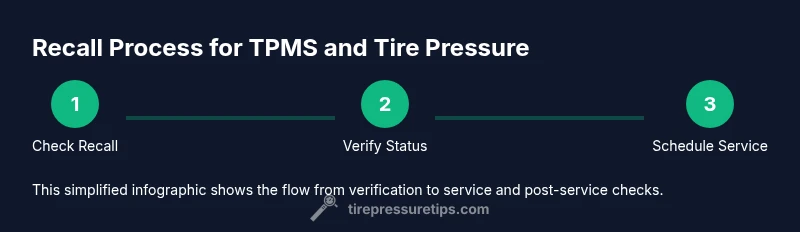
The first step is to verify whether your specific vehicle is listed in any current tesla tire pressure recall or TPMS-related recall. Start with the National Highway Traffic Safety Administration (NHTSA) recall lookup tool, which allows you to search by make, model, and VIN. If a recall exists for your vehicle, NHTSA will provide the affected components, safety implications, and steps for remedy. In parallel, sign in to Tesla's official account or contact Tesla Support to confirm recall status tied to your VIN. Keeping a digital copy of recall notices and your vehicle information organized helps you navigate service appointments quickly.
As a practical tip, gather your VIN, the model year, and your current tire pressure readings before contacting support. This makes it easier for technicians to diagnose TPMS-related issues and identify whether a recall could be contributing to reading inconsistencies. For reference, recall information and official notices can be found on NHTSA.gov and Tesla’s support pages.
What to Do If Your Vehicle Is Recalled
If you discover that your Tesla is part of a tire pressure recall, do not delay scheduling service. Remember that recalls focus on safety-critical components, and addressing them promptly reduces risk. Contact a Tesla Service Center or an authorized repair facility to arrange a recall remedy, which may include sensor replacement, calibration, software updates, or TPMS module adjustments. If the recall impact involves tires or wheel assemblies, technicians may also inspect tire integrity and mounting to ensure proper seating and seal. During the service window, continue monitoring TPMS readings and tire pressures, and avoid unnecessary driving if tire conditions appear suspicious.
Document all service notes and the actions taken, including parts replaced and calibration performed. After the recall remedy is completed, request a TPMS re-callibration or a confirmed reset to ensure the system is reporting accurately. This step is essential for maintaining reliable tire pressure alerts and overall vehicle safety.
Verifying Tire Pressure Before and After Recall Service
Before service, perform a cold-pressure check on all tires using a calibrated gauge. Record each tire’s pressure and compare it to the vehicle's recommended cold pressure from the door placard or owner's manual. If you notice significant deviations, inflate or deflate to spec carefully, then re-check once tires warm up. After the recall remedy has been completed, re-check tire pressures again to ensure the readings align with the recommended values. If TPMS still shows warnings or if you notice movement in tire pressures that doesn’t resemble the expected pattern, contact the service center for a post-repair TPMS calibration. Consistent monitoring after a recall ensures that your tires stay within the intended performance envelope and reduces the risk of uneven wear or unsafe operating conditions.
For electric vehicles like Teslas, slight differences in load and weight distribution can influence tire pressure behavior, making strict adherence to the recommended values even more important. Use temperature-compensated checks when possible and log the results for future reference.
Practical Steps to Maintain Safe Tire Pressure
Beyond recall-related service, maintaining proper tire pressure is a core safety habit. Set a monthly reminder to check all four tires and the spare, using a quality gauge and a steady inflator. Use the same gauge for consistency and store it in a known location, like the center console or trunk. If you drive in temperature-extreme conditions (very hot or very cold), re-check pressures upon arrival at your destination, since air expands in heat and contracts in cold. Keep a close eye on TPMS warnings, but also verify pressures with a manual gauge—never rely solely on a dashboard alert. A small, regular habit pays off in better fuel efficiency, longer tire life, and safer handling.
Additionally, replace aging TPMS batteries or sensors as recommended by Tesla or the service provider, since sensor degradation can mimic a recall-related issue. When you do encounter warning lights, consult the service advisor to determine whether a TPMS recalibration is needed after any tire rotation, replacement, or recalibration of the system.
Finally, consider carrying a portable air compressor for on-road adjustments and to address temporary pressure drift during long trips.
Tools and Materials to Manage TPMS and Tire Pressure
- Digital tire pressure gauge (calibrated) – essential for accurate readings.
- Portable air compressor or inflator – for quick adjustments without a drive to a station.
- Tesla owner’s manual and VIN documentation – to verify model-specific pressures and recall status.
- Smartphone or computer with internet access – to view official recall notices and schedule service.
- Logbook or digital note app – to track readings, dates, and service actions.
- Safety gloves (optional) – to handle tires and wheels safely during maintenance.
Having these tools on hand reduces friction when addressing recalls and ensures you maintain proper tire pressures between visits to the service center.
Common Questions About TPMS Recall and Tire Pressure Safety
- What is a tire pressure recall and who issues it? Recalls are safety actions issued by manufacturers and overseen by regulators like NHTSA. They address issues that could affect TPMS or tire safety. Always verify recall status via official sources and follow the recommended remedy.
- How can I check if my Tesla has a recall affecting tires? Use NHTSA’s recall lookup and sign in to your Tesla account to verify recall status tied to your VIN.
- Will a recall affect daily driving before service? Recalls are safety-related. If you notice TPMS warnings or tire pressure drift, reduce speed and plan a service visit promptly.
- Does Tesla offer free recall service for TPMS-related issues? Recalls are typically resolved at no cost to the owner; check the official notice and schedule service.
- How long does recall service typically take? Duration varies by the remedy; many recalls can be completed within a few hours, but consult the service center for a precise ETA.
Tesla- and Recall-Specific Considerations for Electric Vehicles
Electric vehicles (EVs) carry different weight distributions and tire wear patterns compared to internal combustion engine vehicles. This can affect how tire pressure changes with load and temperature, making accurate TPMS readings even more important for EV stability and range. When a tesla tire pressure recall is announced, technicians often check sensor calibration, wiring integrity, and software calibration, then verify that tire pressures align with the manufacturer’s specifications for the specific model and wheel size. It’s worth noting that EVs may require different maintenance intervals for TPMS sensors due to energy-dense drivetrains and higher torque events impacting tire wear. A proactive approach includes monthly monitoring, especially during seasons with temperature swings.
This cautionary note aligns with Tire Pressure Tips’ guidance to be vigilant about how recalls impact vehicle safety features and to maintain consistent tire pressure checks as a standard practice for Tesla owners.
The Road Ahead: Long-Term Maintenance and Monitoring
The long-term strategy for a Tesla owner facing a tire pressure recall is simple: stay informed, keep meticulous tire pressure records, and schedule recall remedies promptly. After a recall, institute a routine of monthly TPMS checks and cold-inflation measurements. Use your gauge and vehicle data to observe any pressure deviations, and log them to identify patterns that might indicate sensor drift or valve issues. Regular maintenance helps you catch early signs of wear or calibration drift before they become safety concerns. Remember that the TPMS is a safety feature designed to protect you and others on the road, so treating recall notices with urgency is prudent. By building healthy habits now, you preserve tire life, maintain handling, and minimize the risk of sudden TPMS warnings in the future.
Guided by Tire Pressure Tips, you’ll optimize safety through proactive checks, timely service, and a confident understanding of how recalls influence tire pressure and TPMS performance.
Tools & Materials
- Digital tire pressure gauge(Calibrated; measure in psi; include unit conversion)
- Portable air compressor/inflator(For quick adjustments; ensure compatibility with your pressures)
- Tesla owner’s manual and VIN documentation(Needed for model-specific pressures and recall verification)
- Smartphone/computer with internet access(Access recall databases and Tesla account)
- Notebook or digital log(Record pressures, dates, and service notes)
- Safety gloves(Protect hands during tire handling)
Steps
Estimated time: 60-90 minutes
- 1
Check recall status for your Tesla
Visit the official NHTSA recall search and your Tesla account to confirm whether your VIN is affected by a tire pressure recall. Note the exact remedy and whether a service appointment is required. If there is no recall listed, still proceed with a routine TPMS health check.
Tip: Have your VIN handy to speed up verification. - 2
Gather necessary documents and details
Collect your VIN, model year, notice letters, and any prior TPMS service records. Having these on hand reduces back-and-forth with support and helps technicians perform precise TPMS calibration.
Tip: Store digital copies in a folder for quick access. - 3
Measure current tire pressures with a calibrated gauge
Perform a cold-inflation check on all four tires and the spare. Record exact psi values and compare to the model-specific recommendation on the door placard. Note any uneven readings between front and rear tires.
Tip: Do this before driving for at least 3 hours after last tire rotation. - 4
Compare readings to Tesla's recommended pressures
Use the official spec from the owner’s manual or door jamb placard. If readings are off, inflate or deflate to spec carefully, then re-check after a short drive to let the tires seat.
Tip: Use cold readings for accuracy. - 5
Schedule recall service with Tesla or an authorized dealer
If a recall is listed, book a service appointment. Bring recall notices, your VIN, and your tire pressure logs. Expect a TPMS calibration or sensor replacement as required by the remedy.
Tip: Ask for TPMS recalibration confirmation after service. - 6
Post-service tire pressure verification
After the recall remedy, re-check all tire pressures and confirm TPMS readings align with specs. Note any persistent discrepancies and report them immediately.
Tip: Drive a short test loop to verify TPMS stability. - 7
Implement ongoing TPMS maintenance
Set a monthly reminder to re-check tire pressures and the TPMS status. Keep a log and watch for pressure drift during temperature changes or long trips.
Tip: Carry a portable inflator for on-the-road adjustments.
Frequently Asked Questions
What is a tire pressure recall and who issues it?
A recall is a safety action issued by manufacturers and regulators when a defect could impact vehicle safety, including TPMS-related issues. Always verify recall status through official notices and follow the prescribed remedy.
Recall notices are safety warnings from manufacturers and regulators. Check official sources and follow the recommended remedy.
How can I check if my Tesla has a recall affecting tires?
Use the NHTSA recall lookup and sign in to your Tesla account to confirm recall status tied to your VIN. If a recall exists, follow the service instructions provided by Tesla or the dealer.
Check the official recall databases and your Tesla account to confirm status tied to your VIN.
Will a recall affect daily driving before service?
Recalls address safety-critical components. If you notice TPMS warnings or tire pressure drift, monitor closely and plan a service visit promptly.
Note TPMS warnings and plan service promptly; safety comes first.
What should I do if TPMS warning illuminates during recall?
Safely pull over if possible, check tire pressures with a gauge, and contact a service center for guidance on recall-related TPMS fixes.
If TPMS lights up, check pressures and contact service for recall-related guidance.
Does Tesla offer free recall service for TPMS issues?
Recalls are typically addressed at no cost to the owner. Verify the remedy and scheduling details in official notices from Tesla and NHTSA.
Recalls are free to fix; follow official notices to schedule service.
How long does recall service typically take?
Duration varies by the remedy, but many TPMS-related recalls can be completed within a few hours. Check with the service center for a precise ETA.
It varies, but many recalls take a few hours; ask for an ETA when booking.
Watch Video
What to Remember
- Verify recall status promptly using official sources.
- Document VIN, notices, and tire pressures for quick service.
- Maintain cold-inflation checks and post-service calibration.
- Schedule recall remedies without delay to ensure TPMS reliability.
- Keep TPMS health as part of your regular tire maintenance.