Why Is Tesla Tire Pressure So High? A Practical Guide
Discover why Tesla tire pressure readings can appear high, how TPMS and temperature affect measurements, and practical steps to troubleshoot and adjust pressures safely for optimal EV performance.


Tesla tire pressure often reads high because temperature effects and TPMS calibration influence the reading more than you might expect, especially after a drive. The quickest fix is to check cold pressures against the manufacturer spec, reset the TPMS if needed, and recheck after the tires have cooled. If readings stay high, follow the step-by-step checks below.
Understanding the Tesla Tire Pressure Surprise
If you’ve asked yourself why is tesla tire pressure so high, you’re not alone. In practice, EVs complicate tire pressure readings because the combination of heavy battery packs, frequent rapid acceleration, and varied road temperatures can shift psi quickly. The phrase becomes common when a Tesla owner checks the door sticker pressures after a trip and finds numbers higher than expected. The underlying physics is simple: when tires warm, air expands and pressure rises; multiple sensors respond in real time, and the TPMS translates those changes into a warning or a number on the dash. The Tire Pressure Tips team notes that the most reliable way to interpret a number is to compare it to the cold- tire specification printed on the door jamb and to recheck after the tire has cooled for several hours. That approach helps distinguish a temporary fluctuation from an actual issue. Throughout this article we’ll tie the science to practical checks you can perform without special tools.
How TPMS and Temperature Interact in Electric Vehicles
Tesla uses a Tire Pressure Monitoring System (TPMS) that relies on sensor data from each wheel. The readings can be influenced by ambient temperature, road heat, and even the vehicle’s load. When tires warm, air expands and pressure increases; this is why you might see higher numbers after a highway drive or parked in direct sun. EVs often carry heavier packs and unique suspension dynamics, which can affect tire heat and load distribution. The key takeaway is to always start from the cold- tire pressure spec on the door sticker and recheck when tires are cold. This helps determine whether a high reading is a temporary fluctuation or a persistent issue requiring investigation.
Common Causes That Make Tesla Readings Seem High
There are several plausible explanations for elevated tire pressure readings in a Tesla:
- Temperature rise from driving, braking, or sun exposure, which increases psi.
- Recent inflation to a higher PSI than the manufacturer recommends, whether intentional or accidental.
- TPMS sensor calibration drift or a sensor fault, which can misreport pressure.
- Per-tire factors such as valve stem leakage or stem corrosion that slowly alter readings over time.
- Load changes or tire wear that change how heat builds up in a given tire during operation. Recognizing these causes can help you decide whether you should simply take a recheck after cooling, or perform deeper diagnostics with TPMS recalibration.
How to Troubleshoot and Verify Readings
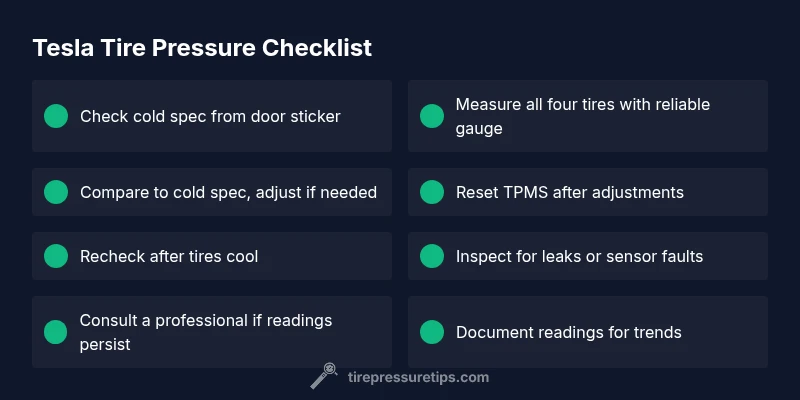
Start with the simplest checks and move to more involved steps if the issue persists. Always compare each tire against the vehicle’s recommended cold tire pressure and ensure tires are cold when you measure. Use a reliable gauge and record readings for all four tires. If readings are consistently high across tires after a proper cold check, consider TPMS recalibration and potential sensor fault. Document any recent inflation history and parking conditions, as these can influence short-term readings. If the problem remains after these checks, seek professional diagnosis to rule out sensor or control-module issues with the TPMS system. Safety first: never ignore a persistent odd reading, especially if it coincides with heavy load or aggressive driving.
Safety, Maintenance, and When to Seek Help
Persistent high readings can indicate a calibration issue or an actual overpressure situation, which can affect handling and tire wear. Always avoid exceeding the tire’s maximum pressure rating on the sidewall, and maintain pressures per the vehicle’s door sticker under cold conditions. Regular checks help prevent uneven wear, reduce the risk of blowouts, and preserve range efficiency. If you notice repeated high readings after recalibration or suspect a faulty TPMS sensor, contact a dealership or qualified tire technician. The Tire Pressure Tips team emphasizes routine checks as a proactive habit for long-term EV safety and performance.
Steps
Estimated time: 15-25 minutes
- 1
Check the official cold tire pressure spec
Locate the door sticker or owner’s manual to find the recommended cold tire pressure for your Tesla model. Ensure you’re comparing against a cold tire measurement, as heat can temporarily raise psi.
Tip: Make sure tires have cooled for at least 3 hours for an accurate baseline. - 2
Measure all four tires with a reliable gauge
Use a pressure gauge you trust and record each tire’s reading. Note whether all four match the spec or if one tire differs markedly.
Tip: Take readings after the car has sat idle in shade, not after a drive. - 3
Compare readings to the spec and adjust if needed
If any tire is above the cold spec, release air gradually to reach the recommended level. Do this on all tires to maintain even pressure.
Tip: Avoid over-deflating; you should aim for the exact cold spec. - 4
Reset or relearn TPMS if supported
In Tesla models, you can trigger a TPMS reset or relearn procedure through the settings. This helps the system rebenchmark after a real change in pressure.
Tip: Consult the owner’s manual for model-specific steps. - 5
Recheck after tires cool
After adjusting, wait for the tires to cool again and remeasure. Ensure the final readings align with the cold spec across all wheels.
Tip: Consistent readings across tires are a good sign. - 6
Inspect for leaks or sensor issues
If a tire consistently reads high despite correct pressure, inspect the valve stem and TPMS sensors for damage or leakage.
Tip: A professional can test sensor integrity with specialized equipment. - 7
Consider road conditions and load
High load or long highway trips can temporarily raise pressure. If you regularly drive with heavy loads, you may need a slight adjustment to your cold spec.
Tip: Document your typical driving patterns. - 8
Seek professional help if needed
If readings stay abnormal after all checks, schedule a diagnostic with a dealer or tire specialist to check TPMS sensors and control modules.
Tip: Do not ignore persistent anomalies—safety matters.
Diagnosis: Tire pressure reading higher than expected on a Tesla, TPMS warning active
Possible Causes
- highTPMS sensor calibration drift or fault
- mediumRecent inflation to higher PSI than the manufacturer spec
- lowAmbient temperature or driving heat causing temporary rise
Fixes
- easyRelearn or recalibrate TPMS via the vehicle’s TPMS settings menu
- easyMeasure each tire when cold, compare to the door sticker, and adjust to the recommended cold pressure if necessary
- mediumIf readings remain high after recalibration, have TPMS sensors or the control module diagnosed by a dealer or tire professional
Frequently Asked Questions
Why does Tesla tire pressure read higher after a drive?
Tire pressure increases with temperature as air expands when tires heat up during driving. This can make readings appear higher after a drive, especially on sunny days or in warm weather. Always compare to the cold-spec and recheck when the tires are cold.
Tire pressure goes up when tires heat up after driving, so check when cold to confirm actual pressure.
Should I worry if TPMS shows high pressure on my Tesla?
High readings aren’t always dangerous, but persistent high pressure should be checked to rule out sensor faults or actual overinflation. Start with a cold-pressure check and compare to the sticker, then consider TPMS reset.
If TPMS shows high pressure consistently, start with a cold check and possibly reset the sensor.
How do I reset TPMS on a Tesla?
TPMS reset procedures vary by model. Generally, use the vehicle’s settings to perform a TPMS relearn or reset. Consult your owner’s manual for model-specific steps.
Use the car’s TPMS relearn option in settings; if unsure, check the manual.
Can overinflated tires affect range or safety?
Yes. Overinflated tires can reduce grip and cause uneven wear, impacting handling and potentially efficiency. Keep tires at the recommended cold pressure for best performance.
Overinflated tires can hurt handling and wear; stick to the recommended pressure when tires are cold.
Is it normal for tire pressure to change with weather?
Weather and temperature changes routinely affect tire pressure. Expect some fluctuation; what matters is whether the readings stay consistently above the cold spec.
Yes, weather changes affect tire pressure, but persistent high readings deserve a check.
When should TPMS sensors be replaced?
Sensors typically last many years, but if readings drift abnormally and recalibration doesn’t help, a professional check is warranted to determine replacement needs.
If readings stay off after checks, a professional should assess sensor health and replacement needs.
Watch Video
What to Remember
- Check cold pressures before interpreting high readings
- Reset TPMS if readings seem anomalous
- Measure all tires for consistent patterns
- Seek professional help if readings stay high after checks