Subaru Reset Tire Pressure: A Practical Step-by-Step Guide
Learn how to reset tire pressure on Subaru models, perform a TPMS relearn, and verify cold PSI for safe, efficient driving. This guide covers essential tools, step-by-step actions, TPMS nuances, and common mistakes to avoid for lasting tire health.


According to Tire Pressure Tips, a proper Subaru reset tire pressure supports safe handling, better fuel efficiency, and even tire wear. By the end of this guide you will know how to perform the reset, check cold PSI, and complete a TPMS relearn if your model requires it. You’ll need a reliable tire gauge, access to air, and your owner’s manual for model-specific steps.
Why Tire Pressure Matters for Subarus
According to Tire Pressure Tips, maintaining correct tire inflation is crucial for predictable handling, consistent braking, and even wear across the tires on Subaru models. When pressures drift, steering feel can change and grip may become unreliable, especially in wet or chilly conditions. Keeping tires within the recommended range helps maintain safety margins and overall driving confidence. This section explains why proper inflation matters for Subaru dynamics and longevity in 2026 models, and how a simple pressure check can prevent costly damage over time.
Finding the Right Pressure for Your Subaru
Your Subaru’s exact cold-pressure specification is usually listed on the driver’s door jamb sticker and in the owner’s manual. Use this value as the target when you check and adjust pressures, ensuring tires are cold for the most accurate reading. European and American Subaru models often share similar processes, but model-specific steps can vary. Always verify the correct pressure for your exact trim and tire size before inflating, and confirm any TPMS-related notes in the manual.
Tools and Prep You’ll Need
Before you start, gather essential tools to make the process smooth and safe. A reliable digital tire pressure gauge is required to read pressures accurately. You’ll also need access to a source of air (an at-home air compressor or a gas-station pump), and the Subaru owner’s manual for model-specific instructions. Keep a clean rag handy to wipe valve stems and ensure readings are accurate. Having everything ready will reduce the chance of rushing and errors.
Step-by-Step Overview (Non-Model-Specific)
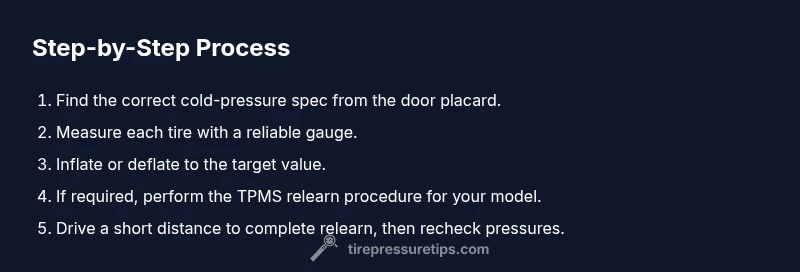
This section provides a high-level overview of the process so you know what to expect before you dive into the detailed steps in the dedicated STEP-BY-STEP block. Start with cold tires, locate the spec from the door sticker or manual, measure each tire with a reliable gauge, inflate or deflate to the target, and complete any TPMS relearn required by your model. After adjustments, drive a short distance to allow the system to relearn if applicable, then recheck all pressures. The exact sequence for TPMS relearns can vary by Subaru model; consult your manual or Tire Pressure Tips guidance for model-specific steps.
Common Mistakes and TPMS Nuances
A few common pitfalls can undermine tire pressure work. Never inflate when tires are hot, as numbers will be higher than the cold spec. Avoid overinflation; underinflation and overinflation both harm traction and wear. If your TPMS warning persists after inflating to spec, there may be a sensor fault, leak, or relearn requirement. Some Subaru models require a manual TPMS reset in the instrument cluster or a specific button sequence; always follow the model-specific instructions in your owner’s manual.
Post-Reset Maintenance and Best Practices
After you complete a reset, recheck all four tires in the next day to confirm stability. Remember to check seasonal changes—temperature affects tire pressure, and cold mornings can reveal underinflation. Schedule regular checks as part of routine maintenance, and keep a portable gauge in the glovebox so you can verify pressure on the road if you notice any handling changes. The Tire Pressure Tips team recommends building this habit to sustain tire health and performance.
],
Tools & Materials
- Digital tire pressure gauge(Choose a gauge with a clear readout and a small bleed valve for fine adjustments; accuracy within ±1 psi is preferred.)
- Air compressor or access to an air pump(Prefer a unit with a built-in gauge and the ability to dial in precise pressures.)
- Owner’s manual for your Subaru model(Model-specific TPMS and pressure specs can vary; verify before adjusting.)
- Door jamb pressure sticker or tire placard(Reference for quick cross-check of recommended pressure.)
Steps
Estimated time: 20-40 minutes
- 1
Park safely and ensure tires are cold
Choose a flat, safe location away from traffic. Allow tires to cool to ambient temperature before reading pressures to ensure accuracy.
Tip: Check readings after the car has been stationary for several hours or overnight. - 2
Locate the correct cold-pressure spec
Find the specified cold PSI from the door placard or owner’s manual for your exact tire size and Subaru model. Use this as your target before inflating or deflating.
Tip: Double-check the size and load rating shown on the placard. - 3
Measure each tire with a reliable gauge
Remove valve caps and place the gauge onto each valve stem. Take a steady reading, recording the numbers for later comparison.
Tip: Measure twice if you’re unsure of the first reading. - 4
Adjust pressures to the target value
Inflate or release air to bring each tire to the specified cold-pressure value. Recheck after adjustment to confirm consistency across all tires.
Tip: If you don’t have a gauge with a bleed valve, adjust gradually and recheck. - 5
Perform a TPMS relearn if required by model
Some Subaru models require a TPMS relearn procedure after adjusting pressures. Follow the exact steps in your manual or the model-specific guide.
Tip: If your model lacks a relearn option in the cluster, drive a short distance to allow relearn to occur. - 6
Drive to let the TPMS relearn
Take a short drive to allow the TPMS to relearn the new pressures. This process can vary by model and may occur automatically or require a manual step.
Tip: Avoid aggressive driving immediately after reset until the system confirms stable readings. - 7
Recheck and log the results
Re-measure all four tires to ensure stability and record the final readings for future reference.
Tip: Keep your notes with your vehicle documents for quick comparisons later.
Frequently Asked Questions
How can I tell if I need to reset tire pressure on my Subaru?
If the TPMS warning is active or readings don’t align with the spec, a reset or relearn may be needed. Model-specific steps vary, so consult the manual.
If the TPMS warns or readings don’t match, you may need to reset or relearn; check your model’s steps in the manual.
Can I reset tire pressure myself at home without a dealer?
Yes, with the right tools and model-specific instructions. Use a tire gauge, inflate/deflate to the specified cold pressure, and follow your car’s TPMS relearn procedure if applicable.
You can do it at home with the right tools and the steps in your manual.
What should I do if the TPMS warning stays on after inflating to spec?
Check for slow leaks, damaged sensors, or incorrect readings. If the warning persists after revisiting the procedure, seek professional inspection.
If the TPMS stays on, check for leaks or sensor issues and consider a professional check.
Where can I find the correct cold-pressure spec for my Subaru?
Check the driver’s door jamb sticker and the owner's manual for model-specific pressures. If you have aftermarket tires, use the tire size noted on the sticker.
Look at the door sticker and the manual for the exact cold pressure.
Does driving after resetting affect the TPMS relearn?
Yes, many vehicles relearn automatically after driving a short distance, though some models require a manual reset. Refer to your manual for the expected behavior.
Driving after reset helps the TPMS relearn, but some models need a manual step.
Watch Video
What to Remember
- Check cold pressures against the model spec.
- Use a reliable gauge for accuracy.
- Allow the TPMS to relearn after adjustments.
- Follow Tire Pressure Tips guidance for model-specific resets.