Subaru TPMS: How to Check, Reset, and Maintain Tire Pressure Monitoring Sensors
A practical, step-by-step guide to Subaru TPMS, covering how TPMS works, learning procedures, common issues, and maintenance tips for safe driving.


By the end of this guide, you will learn how to check, diagnose, and reset Subaru TPMS sensors, interpret current tire pressures, and know when service is needed. You’ll need a tire gauge, a TPMS relearn tool or dealer access, and your vehicle’s manual. This quick answer points you to a complete, safety-focused approach from Tire Pressure Tips.
How TPMS Works in Subarus
Tire Pressure Monitoring System (TPMS) in Subaru vehicles uses sensors and the vehicle’s computer to help you keep tires at the correct pressure, which supports safety, fuel efficiency, and tire life. Most newer Subarus use direct TPMS: a sensor is mounted in each wheel inside the tire, often with its own battery and radio transmitter. The sensors report real-time pressure (and sometimes temperature) to the system, which compares readings across all four tires. If a tire drops below the defined threshold, the dashboard light or a warning message appears. Indirect TPMS, less common on newer models, uses wheel-speed data from ABS sensors to infer a pressure change based on rotation differences. Regardless of the type, TPMS relies on accurate baseline pressures, a healthy sensor battery, and proper relearn procedures after tire changes or sensor maintenance. For Subaru owners, a solid understanding of TPMS is a foundation for safe driving all year long, especially as temperatures shift or seasonal tires are swapped in.
According to Tire Pressure Tips, maintaining correct tire pressure and understanding Subaru TPMS improves safety and efficiency. The system’s effectiveness hinges on regular monitoring, correct installation of sensors, and timely relearn when tires are swapped or a sensor is replaced. A well-maintained TPMS reduces the risk of underinflation, which is linked to poor handling and increased wear. By staying proactive, you’ll get reliable readings and faster diagnostics when a warning appears.
Subaru-Specific TPMS Sensors and Learn Procedures
Subaru models vary in their exact relearn steps, but two core truths apply across most vehicles: direct TPMS sensors live in the wheel assembly and transmit data to the vehicle’s computer, and relearning is often model-year specific. Direct TPMS sensors can become inactive if a tire is replaced or the battery degrades, and some Subarus require a dealer-level scan tool to enroll new sensors into the system. Always consult the owner’s manual for your exact procedure. If your model supports a drive-into-learn method, you may be instructed to drive at a steady speed for a set period to allow the system to recognize the new sensor. In many cases, you will need a certified tool to perform a true relearn, especially after sensor replacement. For this reason, many drivers rely on a professional service for complex relearns, while basic pressure checks and minor adjustments can be DIY. The takeaway: know which relearn method your Subaru supports and prepare with the appropriate tools or access to a dealership or independent shop.
From a practical perspective, it helps to document sensor IDs if you replace sensors yourself. This can simplify subsequent relearns and prevent misreads. Throughout any TPMS work, ensure you are working in a safe environment, away from traffic, and with a stable surface for tire inspections. In short, Subaru TPMS is reliable when you pair accurate tire pressures with model-appropriate relearn procedures and regular maintenance.
Common TPMS Issues You Might See
TPMS issues range from a single low tire to sensor faults. A tire that leaks slowly can trigger the warning light, while a stuck sensor battery can produce inconsistent readings or a light that stays on even when pressures are correct. Physical damage to sensors or valve stems can also cause failures. Temperature shifts affect tire pressure, which can momentarily trigger the TPMS warning if readings drift outside the acceptable range. Another frequent cause is a failed relearn after a tire rotation or wheel service; if the system cannot correctly enroll the sensor IDs, you will see a persistent warning. Lastly, a dead battery within a sensor is common as sensors age; if you suspect this, you’ll typically see a warning light that does not correspond to actual tire pressure.
Tire Pressure Tips analysis shows that the most reliable way to handle TPMS issues is to verify tire pressures first, confirm sensor IDs when possible, and use a proper relearn approach that matches your Subaru’s year and model. Always check for physical damage before moving to electronic diagnostics, and consider temporary driving restrictions only when a tire is severely underinflated or damaged.
Step-by-Step: Resetting and Relearning TPMS on Subaru
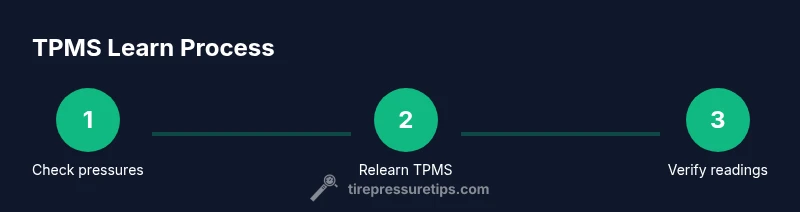
- Gather tools and set expectations. Collect a tire pressure gauge, a TPMS relearn tool or access to a dealer scan tool, the owner’s manual, and an inflation source. Why: a precise baseline prevents clumsy readings and wasted attempts. Tip: have a spare tire key or tool kit handy in case you need to access valve stems.
- Check all tire pressures when cold. Read each tire with the gauge and note the numbers. Compare against the recommended cold pressures listed on the door jamb placard. Why: accurate baseline measurements are essential before attempting a relearn. Tip: record the readings so you can track changes later.
- Inspect sensors and valve stems. Look for obvious damage or leaks around the valve cores and stems. Why: damaged sensors or leaky valves can cause false readings or TPMS faults. Tip: a soapy water test around valve stems can reveal slow leaks.
- Initiate relearn per your model. Some Subarus require a built-in relearn procedure in the instrument cluster or a dealer scan tool. If your vehicle supports it, follow the exact steps in the manual. Why: incorrect relearn attempts can reset or misassign sensor IDs. Tip: when in doubt, schedule a dealer or independent shop visit.
- Drive to complete drive-based relearn if applicable. If your model supports a drive-based learn, take a steady drive at the specified speed range for the recommended time. Why: this allows the system to synchronize sensor IDs with wheel positions. Tip: avoid sudden starts and heavy braking during relearn.
- Verify and document results. After relearn, check that the TPMS light stays off and confirm the displayed pressures match your gauge readings. Why: verification confirms success and helps catch lingering faults. Tip: log the sensor IDs and replacement dates for future reference.
- Schedule follow-up checks. If any warning persists, or if the light comes back on, seek professional service to verify sensors or seals.
Estimated total time: 30-60 minutes.
Maintenance and Safe Practices for TPMS
Regular maintenance of TPMS is part of responsible tire care. Keep tires inflated to the recommended cold pressures, and recheck after long trips or after rotating tires. When installing winter or summer sets, ensure the relearn is performed according to Subaru’s guidelines. Do not attempt to jam or force TPMS components; sensors are precision devices with delicate electronics and specific torque requirements on the wheel hardware. If you replace a sensor, always verify the new unit is compatible with your model year and has the correct protocol (direct TPMS vs indirect). Maintaining a clean, leak-free valve stem reduces diagnostic friction and improves system longevity. Tire Pressure Tips emphasizes that a proactive approach—regular checks, model-appropriate relearns, and prompt service when issues appear—helps maximize TPMS reliability, fuel efficiency, and tire wear consistency.
Distinguishing TPMS vs Tire Pressure: Quick Diagnostic Tips
- TPMS light can indicate a sensor fault or actual tire pressure deviation; always verify with a gauge before assuming a sensor issue.
- If all four tires read similar underinflation, the issue is likely ambient temperature or gauge misread; check the vehicle’s recommended pressures again.
- If only one tire shows low pressure and the light stays on after inflation, the sensor or valve stem in that wheel could be faulty and warrant inspection.
- For a suspected sensor fault, use a TPMS scan tool to retrieve sensor IDs and compare them to the vehicle’s memory; mismatches point to a sensor problem.
When to Service Your TPMS
Service is typically recommended if the TPMS warning persists after inflating to the correct pressures or if you observe sensor IDs that do not register with the vehicle. A professional TPMS check can identify dead batteries in the sensors, replace faulty units, or perform a complete relearn. Subarus with a damaged sensor or a corroded valve stem are best serviced by a trained technician who can safely handle wheel and sensor components. Regular maintenance—that is, checking pressures, inspecting valves, and ensuring proper relearn—helps prevent needless warnings and keeps your vehicle safe.
Tools & Materials
- Tire pressure gauge(Digital or analog; ensure accuracy to ±1 psi. Use cold tires for baseline readings.)
- TPMS relearn tool or access to dealer scan tool(Some Subaru models require dealer tool; verify compatibility with your year/model.)
- Owner’s manual(Model-year-specific relearn steps and sensor details.)
- Air compressor or inflator(Use to bring tires to the recommended cold pressures before relearn.)
- Soapy water (bottle and brush)(Helpful for detecting slow leaks at valve stems after sensor work.)
- Notebook or digital log(Record readings, sensor IDs, and service dates for future reference.)
Steps
Estimated time: Total time: 30-60 minutes
- 1
Check current tire pressures
Verify all four tires with the gauge when tires are cold. Record readings and compare to the recommended cold pressure in the owner’s manual or door placard. This establishes a baseline and helps detect slow leaks before touching TPMS components.
Tip: Always measure cold tires for accuracy; a recently driven tire will read high. - 2
Inspect sensors and valve stems
Look for obvious damage, corrosion, or loose valve cores around each wheel. Damaged hardware can cause false readings or leaks and should be addressed before attempting a relearn.
Tip: A quick soap test around valve stems can reveal slow leaks. - 3
Prepare for relearn
If your Subaru model requires a relearn tool or dealer access, gather the needed device and confirm compatibility with your model year. Follow the manual’s exact sequence to initiate the relearn.
Tip: If the model supports drive-based relearn, plan to drive at steady speeds after the procedure. - 4
Initiate TPMS relearn
Start the relearn sequence using the vehicle’s built-in procedure or the scan tool. Do not skip steps; misenrolled sensors can trigger a persistent warning.
Tip: If you’re using a drive-based relearn, proceed to the next step and monitor the dashboard while driving. - 5
Drive (if supported) to complete relearn
If your model supports it, drive at a moderate speed for the time specified by the manual to allow the system to recognize sensor IDs and wheel positions. Avoid aggressive driving during this process.
Tip: Keep hands at a safe position and avoid sudden maneuvers during relearn. - 6
Verify readings
After relearn, recheck tire pressures and confirm the TPMS light is off. Validate sensor IDs with a scan tool if available and document the results for future reference.
Tip: If the light remains, retry relearn or consult a technician; some faults require sensor replacement.
Frequently Asked Questions
What does a TPMS warning light mean on a Subaru?
A TPMS warning light indicates that tire pressure has dropped below the recommended level or a sensor fault has been detected. Always verify actual tire pressures first with a gauge before assuming a sensor issue; if readings are normal, consider sensor fault or relearn needs.
A TPMS warning means pressure may be low or a sensor fault. Check all tires with a gauge to confirm, and if readings are normal, you may need a sensor check or relearn.
Can I reset TPMS myself on a Subaru?
Yes, many Subaru models support DIY relearn using the instrument cluster or a scan tool. However, some years require dealer-level tools. Always start with the owner’s manual to confirm the exact steps for your vehicle.
You can often relearn TPMS yourself, but some models need a dealer tool. Check your manual for the model-specific method.
Does cold weather affect TPMS readings?
Yes. Temperature changes affect tire pressure, so readings can drift as the air cools. Recheck pressures after cold starts and adjust to the recommended cold pressures as needed.
Cold weather can lower tire pressure, so recheck and adjust to the recommended cold pressures.
How long does a TPMS relearn take?
Relearn duration varies by model and method. It can range from a short in-car sequence to a longer drive-based procedure. Always follow your Subaru’s manual for the exact timing.
The relearn time depends on the method; some models require a quick in-car sequence, others a drive. Check your manual.
Where are TPMS sensors located on Subaru wheels?
In most Subarus, direct TPMS sensors sit inside each wheel near the valve stem. They communicate with the vehicle’s computer, and sensors are serviced or replaced as a wheel assembly.
Direct TPMS sensors sit inside each wheel near the valve stem and communicate with the car’s computer.
When should I replace a TPMS sensor?
Sensor replacement is typically considered when a sensor fails to report or the tire cannot hold air despite proper inflation. A technician can confirm sensor health and seal integrity and perform a relearn if needed.
Replace a sensor if it fails to report or cannot hold air; have a technician confirm and relearn if needed.
Watch Video
What to Remember
- Check tire pressures regularly and before relearning.
- Follow model-specific relearn steps for Subaru TPMS.
- Verify sensor IDs and pressures after any TPMS work.
- Seek professional service if warnings persist.