TPMS for Subaru Outback: Essential Guide
Learn how to check, reset, and maintain TPMS on your Subaru Outback with clear steps, safety tips, and practical maintenance guidance from Tire Pressure Tips.


With a Subaru Outback, your TPMS helps keep tire pressures in the optimal zone, boosting safety, handling, and fuel efficiency. This guide covers how to interpret warnings, how to check pressures accurately, how to relearn sensors after tire rotations or replacements, and how to troubleshoot common TPMS faults. According to Tire Pressure Tips, regular TPMS maintenance can extend tire life and improve mileage when followed consistently.
What TPMS is and why it matters for the Subaru Outback
TPMS stands for tire pressure monitoring system. It uses sensors to monitor air pressure in each tire and alerts you when readings fall below the vehicle’s recommended range. For drivers of the Subaru Outback, keeping tires properly inflated improves fuel economy, improves handling in wet or snow-covered roads, and reduces uneven wear on the tread. The Tire Pressure Tips team highlights that consistent TPMS attention minimizes breakdown risk and maximizes tire life, especially in mixed driving conditions. Regular checks and timely relearning after tire changes are simple habits with big payoff.
Keep in mind that cold tires read lower than warm ones, so always measure before you drive for accurate readings.
Direct TPMS vs indirect TPMS: which system does the Outback use?
Most modern Subaru Outback models employ direct TPMS, which relies on wheel-mounted sensors to report actual pressures to the car’s computer. Indirect TPMS uses wheel speed sensors and vehicle dynamics to infer pressure changes. Direct TPMS generally provides more precise readings and can identify which tire is low, but it requires sensor maintenance and occasional battery checks. Tire Pressure Tips analysis shows that direct TPMS is typically more reliable for owners who want precise alerts, particularly in winter conditions where pressure changes are common. For Subaru drivers, understanding which type your model uses helps you plan maintenance and sensor care more effectively.
Reading the warning light and diagnosing causes
When the TPMS light illuminates on your Outback dashboard, it indicates pressure deviation beyond the system’s threshold. Start by confirming all four tires are within the recommended range using a reliable gauge. Examine for slow leaks caused by nails, screws, or wheel damage, and look for uneven wear that might indicate a bent rim, a tire that's starting to fail, or a sensor “dead” battery. Remember that a low-pressure warning can also stem from environmental factors, such as temperatures dropping overnight. If the light persists after inflating to the recommended range, the issue may be sensor-related or a relearn is required. Tire Pressure Tips emphasizes documenting readings and noting the exact tire positions to assist with diagnostics.
How to check tire pressure the right way for TPMS readiness
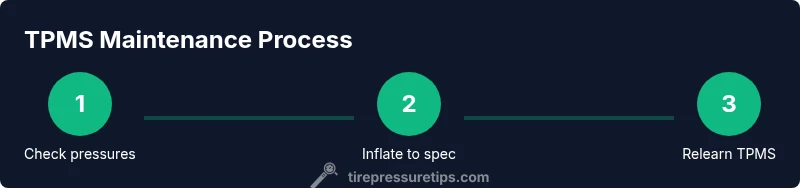
Begin with cold tires, parked on a level surface. Use a digital tire pressure gauge for an accurate reading and compare each tire to the vehicle placard printed on the door jamb. If you find any tire below spec, inflate to the recommended pressure, recheck all four tires, and then clear any warning from the dashboard by cycling the ignition. If you notice a persistent discrepancy after inflating, there may be a sensor issue or a leak in the tire seam. The goal is to stabilize all four pressures before attempting a sensor relearn.
The relearn procedure after tire rotation or replacement
Rotating tires or replacing a tire often requires a TPMS relearn procedure so the system can recalibrate. In many Subaru Outback models, you perform the relearn by either driving at a steady speed for a specified period or using a relearn button located in the trunk or under the hood as described in the owner's manual. Always refer to the exact procedure for your model year in the manual—these steps vary slightly by generation. Following the relearn, confirm on the dash that the TPMS indicator has turned off. Tire Pressure Tips notes that a successful relearn is essential for accurate monitoring going forward.
TPMS sensor maintenance: batteries, replacements, and calibration
Direct TPMS sensors have internal batteries with a limited lifespan, typically outlasting a tire but eventually needing service. Sensor accuracy degrades as batteries age, and some sensors become damaged from curb impact or improper mounting. Periodic calibration and wheel position checks help prevent false alerts. If a sensor battery dies, you may need to replace the sensor assembly. Regular checks also reduce the likelihood of a sudden TPMS failure on the highway, which can be dangerous and lead to expensive repairs.
Common TPMS problems and quick fixes
A common issue is a tire that shows as low even when inflated correctly, often caused by a slow leak or a faulty sensor. A dead battery in a sensor can trigger a low-PSI warning in one wheel even if others are fine. In some cases, a simple relearn can resolve a misread, especially after tire service. If warnings persist, inspect the valve stems for cracks or corrosion, verify the wheel rims aren’t damaged, and confirm the sensor is properly seated. If you’re unsure, seek professional help rather than driving with a malfunctioning TPMS.
Best practices for Subaru Outback TPMS: seasonal checks and preventive care
Seasonal variance affects tire pressure, particularly when moving from warm to cold months. Schedule a monthly check during extreme temperatures and after long highway trips where pressure can drift. Keep spare tire pressure in mind, as TPMS often covers the four main tires but not the spare. Subscribing to a routine, such as a quick weekly pressure check when fueling, helps catch leaks early and ensures the system stays reliable over the vehicle’s lifespan. Tire Pressure Tips recommends this as a simple pillar of maintenance.
A practical maintenance schedule and quick reference checklist
Create a simple calendar reminder to inspect pressures every 4 weeks and after any tire service. Verify the door placard for target psi values and adjust for load and speed as needed. Maintain a badge or note for each tire with the last reading and the date. This habit reduces the chance of failing a roadside TPMS test and keeps your Outback performing at peak efficiency.
Tools & Materials
- Digital tire pressure gauge(±1 psi accuracy; use when tires are cold for best readings.)
- Owner's manual for your model year(Look up the exact TPMS relearn procedure and battery information.)
- Tire inflator with gauge(Useful for topping off tires after measurement.)
- Wheel chocks(Safe in the driveway or shop when inflating tires.)
- Car jack and lug wrench(Only if you plan to inspect or rotate tires.)
- Marker and notepad(Record pressures and maintenance notes.)
Steps
Estimated time: 60-90 minutes
- 1
Park on a level surface and power down the vehicle
Ensure the car is in Park, the parking brake is engaged, and the engine is off. This reduces the risk of accidental movement while measuring pressures. Let the tires cool for at least 3 hours if you’ve been driving recently to get an accurate cold reading.
Tip: Always perform TPMS work with the engine off and the vehicle stationary. - 2
Find the recommended tire pressures on the door placard
Open the driver’s door and read the tire pressure specifications printed on the placard. This value is the target for all four tires under normal load. Use these figures as your baseline for any adjustments during maintenance.
Tip: Note that the placard values may differ from the tire sidewall numbers. - 3
Measure each tire with a digital gauge
Use a high-quality gauge to check each tire’s cold pressure. Record the readings for reference. If a tire reads low, add air in small increments and recheck until you match the placard value.
Tip: Always start with the lowest-pressure tire first to minimize unsafe inflations. - 4
Inflate or deflate to match the target pressure
Adjust each tire to the exact target pressure. After inflation or deflation, recheck quickly to confirm accuracy. If you’re doing this with a tire under load, recheck after driving a short distance.
Tip: Don’t rely on a gauge that hasn’t been calibrated recently. - 5
Drive briefly to test the TPMS relearn readiness
If you performed any tire service or pressure adjustment, you may need to relearn the TPMS. Drive at a steady speed (as allowed by the owner’s manual) for a short period to allow the system to sense new pressures.
Tip: A short, steady drive with moderate speeds aids the relearn process. - 6
Initiate the TPMS relearn per the manual
Follow the exact relearn procedure for your Subaru Outback model year. This could involve a button sequence, a specific driving pattern, or a sensor initialization step. If the dash light stays on, repeat the process or consult a technician.
Tip: If unsure, consult the owner’s manual to avoid missteps. - 7
Verify the TPMS light status
After relearning, confirm that the TPMS light turns off. If it remains, there may be a sensor fault or a leak that warrants professional inspection.
Tip: Persistent warning lights can indicate sensor damage or leak paths. - 8
Document readings and create a maintenance log
Record the final readings and the date for future reference. A simple log helps you spot trends and reduces the chance of missing future leaks or sensor faults.
Tip: Keep the log with your owner’s manual for easy reference.
Frequently Asked Questions
What does the TPMS warning light mean on a Subaru Outback?
The TPMS warning indicates at least one tire is below the recommended pressure or the system detected a sensor fault. Start by checking all tires cold against the placard values, then address leaks or sensor issues if readings are off. If the light stays on after adjustment, relearn or seek professional service.
If you see the TPMS light, check all tires with a gauge and bring them to the recommended pressure. If it won’t reset, you may need a sensor check from a pro.
How do I relearn TPMS after rotating tires?
Relearn procedures vary by model year. Refer to the Subaru Outback owner’s manual for the exact steps, which may involve a button or a specific drive pattern. After performing the relearn, drive briefly to allow the system to register the new configuration.
Follow the manual’s steps and then test by a short drive to confirm the light goes off.
Can TPMS sensors fail and require replacement?
Yes, sensors can fail, especially if their batteries die or if the sensor is damaged by impact or corrosion. If you repeatedly see low-pressure readings or a constant warning with all tires inflated correctly, sensor replacement may be necessary.
Sensors can fail over time; a professional can confirm with a diagnostic and replace as needed.
Is it safe to drive with a TPMS fault?
If the TPMS fault is a sensor issue, the vehicle is generally drivable, but you should avoid long trips and high speeds until the system is fixed. The main risk is driving with underinflated tires, which increases the chance of a blowout.
Drive cautiously and have the TPMS inspected soon to prevent tire damage.
How often should I check TPMS and tire pressures?
Check tire pressures monthly and before long trips. Inspect after temperature changes, after road trips, and after tire service to ensure the system stays accurate.
Check once a month, and before big trips to catch leaks early.
Watch Video
What to Remember
- Check all tires when cold and match to placard values
- Understand whether your Outback uses direct or indirect TPMS
- Relearn TPMS after tire changes/rotations
- Use a calibrated gauge and document readings
- If warnings persist, consult a professional to inspect sensors