Subaru Tire Pressure Gauge: A Practical Guide to Accurate Readings
Learn how to choose and use a Subaru tire pressure gauge for accurate readings, TPMS compatibility, and seasonal maintenance. Practical steps, safety tips, and expert guidance from Tire Pressure Tips.


In this guide, you will learn how to use a Subaru tire pressure gauge to get accurate readings. We'll cover how to pick the right gauge, how to check tire pressure when the tires are cold, and how to adjust pressure to match manufacturer specs. You'll also see safety tips and common mistakes.
Subaru Tire Pressure Gauge: Why It Matters for Your Subaru
For Subaru owners, maintaining correct tire pressure starts with a reliable Subaru tire pressure gauge. The right tool makes it quick to verify that each tire sits at the manufacturer’s recommended PSI, which helps with fuel economy, tire wear, and overall handling. According to Tire Pressure Tips, keeping accurate tire pressure is a simple yet crucial habit for Subaru owners. A good gauge reduces guesswork, prevents flat-spotting, and ensures TPMS sensors read accurately. In this section, you’ll learn how to choose the right gauge, how to apply readings, and how to translate numbers into action.
First, understand that there are several gauge types: mechanical dial gauges, digital gauges, and even simple pen-style gauges. Subaru’s own maintenance manuals emphasize checking pressures when tires are cold and before long trips. Readings can change with temperature and load, so use a consistent method to compare to the recommended PSI listed in your owner’s manual or on the tire placard on the door jamb. When done correctly, gauge readings become a dependable daily health check for your Subaru’s tires, helping you maintain grip, braking performance, and even tire wear. Tire Pressure Tips’ analysis suggests that many drivers overlook this step until a TPMS warning, which could have been avoided with a quick gauge check.
To get started, gather a gauge, a cold tire, and the vehicle’s recommended PSI. The rest of the guide walks you through what gauge type to pick, how to read it accurately, and how to act on the numbers.
Choosing the Right Gauge for Subaru
Choosing a Subaru tire pressure gauge means weighing accuracy, durability, and ease of use. A reliable gauge should have a clear display, a range that covers typical passenger tire pressures (usually 20–50 PSI), and a secure valve connection that prevents air leaks while you measure. If you drive an older Subaru model with a wider tolerance, you may prefer a dial gauge for quick visual checks, while a digital gauge can offer precise numeric readouts and unit switching (psi, bar, kPa). In all cases, look for a gauge with a good seal on the chuck, a sturdy build, and a reset feature to clear previous readings. If you own winter tires or plan frequent seasonal swaps, ensure the gauge is robust enough to survive cold conditions and storage in a garage or trunk. For reference, Subaru tire pressure specifications are typically found on the door placard and user manual, not on the tire sidewall.
When selecting, avoid very cheap adapters that can give inconsistent numbers or leak at the valve stem. A mid-range gauge with a solid thumb wheel, or a high-quality digital readout, will give you dependable results across your Subaru vehicles. Remember, consistency matters: use the same gauge every time to make readings comparable over time.
How to Read Readings Accurately: A Practical Method
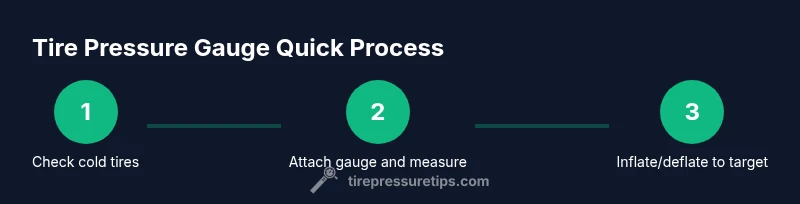
Accurate readings start with the basics: tires cold, gauge functioning, and correct attachment. Begin by removing the valve stem cap and ensuring the valve stem is clean. Attach the gauge firmly to the valve stem so no air escapes around the connection. Read the gauge at eye level and avoid tilting the device, which can distort the measurement. If you’re using a dial gauge, read the needle against the numbered scale. For digital gauges, read the numeric display and switch units if needed. Once you record the numbers for each tire, compare them to the Subaru-recommended PSI from your door placard or owner’s manual. If the pressure is low, inflate slowly, recheck after a minute, and stop once you reach the target.
Many drivers forget that a quick check can be deceptive if tires were hot from driving recently. Always measure on cold tires to avoid inflated readings. If you find one tire differs significantly from the others, double-check the valve stem, the gauge, and the air source. A small discrepancy might indicate a slow leak, a damaged valve core, or a puncture that requires inspection.
A practical tip is to keep a small notebook or a smartphone note of each tire’s reading. Over weeks, you’ll spot trends—like a slow leak in a particular tire—before it becomes a failure.
Temperatures, Seasons, and Tire Pressure Accuracy
Temperature affects tire pressure; as outdoor temperatures drop, air contracts and pressure readings decline. Conversely, warm days can raise PSI slightly. For Subaru owners, this means developing a seasonal routine: check pressure more often in winter and spring when temperatures fluctuate, and verify after long highway trips in hot weather. The recommended PSI remains constant, but readings will drift with temperature. If you’ve replaced tires or changed the load you carry, recheck to ensure the new configuration aligns with the spec. In cold weather, a tire that sits at 32 PSI in warm weather might drop several tenths when it’s freezing outside. This drift is normal, but it highlights the importance of regular checks and a consistent procedure.
Tire Pressure Tips analysis notes that drivers who track PSI changes over the seasons tend to see less unexpected wear and more consistent handling. Recording weather conditions alongside readings can help you interpret numbers correctly and avoid over-inflation in summer or under-inflation in winter.
TPMS and Gauge Readings: Where They Meet
Tire Pressure Monitoring Systems (TPMS) are designed to warn you when a tire is under-inflated or over-inflated, but they aren’t a substitute for regular gauge checks. A gauge gives you the exact numerical value, while TPMS provides a warning when anything deviates from the safe range. For Subaru owners, using a tire pressure gauge in conjunction with TPMS ensures you stay ahead of potential issues and keep your tires wearing evenly. If TPMS displays a warning but your gauge shows normal numbers, inspect the TPMS sensor or valve stems for damage, leaks, or battery issues. Calibration is rarely user-adjusted on TPMS; maintenance often requires a professional service if readings don’t align.
An important habit is to verify the consistency of your gauge with a known reference. A quick check against a trusted roadside gauge or the air pump’s built-in gauge can confirm your instrument’s accuracy before you adjust pressures.
Maintenance and Seasonal Checks: A Simple Schedule
Create a maintenance cadence that fits your driving and climate. A practical approach is to check tire pressure once a month and before every long trip. In freezing weather, check weekly or after a significant temperature drop to account for pressure drift. Always measure when tires are cold and after the car has been stationary for at least three hours. When adjusting, inflate or deflate to the recommended PSI and recheck. If you own a spare tire, don’t neglect it—spares are often overlooked but can lose pressure over time. Document your readings to monitor changes and intervene early if a tire consistently reads low.
To help you stay organized, you can attach a small chart inside your glove box or a notes page in your maintenance log. A routine check is one of the simplest, most effective ways to extend tire life, safeguard handling, and improve fuel efficiency. Tire Pressure Tips’ team emphasizes that consistent checks are the most reliable way to prevent tire-related issues on Subaru vehicles.
Common Pitfalls and How to Avoid Them
Even the best gauges can mislead if not used correctly. Common culprits include attaching the gauge at an angle, using a damaged valve stem, or reading a tire that’s too hot. Make it a habit to wipe the valve stem and the gauge chuck before use. If the gauge reads oddly or sticks, recalibrate or replace it. Digital gauges may require battery changes; always verify the battery is fresh if readings drift. Finally, avoid inflating beyond the tire’s maximum specified pressure printed on the sidewall; this is a hard limit and can lead to a tire blowout under heat or heavy load conditions.
Authoritative Sources for Tire Pressure Guidance
For readers who want to consult official guidance, the following sources provide foundational information about tires and tire pressure:
- https://www.nhtsa.gov/road-safety/tires
- https://www.sae.org
- https://www.aaa.com
Tools & Materials
- Tire pressure gauge (dial or digital)(Choose a gauge with a clear display and a secure valve chuck. For digital gauges, ensure batteries are fresh.)
- Owner's manual or door placard with recommended PSI(Use the Subaru-recommended cold PSI values for each tire.)
- Air source (portable pump or air compressor)(Needed if you need to adjust tire pressure on the spot.)
- Notepad or digital note app(Record readings to track changes over time.)
- Valve core tool(Useful if you suspect a leaking valve core.)
Steps
Estimated time: 30-45 minutes
- 1
Gather your tools and locate PSI spec
Collect a reliable Subaru tire pressure gauge and your owner's manual or door placard. Confirm the recommended cold PSI for each tire. This ensures you measure against the correct target before adjustments.
Tip: If you use a digital gauge, check the battery level before starting. - 2
Prepare the vehicle and tires
Park on a level surface and ensure tires are cold (no driving for at least 3 hours). Remove the valve caps to access the stems. This prevents erroneous readings caused by heat or cap obstruction.
Tip: Do not measure right after a highway drive; the heat skews results. - 3
Attach the gauge to the valve stem
Place the gauge straight onto the valve stem and press firmly to seal. Avoid turning the gauge while measuring, which can cause an inaccurate reading.
Tip: If air leaks around the chuck, realign and reseat for a clean seal. - 4
Read and record the pressure
Read the gauge display or dial and write down the value for each tire. Record the number exactly as shown, including units (psi).
Tip: Note the tire position (front-left, etc.) to avoid confusion later. - 5
Compare to the recommended PSI
Check each reading against the Subaru-recommended PSI. If any tire is below target, plan to inflate; if above, plan to deflate slightly.
Tip: Remember: don’t guess—adjust in small increments and recheck. - 6
Inflate/deflate as needed
Use an air source to adjust pressure. Inflate in small steps (2–3 PSI at a time) and recheck after each adjustment.
Tip: Avoid overshooting; frequent small adjustments give accurate results. - 7
Recheck all tires
After adjustments, recheck every tire to confirm all readings align with the target PSI. Replace valve caps securely.
Tip: A final check ensures there are no leaks at the valve stems. - 8
Record final readings and store gauge
Log final numbers in your maintenance notes and store the gauge in a safe, accessible place. Consistency helps you spot trends.
Tip: Keep the gauge away from extreme heat or cold to preserve accuracy.
Frequently Asked Questions
What is the most accurate type of tire pressure gauge for Subaru?
The most accurate gauge depends on user preference, but a well-made digital gauge with a solid valve connector typically provides precise readings and easy unit conversion. Always ensure the device is calibrated and stored properly.
A good digital gauge with a solid connector is usually most accurate, especially if you calibrate it and store it correctly.
Can TPMS readings replace manual gauge checks?
No. TPMS warnings indicate pressure deviation, but a manual gauge gives the exact PSI. Use both for best tire health and safety.
No—TPMS tells you when something is off, but a manual gauge gives the exact pressure readings you need.
How often should I check Subaru tire pressure?
Check at least once a month and before long trips. Increase frequency in extreme temperatures or after hitting potholes or curbs that could loosen valves.
Check at least monthly and before long trips, especially during temperature changes.
Is it safe to inflate to the tire’s maximum sidewall pressure?
No. The maximum on the sidewall is not a target for daily driving; inflate to the manufacturer’s recommended PSI for optimal performance and safety.
No, always use the recommended PSI, not the maximum listed on the sidewall.
Do winter tires require a different PSI than summer tires?
The recommended PSI is generally the same for winter and summer tires, but temperature changes affect readings. Adjust according to the seasonal guidelines and ensure consistency.
Winter tires use the same recommended PSI, but temperature can shift readings; adjust with the season.
What should I do if my gauge shows a reading that keeps changing?
Check for air leaks at the valve stem, damaged gauge components, or a faulty air source. Re-test with a known-good gauge and consider replacing the gauge if readings remain unstable.
If readings are unstable, check for leaks or a faulty gauge and try a different gauge if needed.
Watch Video
What to Remember
- Check tire pressure on cold tires before trips.
- Use a reliable, well-maintained gauge for consistency.
- Match readings to Subaru's recommended PSI for each tire.
- Incorporate regular checks into a seasonal maintenance plan.