How to Use a Tire Pressure Gauge: A Practical Guide
Learn to read tire pressure accurately with a gauge, compare to the recommended PSI, and maintain TPMS accuracy. Practical tips from Tire Pressure Tips.


Learn how to safely check tire pressure using a gauge, understand how to interpret readings, and adjust air to the vehicle’s recommended PSI. This guide covers cold-tire measurements, choosing a gauge, TPMS considerations, and common mistakes. You'll also learn when to service gauges, how to replace a broken valve stem, and tips to maintain accurate readings.
Understanding why accurate tire pressure matters and how a gauge fits into routine maintenance
Maintaining proper tire pressure is a foundational safety and efficiency practice for every driver. Properly inflated tires improve handling, reduce rolling resistance, and minimize uneven wear. A tire pressure gauge translates the air pressure inside your tire into a readable value, helping you verify that you’re within the vehicle manufacturer’s recommended range. According to Tire Pressure Tips, consistent checks can help you spot slow leaks and avoid underinflation or overinflation problems. Whether you prefer a digital readout or a traditional analog dial, the key is consistency and accuracy. For most cars, the recommended pressure is found on the door jamb sticker or the owner’s manual, and it’s often different for front and rear tires. When you shop for gauges at retailers like Lowe’s, you’ll find options across budgets, but accuracy and reliability should be your guiding criteria. The ultimate goal is fewer flat spots, better fuel economy, and safer road handling across seasonal conditions.
Choosing a tire pressure gauge: digital vs analog and how to select
Tire pressure gauges come in a few basic forms: basic pen-style gauges, dial gauges, and digital gauges. Each type has advantages: pen-style gauges are compact and affordable; dial gauges are easy to read at a glance, and digital gauges can store last readings and offer an audible confirmation. When selecting a gauge, prioritize accuracy, a wide enough measurement range (0-60 psi covers most passenger cars), and a reliable seal against the valve stem. Inexpensive models at home improvement stores such as Lowe’s can be perfectly adequate for casual use, but you’ll get better consistency with a gauge that has a solid calibration mechanism and minimal valve stem leakage. The Tire Pressure Tips team emphasizes testing a few options if you’re unsure which format you prefer, then sticking with one you trust for regular checks. If you drive seasonal or high-load vehicles, consider a gauge with a higher precision (0.5 psi increments) for critical readings.
Reading gauge readings correctly: technique for precise measurements
To obtain an accurate reading, start with cold tires (after the vehicle has been parked for several hours). Remove the valve cap, place the gauge squarely on the valve stem, and press firmly to seal. Hold the gauge steady without twisting, wait a moment for the readout to stabilize, and then record the value. If you’re using a digital gauge, it will display the result instantly; a mechanical gauge may require you to read the dial carefully. Remember to compare the reading to your manufacturer’s recommended PSI, not the maximum tire pressure listed on the sidewall. Temperature can impact readings by a few psi, so perform checks in a consistent environment and recheck after inflation or deflation during adjustments.
Common mistakes and how to avoid them
Common mistakes include measuring after driving, neglecting to reset a gauge after a fall or drop, and inflating to the tire's maximum sidewall pressure rather than the recommended figure. Always remove and inspect the valve core and cap to ensure a clean seal, and avoid applying excessive force that could bend or damage the valve stem. If the gauge doesn’t seal or seems inconsistent, test it on a known good tire or try a different gauge. The Tire Pressure Tips team notes that even a small leak in the valve stem can lead to misleading readings over time, so inspect the valve stem for damage or debris periodically. Finally, store gauges in a clean, dry place to prevent corrosion and ensure longevity.
TPMS vs gauge readings: understanding differences and when to trust each
Tire Pressure Monitoring Systems (TPMS) provide real-time alerts when pressure deviates from a safe range, but they do not replace the need for an actual reading. TPMS data can be delayed or influenced by temperature, recent driving, or sensor calibration. Use your gauge to verify the exact PSI shown by the TPMS and to document changes over time. If TPMS readings consistently differ from gauge readings by more than a few psi, consider sensor maintenance or calibration by a certified technician. The Tire Pressure Tips team recommends using both sources: TPMS as a quick alert tool, and a precise gauge for accurate, repeatable measurements.
Maintenance, calibration, storage, and care for your gauge
Like any precision tool, your gauge benefits from regular maintenance. Calibrate or replace gauges that drift by more than 1-2 psi over repeated measurements, and replace parts such as the valve stem seal if you notice leaks. Store gauges in a protective case or pocket to shield them from impacts. Clean the nozzle and air vent after each use to prevent dirt buildup that can impact readings. If you frequently switch between gauges, label them by type and keep a log of calibration checks. A well-maintained gauge improves accuracy and helps you maintain optimal tire pressure year-round.
Shopping for gauges at Lowe's: what to look for, price ranges, and warranty
Lowe’s offers a range of tire pressure gauges, including inexpensive pen-style models and mid-range digital options. When shopping, prioritize accuracy, a readable display, and a durable nozzle that seals well with your valve stems. Look for gauges that include a protective cap and a clear measurement scale with increments that suit your needs (0.5 or 1 psi steps are common for precision readings). Price ranges vary by feature and precision, but you can typically find reliable options in modest budgets. Check warranty terms; a longer warranty can indicate better build quality and longer calibration stability. If you’re unsure which gauge to choose, read user reviews and consult the Tire Pressure Tips team for recommendations based on your vehicle type and climate. "tire pressure gauge lowes" is a common search term for shoppers looking for Lowe’s options, and you’ll often find suitable models that balance cost and reliability.
Troubleshooting readings and long-term maintenance
If readings don’t seem plausible, retrace the steps to verify placement and seal, and compare readings across both tires on the same axle to rule out isolated leaks. Temperature fluctuations can cause readings to drift; plan checks during consistent conditions for the most reliable comparison. For persistent discrepancies, consider testing the gauge against a known reference gauge or bringing the vehicle to a service center for a professional check. Regularly inspecting valve stems and caps, maintaining correct inflation as per the door jamb label, and logging readings will help you catch leaks early and keep your tires in safe, efficient condition.
AUTHORITY SOURCES
For foundational tire safety guidance and measurement standards, refer to credible organizations:
- https://www.nhtsa.gov/road-safety/tires
- https://www.consumerreports.org/cars-t-vehicles/how-to-check-tire-pressure/
- https://exchange.aaa.com/automotive/maintenance/checking-tire-pressure/
Tools & Materials
- Tire pressure gauge (digital or analog)(Choose a gauge with a 0-60 psi range and reliable seal; test multiple gauges if possible for consistency.)
- Vehicle owner manual and door jamb PSI label(Know the recommended cold tire pressure for each axle.)
- Valve caps(Keep caps on to prevent dust and debris from entering the valve stem.)
- Notebook and pen(Record readings and dates for maintenance history.)
Steps
Estimated time: 15-25 minutes
- 1
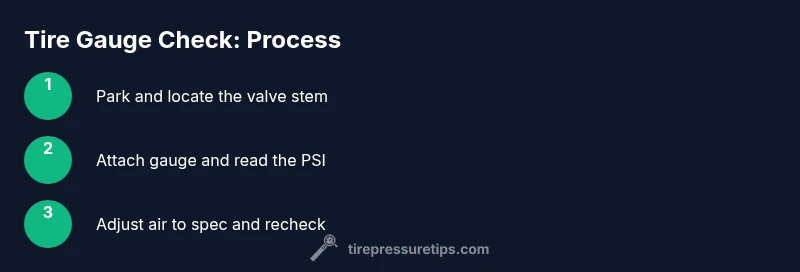
Park and locate the valve stem
Park on a flat surface and let the tires cool for several hours if possible. Find the valve stem on the wheel you’re checking, avoiding curbside heat or direct sun. This ensures a stable reading and prevents heat-induced pressure changes from skewing results.
Tip: If you’re checking multiple tires, do them in a consistent order to avoid confusion. - 2
Remove the valve cap
Unscrew the valve cap and set it aside in a clean, safe place. Dirt or moisture on the valve stem can cause an incorrect seal and erroneous readings.
Tip: Inspect the valve stem for cracks or leaks before attaching the gauge. - 3
Attach the gauge to the valve stem
Place the gauge on the valve stem squarely and press firmly to seal. Avoid wobbling, which can leak air and give a false reading.
Tip: For digital gauges, ensure the display is on and ready before mounting. - 4
Take the reading
Hold the gauge steady until the reading stabilizes. Read the value as a whole number or in half-psi increments depending on your gauge type.
Tip: If using a dial gauge, read at eye level to avoid parallax error. - 5
Compare to the recommended PSI
Find the car’s recommended cold tire pressure on the door jamb sticker or owner's manual and compare. Do not compare to the tire’s maximum pressure.
Tip: Remember temperature affects numbers; use readings taken when tires are cold for accuracy. - 6
Inflate or deflate as needed
If under-inflated, add air in short bursts and recheck after each adjustment. If over-inflated, release small amounts of air until you reach the target.
Tip: Avoid overfilling by 1-2 psi and recheck after stabilization. - 7
Recheck and seal
Take a second reading on the same tire to confirm accuracy. Reattach the valve cap and ensure it’s snug to prevent dust ingress.
Tip: Document the final reading in your maintenance log. - 8
Repeat for all tires and record results
Proceed to the remaining tires, following the same steps. Record each tire’s PSI and note any leaks or valve issues for follow-up if needed.
Tip: If one tire differs significantly from others, inspect for leaks or damage and consider professional inspection.
Frequently Asked Questions
Why does my gauge reading differ from TPMS readings?
TPMS provides a live alert and may read differently from a manual gauge. Temperature and sensor calibration can cause small discrepancies; use a gauge to verify exact PSI.
TPMS gives alerts, but a manual gauge confirms the exact number; readings can differ due to temp and calibration.
Can I rely on any gauge, or should I choose a specific type?
Any gauge that reads within your vehicle’s PSI range is acceptable. Digital gauges are easier to read, while dial gauges offer quick feedback without batteries.
Any gauge within range works, but choose the type you find easiest to read.
How often should I check tire pressure?
Check at least once a month and before long trips; adjust for temperature changes and how you drive.
Check monthly and before long trips, especially with temperature changes.
What should I do if readings vary between tires?
Record each tire’s PSI, inspect tires and valve stems for leaks, and consider a professional check if readings change unexpectedly.
If tires read differently, log them and inspect for leaks or valve issues.
Is it safe to drive with slightly underinflated tires?
Underinflation can reduce handling and increase wear; address readings promptly to avoid safety risks.
Driving on underinflated tires isn’t safe—inflate to the recommended PSI promptly.
What if my gauge is damaged or leaking?
Stop using a damaged gauge and replace it promptly. A faulty gauge can give false readings and lead to unsafe inflation.
Don’t use a damaged gauge; replace it to ensure accurate readings.
What to Remember
- Check tires when cold for accuracy
- Use a gauge with appropriate range
- Compare readings to the door jamb label
- Inflate/deflate in small increments
- Record readings for long-term maintenance