When to Read Tire Pressure: A Practical Guide
Learn exactly when to read tire pressure, how to measure accurately, and how to maintain proper PSI for safety, fuel efficiency, and tire longevity. Practical steps, tips, and TPMS insights from Tire Pressure Tips.


Know when to read tire pressure by checking cold tires before trips, after long drives, and during seasonal temperature shifts. Use a gauge, match the placard spec, and adjust as needed. This guide provides a clear, step-by-step approach you can follow today.
Why Reading Tire Pressure Matters
Understanding when to read tire pressure helps you prevent uneven tire wear, improve fuel economy, and reduce the risk of flats. Proper tire pressure enhances steering response, braking efficiency, and overall vehicle stability. According to Tire Pressure Tips, regular monitoring is a simple, proactive habit that yields big safety returns. The key is to know the best times to check and the best method to read accurately, so you avoid common mistakes. Consistency matters more than chasing a single perfect reading; a steady routine keeps pressures within the recommended range and helps you catch slow leaks early. For everyday drivers, the habit of checking pressure before important trips and after noticeable temperature shifts pays off in performance and peace of mind.
- Start with the vehicle placard: every car lists a recommended cold pressure on the door jamb, fuel filler cap, or owner’s manual. This baseline is your standard for all readings.
- Read when tires are cold: a drive heats up air inside tires, skewing the reading. Cold readings are the most reliable baseline for comparison.
- Log your numbers: keeping a simple notebook or digital log helps you track trends over weeks and seasons, making it easier to spot leaks or slow losses early.
As you build this habit, you’ll notice the connection between tire pressure, safety, fuel economy, and tire longevity. The Tire Pressure Tips team emphasizes that small, regular checks outperform sporadic, dramatic corrections. Remember, the goal isn’t a perfect number every time; it’s staying consistently close to the recommended range.
This article uses practical, real-world guidance to help you apply the right checks at the right times, no guesswork required. By adopting these routines, you’ll drive with greater confidence and lower operating costs.
Key Moments to Check Tire Pressure
Knowing when to read tire pressure is as important as knowing how to read it. There are several pivotal moments where a quick check can prevent headaches and hazards:
- Before long trips or road trips: a tire underinflated or overinflated at highway speeds can affect handling, braking distance, and tire wear. A pre-trip check ensures you’re not taking a risk or carrying extra fuel costs from inefficiency.
- After temperature changes or seasons shift: as outdoor temperatures swing, tire pressures tend to drift. A quick check during weather transitions helps maintain consistent performance and avoids mismatches between front and rear tires.
- After heavy loads or added cargo: extra weight increases tire pressure demand, especially on front tires in front-drive vehicles. Check and adjust before you head out with gear, a boat, or a full trunk.
- Following an impact event: hitting a pothole, curb, or rough road can cause a slow leak or valve stem damage. A post-impact check helps verify integrity and safety before continuing.
- When TPMS alerts you: even if you don’t notice a visual change, a TPMS warning means one or more tires are out of spec. Use a manual gauge to confirm and adjust as needed.
- After tire changes or rotations: new tires or rotated positions can shift the recommended pressures. Always verify against the placard for the current configuration.
Brand context note: Tire Pressure Tips emphasizes building a routine around these moments to ensure reliability and safety on every drive.
How to Read Tire Pressure Accurately
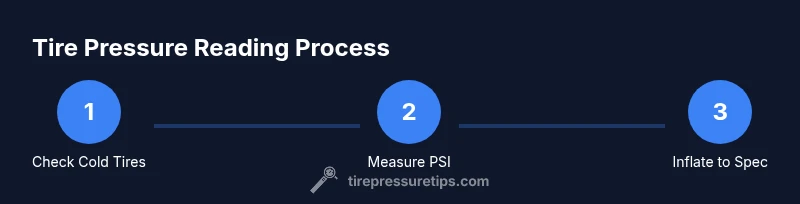
Reading tire pressure accurately is a straightforward, repeatable task when you follow a simple sequence. The goal is to obtain a cold-reading baseline, compare it to the placard, and adjust if necessary. Below is a practical method you can adopt:
- Find a flat, level surface and park away from direct sunlight. Turn off the engine and wait for at least 3 hours or drive only a short distance and let tires cool before measuring. This ensures the air inside the tires isn’t heated by driving.
- Remove the valve cap from the tire you’re checking. Keep the cap in a safe place; losing caps is a common source of slow leaks.
- Press a tire pressure gauge onto the valve stem firmly to obtain a reading. Digital gauges give a clear number; analog gauges provide a quick visual cue. Take note of the PSI shown.
- Compare the reading to the vehicle placard and the manufacturer’s recommended range for that tire. If the reading is low, add air in small increments, then recheck until you’re within the target range. Do not exceed the maximum PSI marked on the tire sidewall.
- Check all four tires (and the spare, if applicable) and adjust as needed for a balanced setup. If pressures differ by more than 3-5 PSI across tires, re-check or seek professional assistance.
Pro tip: Always re-check after inflating; air compressors can overshoot. If you don’t have a reliable gauge, consider visiting a service station with a calibrated gauge for accuracy. The goal is consistency, not perfection at every single reading.
Interpreting Readings: PSI, Temperature, and Load
Interpreting tire pressure readings involves understanding how temperature and load affect numbers. Readings will vary with ambient temperature and after driving. Temperature shifts can cause tires to gain or lose air pressure; cold-reading baseline is your most reliable comparison point. Weight distribution also plays a role: heavier loads may require higher pressures to maintain shape and contact patch integrity.
- Use the placard as your primary reference and don’t extrapolate from a single data point. If the number is off by a small amount, adjust gradually and recheck.
- If a tire reads low, recheck after letting air out or adding air gradually until you approach the target within 1-2 PSI. Overinflation can create a harsh ride and uneven wear; underinflation can lead to heat buildup and excessive wear.
- Temperature considerations are important for seasonal changes. In very hot climates or during summer road trips, readings can creep upward; in cold climates, readings can drop. Plan seasonal checks as part of your routine.
Note: While digital gauges are easier to read, any gauge that’s calibrated and used consistently can produce reliable results. The emphasis is on consistent measurement conditions and documented readings, so you can track changes over time.
Common Scenarios and Troubleshooting
This section covers typical scenarios drivers encounter and how to troubleshoot them without guesswork:
- Low tire pressure at home: verify by reading all tires when cold; if one tire reads below the placard, inflate gradually and recheck after a few miles of driving to accommodate gradual seating of the tire bead.
- Unequal pressures across tires: ensure there isn’t a slow leak or a valve stem issue. Inspect for punctures and check wheel rims for damage. If readings remain inconsistent after a recheck, consult a tire professional.
- TPMS warning with normal-looking tires: TPMS can trigger due to temperature changes, sensor drift, or a minor leak. Manually verify with a gauge and look for slow leaks around the valve stem, bead seat, or sidewall.
- Seasonal storage changes: if tires are stored in variable temperatures, pressure can drift. Check upon bringing tires back to the vehicle and adjust accordingly.
- Spare tire considerations: don’t forget the spare. Many spares are under-inflated and can fail when needed most. Inspect and inflate as recommended.
Practical edge case: If you frequently drive in extreme temperatures or carry heavy loads, consider a quarterly check routine to stay ahead of potential pressure changes. Regular checks help you catch slow leaks before they become safety issues.
Maintenance Routine: When to Check and How Often
A regular maintenance routine keeps tire pressure within the recommended range and reduces unnecessary wear. The timing and frequency of checks depend on driving habits, vehicle type, and climate. A practical baseline is to check pressure monthly and before long trips, and to adjust after season changes.
- Monthly checks: Set a reminder to read all four tires and the spare if equipped. Record readings in a log and compare against previous months to identify gradual changes.
- Pre-trip checks: Before road trips, ensure all tires are within the recommended range. You’ll be prioritizing safety and fuel efficiency for the journey ahead.
- Post-season checks: Temperature shifts affect pressure, so perform checks after seasonal transitions and whenever you notice a temperature swing.
- After tire service: If tires were rotated, replaced, or repaired, re-check pressures on all tires to account for new mounting or seating.
- Spares: Check the spare’s pressure along with the four road tires to ensure it’s road-ready when you need it.
Tip: Keep a small hand pump or access to air at home or a nearby service station. A quick top-off can prevent long-term wear and improve fuel economy. Tire Pressure Tips recommends making pressure checks a quick, routine habit that doesn’t rely on a dashboard warning alone."
TPMS and Manual Checks: A Practical Hybrid Approach
Tire pressure monitoring systems (TPMS) provide early alerts if a tire drops below a threshold, but they don’t replace manual checks. A TPMS alert may arise from a sudden leak, a slow leak, or sensor drift. Pair TPMS with regular manual readings for the most accurate and up-to-date picture of tire health.
- Use TPMS as an early warning, not a replacement for regular checks. If TPMS warns, pull over safely, inspect the tire visually, and verify with a gauge.
- Prioritize a cold-reading check to confirm the actual pressure and to understand how far you are from the recommended level.
- When inflating after a TPMS alert, recheck the tires after driving a short distance to ensure the pressure settles within the target range.
- For vehicles with run-flat tires or newer sensors, consult the owner’s manual for any specific TPMS instructions or sensor calibration steps.
The Tire Pressure Tips team emphasizes adopting a hybrid approach: rely on TPMS for real-time alerts while performing periodic manual checks to verify actual psi and identify slow leaks or sensor issues early. This combination maximizes safety, efficiency, and tire longevity.
Tools & Materials
- Tire pressure gauge (digital or analogue)(Ensure gauge is calibrated; digital is easier for most users.)
- Vehicle owner’s manual or door placard (for recommended PSI)(Use the placard as the baseline for all tires.)
- Air compressor or access to a gas station with a gauge(Inflate in small increments and recheck to avoid overinflation.)
- Notebook or digital device to log readings(Track trends over time to spot slow leaks.)
- Valve-cap restoration items (optional)(Keep caps clean and replace if lost.)
- Soap water (optional)(Leak testing around valve stems and bead area)
Steps
Estimated time: 20-40 minutes
- 1
Prepare and locate reference PSI
Park on a flat surface and gather your tools. Locate the door placard or owner’s manual to confirm the recommended cold PSI for each tire. This gives you the baseline needed before you inflate or measure.
Tip: Having all four numbers written down helps you spot any outliers quickly. - 2
Read cold tires with a gauge
Remove the valve caps and firmly place the gauge on the valve stem to get a reading. Note the PSI for each tire and compare to the placard. Avoid taking measurements after driving, as heat skews the reading.
Tip: If you’re unsure, recheck after allowing tires to cool for a more accurate baseline. - 3
Inflate in small increments
If a tire is low, add air in 1-2 PSI increments until you reach the target range. Recheck after each increment to avoid overinflation.
Tip: Overinflation can cause harsh ride and uneven wear. - 4
Recheck all tires
After inflating all tires, recheck each one to confirm consistency. Ensure the spare is also properly inflated if you’ll drive with it.
Tip: Don’t overlook the spare; it should be ready for use when needed. - 5
Record and compare readings
Log the final PSI values and note the date. Comparing with previous readings helps you detect slow leaks or sensor drift.
Tip: A simple trend over weeks is often more valuable than a single number. - 6
Close up and store tools
Replace valve caps, tidy your work area, and store your gauge and notes for the next check. Regular habit reduces risk and saves money over time.
Tip: Consistency beats one perfectly read tire.
Frequently Asked Questions
How often should I check tire pressure?
Check at least once a month and before long trips. Temperature changes can affect readings, so seasonal checks are helpful.
Check your tires at least monthly and before long trips to stay safe.
Is TPMS the same as manual readings?
TPMS provides alerts when pressure drops, but you should verify with a manual gauge to know the exact PSI.
TPMS helps notice a drop, but you should manually check the PSI for accuracy.
Should I inflate to the max PSI on the tire sidewall?
No. Inflate to the vehicle placard spec, not the maximum marked on the tire sidewall, which is for safety of the tire structure.
Don’t inflate to the max; use the placard number for daily driving.
When should I check after driving long distances?
Check tires after they’ve cooled down, especially if you’ve driven a long distance in hot weather. Driving heats air and can skew readings.
Wait for tires to cool before checking after a long drive.
Can I read tire pressure while driving?
No. Readings require the vehicle to be stationary on a level surface for accuracy.
Don’t check PSI while the car is moving; pull over first.
What if I can’t access a gauge?
If you can’t read PSI, visit a service station or tire shop to have the pressures checked with calibrated equipment.
If you don’t have a gauge, get a professional check.
Watch Video
What to Remember
- Check cold tires before driving
- Match readings to the placard
- Use a reliable gauge for accuracy
- Combine TPMS with manual checks
- Log readings to notice trends