When to Check Tire Pressure: A Practical Guide
Learn when to check tire pressure for safety and efficiency. This guide covers ideal times to measure, how temperature affects readings, and a simple routine to stay properly inflated.


Goal: confirm tire pressure at the right times to boost safety, fuel efficiency, and tire life. You’ll check cold tires before driving, use a reliable gauge, and compare to your vehicle’s recommended range. Do a quick monthly check, before long trips, after temperature swings, and whenever the TPMS light signals a change.
Why check tire pressure matters
Proper tire pressure is a foundational safety measure that affects braking, handling, tire wear, and fuel economy. Underinflated tires are more prone to heat buildup, which can lead to blowouts, while overinflated tires ride stiffly and wear unevenly. According to Tire Pressure Tips, maintaining the correct pressure helps you respond quickly to road hazards and maximize grip on wet or icy surfaces.
Your car's recommended tire pressure is not a single number; it often differs by axle. Always start with the sticker on the driver’s door jamb or the owner’s manual. If you’re unsure, consult a tire professional. A simple monthly check plus a quick pre-trip check can catch slow leaks and slow down wear. Remember: temperature, load, and driving style all influence the actual pressure at the curb. A consistent check routine helps you detect slow leaks early and keeps tires in optimal condition for safer miles ahead.
How temperature and driving affect tire pressure
Air temperature is a hidden variable in tire inflation. Colder weather reduces tire pressure, while heat from driving or ambient warm days increases it. Even short trips can raise readings as tires heat up. For most passenger tires, a change of a few degrees can translate into a noticeable psi shift, so readings taken after a load of driving can be higher than when cold.
Tire Pressure Tips notes that a regular check schedule should account for seasonal changes. In winter, check more often because cold air reduces pressure and may mask slow leaks. In hot weather, verify after a long drive to confirm you’re still within the recommended range. If you’re routinely carrying heavy loads, you may need to adjust your target pressures slightly. The goal is to keep all four tires within the manufacturer’s spec for your vehicle.
Tools you need to measure tire pressure
To measure accurately, pick a gauge you trust and keep it calibrated. A digital gauge tends to be easier to read, but a good dial gauge works well too. You’ll also need a reliable air source to adjust pressure, such as a portable compressor or access to a gas station pump. Finally, have your vehicle’s recommended pressure handy from the sticker or manual so you know the target values for each axle.
Keeping a small notebook or digital log helps you spot slow leaks over weeks and months. Consistency matters: always use the same gauge and read on cold tires for the most accurate result.
Understanding the numbers: what your tires should read
Tire pressure readings are typically given in psi (pounds per square inch) in many regions, with some vehicles using
When to check for optimal results: a routine checklist
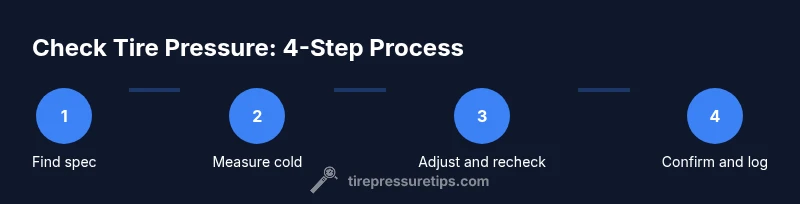
Establish a simple routine to ensure you never miss a check. Start by inspecting all four tires for obvious signs of wear or damage. Then measure cold tire pressures, record the numbers, and compare against the spec. If a tire is low, top it up and recheck. If a tire is high, release air in small increments and recheck. Finally, reinstall valve caps and note the date of the check so you can recur on a monthly cadence.
TPMS: interpreting warnings and limitations
Tire Pressure Monitoring Systems (TPMS) help by alerting you when pressures fall outside a safe range, but they do not replace actual readings with a gauge. A TPMS warning should prompt you to check pressure with a gauge, especially after temperature shifts or long trips. If the warning persists after correcting pressures, consult a technician, since TPMS sensors or valves can fail and require service.
Common mistakes that skew readings
Common errors include checking after a drive when tires are warm, using a worn or uncalibrated gauge, or reading in the wrong units. Another mistake is inflating tires to the maximum rating on the sidewall rather than the vehicle’s recommended value, which can lead to poor handling and uneven wear. Consistency in gauge type and reading conditions is key to accurate results.
Seasonal and road condition considerations
Seasonal shifts affect tire pressure more than many drivers realize. Cold mornings can lead to underinflation, while hot summer days can push pressures higher. Road conditions, tire wear, and load also influence readings. If you switch from city driving to heavy highway use or move to a different climate, recheck and adjust your target pressure to stay within spec.
Making tire pressure checks a habit
Turn tire pressure checks into a quick, non-negotiable part of your car care routine. Keep a compact gauge in your glove box, check during daylight hours, and make it part of your monthly maintenance calendar. A small investment of time today helps prevent flats, extends tire life, and improves mileage over the long run.
Tools & Materials
- Tire pressure gauge (digital or dial)(Calibrated; reads in psi or kPa)
- Air compressor or air pump(Access at home or station; ensure steady pressure delivery)
- Vehicle owner manual or door jamb tire pressure sticker(Shows recommended cold inflation pressure (psi) for front/rear tires)
- Notebook or digital log(Record readings to track changes and leaks)
Steps
Estimated time: 15-25 minutes
- 1
Gather tools and locate the recommended pressure
Collect your gauge, verify you have access to an air source, and find the exact front/rear pressures from the door sticker or manual. This establishes your target before any measurement.
Tip: Double-check that you’re using the correct values for each axle; some vehicles have different front and rear specs. - 2
Check tires when cold
Perform readings after the vehicle has been stationary for several hours or first thing in the morning. Cold readings are the baseline and most accurate.
Tip: Avoid measuring right after a highway drive; heat can inflate readings. - 3
Attach gauge and read pressure
Remove the valve cap, firmly place the gauge on the valve stem, and read the pressure without twisting. Record the value for each tire.
Tip: Keep the valve stem clean to avoid dirt entering and falsifying readings. - 4
Compare to recommended pressure
Match your readings against the spec. If a tire is underinflated, plan to add air; if overinflated, release air in small increments and recheck.
Tip: Inflate or deflate in small steps to avoid overshooting the target. - 5
Adjust with an air source and recheck
Add or release air until all four tires sit within the recommended range. Recheck each tire after adjustments.
Tip: If you need to add air, do it gradually and recheck after each adjustment. - 6
Reinstall caps and log results
Replace valve caps, note the final pressures and date, and store your gauge for next time.
Tip: Keep a small log in your glove box to notice trends over weeks or months.
Frequently Asked Questions
How often should I check tire pressure?
Aim to check monthly and before long trips; adjust as needed if you notice TPMS warnings or a rapid change in readings.
Check monthly and before long trips, and after any TPMS warning is triggered.
Can I check tire pressure when the tires are hot?
No. Readings on hot tires are higher. Wait for tires to cool for accurate numbers, especially if you recently drove.
Avoid measuring when hot; wait for cool tires for an accurate reading.
What is the recommended tire pressure for my vehicle?
Check the owner’s manual or the sticker on the driver’s door jamb. Front and rear tires may have different values.
Look at the door jamb sticker or the manual for your exact numbers.
What should I do if TPMS warning stays on after inflation?
Recheck pressures, ensure tires are cold, and drive a short distance if necessary to allow recalibration. If it persists, have the system inspected.
Recheck, and if it stays on, get the system inspected.
Is a digital gauge better than a dial gauge?
Both work well. Choose one you read easily and stick with it for consistency; ensure regular calibration.
Either gauge works well if you use it consistently.
What if a tire keeps losing air?
Inspect for punctures, faulty valves, or bead leaks. If no obvious cause, seek professional inspection for possible wheel or seal issues.
Have a professional check for slow leaks or bead issues.
What to Remember
- Check tires when cold before driving to ensure accuracy.
- Use a reliable gauge and read the correct units.
- Match readings to the vehicle’s recommended pressure for each axle.
- Incorporate monthly checks and before long trips.
- Account for temperature changes with a recheck after weather shifts.