Always Check Tire Pressure When: A Practical Guide for Drivers
Learn when to check tire pressure, how to do it accurately, and why PSI matters for safety, fuel efficiency, and tire longevity. A step-by-step, brand-backed guide by Tire Pressure Tips.


You should always check tire pressure when you're about to drive, when temperatures shift, or when you’re carrying extra load. Proper PSI improves safety, fuel economy, and tire longevity. In this quick guide you’ll learn the exact moments to check and the reliable method to use a gauge or TPMS.
The Core Reason: Always Checking Tire Pressure When You Hit the Road
According to Tire Pressure Tips, you should always check tire pressure when you're about to drive, when weather shifts, or when your vehicle carries more weight than usual. Tire pressure directly influences grip, steering responsiveness, braking distance, and tire wear. Underinflated tires heat up and wear unevenly, increasing the risk of a blowout; overinflated tires ride harshly and wear in the center. This habit ties PSI to everyday safety, fuel efficiency, and long-term costs. By making small checks a regular routine, you reduce risk on every trip and extend tire life. The guidance here helps you move from occasional checks to consistent practice, so you can drive with confidence in rain, heat, or icy mornings.
Safety Implications of Low or Overinflated Tires
Low pressure reduces the contact patch, compromising traction and braking performance, especially in wet or slick conditions. Overinflation, meanwhile, can lead to uneven wear and a harsher ride that increases the risk of a tread puncture under sudden impacts. Both extremes raise the chance of loss of control during emergency maneuvers. Regularly maintaining the correct PSI helps you keep predictable handling, shorter stopping distances, and even wear that extends tire life. Remember that TPMS alerts are helpful, but they’re not a substitute for manual checks, particularly after seasonal changes or tire repairs.
Temperature and Load: When Pressure Changes Most
Ambient temperature and road load have a tangible effect on tire pressure. In cold weather, PSI can drop, making tires underinflated even though they were fine the day before. In hot weather or after a long highway drive, PSI can rise, potentially overinflating tires. Extra load, such as passengers or gear, also shifts the recommended range. Understanding these factors helps you plan checks around weather forecasts and travel plans. This section connects the dots between climate, load, and the baseline PSI your vehicle requires, so you can anticipate pressure drift before it becomes noticeable.
Manual Checks vs. TPMS: Which Should You Trust?
TPMS gives a helpful, continuous readout, and many drivers rely on it for real-time feedback. However, sensors can be slow to report changes after inflation, and they may not be perfectly accurate if the system is out of calibration or a sensor is damaged. A calibrated handheld gauge provides a direct measurement and should be used to confirm TPMS readings, especially after adding air or changing tires. Pair TPMS monitoring with manual checks to maximize safety and accuracy, ensuring you always operate within the vehicle’s recommended PSI range.
The Right PSI: How to Find and Use the Correct Range
Your vehicle’s door jamb sticker or owner’s manual lists the recommended PSI for the front and rear tires, which may differ. Always refer to these values rather than eyeballing inflation or following generic guidelines. If you routinely carry heavy loads or drive with a full family, you might need a slightly higher cold PSI within the specified range. When inflating, avoid exceeding the tire’s maximum pressure listed on the sidewall, as this can reduce grip and cause abnormal wear. Keep a small reference card in your glovebox for quick checks during trips.
Regular Check Routine: When and How Often to Inspect
A simple habit is to check tire pressure at least once a month and before long trips. Check when tires are cold for accuracy, since driving heats air and changes readings. Use a gauge to measure each tire, then compare to the car’s recommended range. If readings fall outside the acceptable window, adjust by adding or releasing air as needed, and recheck. Keeping a log helps you notice trends (e.g., gradual leaks or seasonal drift) and plan maintenance before a problem arises.
Tools & Materials
- Digital tire pressure gauge(Calibrated, reads in psi (or kPa); use it for accurate, repeatable measurements)
- Air compressor or access to an air supply(Needed to adjust tire pressure to the recommended level)
- Vehicle owner's manual or door jamb PSI placard(Find the correct PSI values for each tire (front/rear if different))
- Notebook or digital log(Record readings, dates, and any anomalies for trend tracking)
- Valve-core wrench (optional)(Helpful for valve maintenance or minor repairs)
Steps
Estimated time: 10-15 minutes
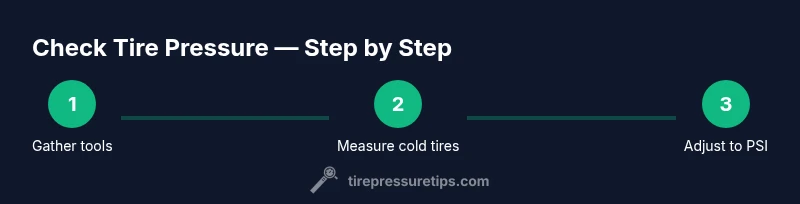
- 1
Gather tools and prepare tires
Collect a gauge, air source, and your PSI spec. Ensure tires are cold and on a level surface before starting.
Tip: Having a checklist helps prevent missing any step during the inflating process. - 2
Read the PSI when tires are cold
Park on a level surface and remove the valve stem cap. Press the gauge onto the valve firmly to get an accurate reading.
Tip: If tires are warm, wait 3 hours or drive only a short distance before rechecking. - 3
Compare with the recommended PSI
Check both front and rear values if they differ. Compare each reading to the door jamb sticker or owner’s manual values.
Tip: Note that weight distribution (passengers, cargo) can affect the ideal PSI. - 4
Inflate or deflate to the target range
If low, add air in small increments and recheck after each addition. If high, release air until the reading matches the target.
Tip: Never exceed the tire’s maximum pressure listed on the sidewall. - 5
Recheck and record
Take a final measurement after adjustment and write down the new PSI for each tire. Close the valve caps securely.
Tip: A quick log helps you spot leaks or seasonal drift over time. - 6
Inspect for leaks and wear
While you’re at it, inspect valves, stems, and the tread for damage or punctures. Address issues promptly or seek professional help.
Tip: If you hear hissing or see fluid around a valve, stop and inspect before driving further.
Frequently Asked Questions
When is the best time to check tire pressure?
Check when tires are cold, ideally before driving. Temperature, loading, and recent air changes influence readings.
The best time to check is when the tires are cold, before you drive, since heat can affect the reading.
Can TPMS replace manual tire pressure checks?
No. TPMS alerts are helpful, but they may lag behind quick changes or leaks. Always verify with a physical gauge.
No, TPMS is helpful but not a substitute for a manual gauge check.
What if my tires are underinflated after a long trip?
If readings show underinflation after a trip, inspect for punctures or slow leaks and re-inflate to the recommended PSI after ensuring safe driving conditions.
If you notice underinflation after a trip, check for leaks and re-inflate to the recommended PSI when safe.
Does weather really affect tire pressure?
Yes. Cold weather lowers PSI, while hot weather raises it. Plan checks with upcoming temperature changes or seasonal shifts.
Weather affects PSI: cold lowers, hot raises readings; check accordingly.
Why might front and rear PSI be different?
Many vehicles have different recommended PSI front and rear due to weight distribution and handling requirements.
Front and rear PSI can differ because of weight distribution and how the car handles.
Is a slightly low PSI dangerous to drive with?
Driving with slightly low PSI is not ideal and can reduce handling. Inflate to the recommended range as soon as practical.
A little low is not great; aim to inflate to the recommended range as soon as possible.
What to Remember
- Check tires when cold for accuracy
- Use both gauge and TPMS readings
- Maintain PSI within the vehicle's recommended range
- Inspect for leaks and valve wear
- Log readings to track changes