How to Reset Tire Pressure Sensor on Honda Accord
Step-by-step guide to reset the TPMS on a Honda Accord, covering relearn methods, drive cycles, safety checks, and troubleshooting for reliable tire pressure readings.


After you park on a level surface and confirm cold tires, you’ll relearn the Honda Accord’s TPMS sensors so the system accurately reads each tire’s pressure. This guide walks you through the proper steps, required tools, and safety checks to reset the sensor learning, ensuring warning lights disappear and tire performance remains optimal. You’ll complete a safe relearn in about 15-30 minutes depending on model year.
Understanding Honda Accord TPMS basics
Tire Pressure Monitoring Systems (TPMS) are designed to alert you when a tire drops below the manufacturer’s recommended pressure. Most modern Honda Accords use direct TPMS sensors embedded in each wheel. Each sensor contains a small battery and reports pressure data to the vehicle’s computer. When a tire is inflated to the correct PSI, the system calibrates and stores that value so warning lights stay off. A TPMS relearn is the process of teaching the car’s computer the current sensor IDs and pressures after you’ve adjusted tires, rotated wheels, or replaced sensors. In practice, the relearn ensures readings are accurate for all four tires and that the dashboard light behaves predictably. According to Tire Pressure Tips, understanding the difference between a simple reset and a full relearn helps prevent misleading warnings and keeps fuel economy and tire wear in check.
For Honda Accord owners, the relearn flow can vary by model year and trim, so always check the owner’s manual for specifics. Some years support a menu-driven relearn inside the instrument cluster or infotainment system, while others require a minute-long drive cycle to teach the system the new sensor values. The goal is a successful relearn that turns off the TPMS warning light and confirms proper tire pressures at the target levels on the placard.
Signs you need a TPMS relearn
- The TPMS light stays on even after inflating tires to the recommended PSI.
- You’ve rotated tires, repaired a puncture, or replaced a sensor.
- You’ve performed a tire replacement and changed wheel position.
- The vehicle’s tire placard pressure has changed due to temperature or load variations. Tire Pressure Tips analysis shows that these situations most commonly trigger a relearn request. If you see the light flashing, you should follow the vehicle’s relearn procedure rather than simply inflating and crossing fingers. A proper relearn ensures long-term accuracy and can prevent premature tire wear.
In short, a relearn aligns the vehicle’s memory with the actual sensors and current tire pressures, so drivers aren’t surprised by misleading warnings.
Tools, safety, and pre-checks
Before you start, gather the essential tools and follow basic safety precautions. A clean, level surface is ideal; avoid slopes or soft shoulders where wheels could shift. Park with the parking brake engaged and the engine off. You’ll need a reliable tire pressure gauge, the recommended PSI values from the Honda Accord placard, and a way to access the TPMS relearn option (either through the car’s settings or a relearn tool). If your model year requires a handheld TPMS relearn tool or an OBD-II diagnostic scanner, have that ready.
Safety matters: do not perform relearn while the tires are hot from driving. Hot tires give higher readings, which skew the relearn process. In addition, wear protective gloves if you’re working on tire valves or wheels, and avoid working with damaged tires or bent sensors. Brand guidance from Tire Pressure Tips emphasizes checking the tire condition and PSI against the official placard before attempting any reset.
Step-by-step overview: relearn concept for Honda Accord
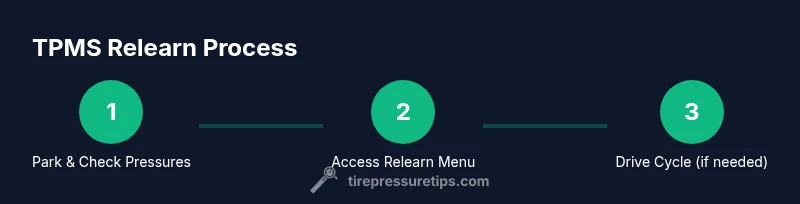
There are two general approaches to teach the car the current TPMS data: a) use the built-in relearn option in the vehicle’s settings, or b) perform a drive cycle that allows the system to relearn automatically. Some model years prefer a short menu-based relearn, while others rely on a controlled drive on a clear road. In both cases, you should complete the process with a final verification step to confirm that all four sensors have been learned and that the TPMS light stays off. The following sections detail the exact steps you’ll follow in the STEP-BY-STEP block.
Authority sources
- NHTSA: Tires and TPMS safety information — https://www.nhtsa.gov/tires
- Honda Owners Club: Official guidance and manuals — https://owners.honda.com
- Consumer Reports: Tire maintenance and TPMS basics — https://www.consumerreports.org
Tools & Materials
- Tire pressure gauge(Check all four tires when cold; compare to placard values.)
- Access to TPMS relearn method (car menu or tool)(Model-year dependent; verify the exact path in the owner's manual.)
- Owner's manual or Honda service information(Cross-check whether your trim needs drive cycle or menu-based relearn.)
- Optional TPMS relearn tool or OBD-II scanner(Only needed if your model requires tool-assisted relearn.)
- Safety gear (gloves, eye protection)(Helpful for working near tires.)
Steps
Estimated time: 15-30 minutes (plus any required drive cycle)
- 1
Park and prep the vehicle
Park on a level surface, engage the parking brake, and turn off the engine. Ensure all four tires are cold before measuring pressures. This prevents hot-tire readings from skewing the relearn data.
Tip: Wait at least 30 minutes after driving to ensure tires are cold before measuring PSI. - 2
Check and record target pressures
Using a reliable gauge, measure the cold PSI of each tire and compare with the placard on the door jamb. Note any underinflated tires and adjust to the recommended value before relearning.
Tip: Record the exact PSI for each tire to reference during the final verification. - 3
Access the TPMS relearn option
In most Honda Accords, navigate to Settings > Vehicle > TPMS > Relearn (or similar). If your model uses a physical relearn button, prepare to press it exactly as described in the manual.
Tip: If the screen prompts you, confirm you want to relearn and ensure the ignition is in ON/ACC as required by your model year. - 4
Run the relearn procedure
Follow on-screen prompts or use the dedicated relearn tool. If your car requires a drive cycle, proceed to step 5. You should see the TPMS indicator flash or go solid signaling the process is underway.
Tip: If the light does not respond after a few minutes, double-check tire pressures and retry the relearn flow. - 5
Complete the drive cycle (if required)
Drive the vehicle at 30-50 mph in a straight line for 10-15 minutes (or as specified by the manual) to allow the sensors to relearn along with the vehicle's ECU.
Tip: Avoid sharp turns and heavy braking during the drive cycle to prevent sensor disturbances. - 6
Verify the relearn and adjust as needed
After the indicator light ceases flashing, recheck all tire pressures to the target values and ensure the TPMS light stays off. If it remains on, re-run the relearn or consult the manual.
Tip: Keep a quick log of the final PSI values and the date for future reference.
Frequently Asked Questions
Do I need special tools to reset the TPMS on a Honda Accord?
Most Hondas offer a relearn option in the vehicle settings or require a brief drive cycle. Some models may need a dedicated relearn tool or an OBD-II scanner. Always check your owner’s manual for the exact method for your year and trim.
Most Honda Accords can relearn TPMS through the car’s settings or a short drive cycle. Some trims may need a relearn tool. Check your manual for specifics.
How long does a TPMS relearn take?
Expect 15-30 minutes for the process itself, plus a possible 10-15 minute drive cycle if required by your model year. Actual time varies by trim and whether you need to perform a drive cycle.
Typically about 15 to 30 minutes, plus a drive if your model requires one.
What should I do if the TPMS light stays on after relearn?
Recheck all tire pressures to the placard values and repeat the relearn procedure if needed. If the light persists, there could be a faulty sensor or a damaged valve stem requiring inspection by a tech.
If the light stays on, double-check all pressures and try the relearn again. If it won’t go away, get a professional check.
Can I reset TPMS with cold tires anytime I rotate tires?
Yes, rotating tires can require a relearn. Ensure all tires are at the proper cold PSI and follow the relearn steps for your year/model.
Yes, after a rotation you’ll often need a relearn to ensure accuracy.
Is a drive cycle always required to relearn?
Not always. Many Honda Accords support a menu-based relearn; some require a drive cycle. Refer to the manual for your exact year and trim.
Not always. It depends on the model year; check your manual.
Should I reset TPMS when tires are warm?
Resetting with warm tires can yield inaccurate readings. Always let tires cool to room temperature before starting the relearn.
No, wait for tires to cool before relearning.
Watch Video
What to Remember
- Park on level ground and test cold tires
- Follow the vehicle’s relearn path or drive cycle
- Verify all four sensors post-relearn
- Record target pressures and date
- If TPMS light returns, recheck sensors and pressures