Error Tire Pressure Troubleshooting: Quick Fixes Guide
Learn how to diagnose and fix error tire pressure alerts, TPMS warnings, and related issues with practical steps, safety checks, and prevention tips for everyday driving.


Error tire pressure warnings are usually caused by a faulty TPMS sensor, a slow tire leak, or a temperature-driven pressure change. Start with simple checks: inspect tires for visible damage and inflate to the recommended pressure, then use the diagnostic flow to identify the root cause. If the warning persists, follow the step-by-step guide below for safe fixes.
What triggers an error tire pressure alert
An error tire pressure warning can pop up for several reasons, from a worn TPMS sensor to a slow leak in a tire. According to Tire Pressure Tips, many warnings are triggered by aging sensors and gradual air loss rather than a dramatic puncture. Start by inspecting all four tires for obvious issues: nails, cuts, or objects embedded in the tread; bulges or sidewall damage; and uneven wear that might hide a leak. Temperature changes can also fool you: a cold morning can drop a few psi and trigger a warning when the car is warmed up later. In any case, treat a warning as a signal to verify air pressure and safety, not as a placebo alert. If you notice a tire that is visibly low or flat, inflate it to the recommended specification and recheck. If the warning persists after inflating, move to the diagnostic flow below and rule out sensor problems and leaks.
Temperature and weather effects on tire pressure
Temperature swings have a direct impact on tire pressure because air expands and contracts with heat and cold. The Tire Pressure Tips analysis (2026) notes that even when a tire isn't visually damaged, pressure readings can rise or fall with the weather, especially during rapid temperature shifts between day and night. When you park in the sun, the inside pressure can temporarily rise; when you drive and cool air returns, the pressure drops. This means a TPMS warning may come and go with the forecast rather than a tire fault. To reduce false alarms, check and adjust pressures when tires are cold, ideally before a commute. Always compare your readings to the OEM specification printed on the door jamb or in the owner’s manual, not to personal memory of “what it felt like last week.”
Safe, quick checks you can perform without tools
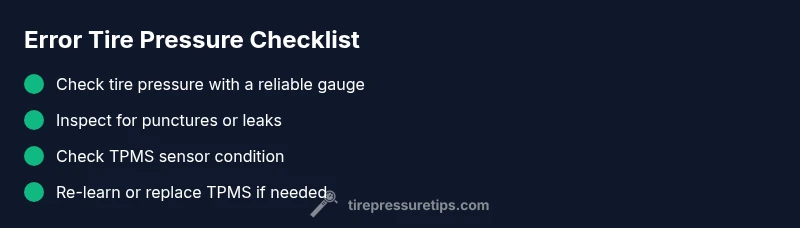
Before you reach for a gauge, perform a few safety-conscious checks: inspect tires for visible signs of damage, ensure wheel valves are tight, and look for new nails or nails pulled out. Park on a flat surface, engage the parking brake, and turn off the engine. Check the spare tire too—it can be neglected but still influences overall safety. Use a reliable tire gauge (prefer a digital or dial gauge) and confirm each tire’s pressure when cold. If any tire reads below the vehicle’s recommended pressure, reinflate to spec using the gauge and recheck after driving a few miles. If the TPMS light remains on after equalizing pressure, proceed to the diagnostic flow for deeper causes.
Diagnostic steps to pinpoint the root cause
Follow a structured flow to isolate the issue. First, verify the current pressure against the vehicle’s specification and note any consistent discrepancies. Next, inspect tires for leaks, punctures, or slow leaks around the tread, bead, and valve stems. Check the TPMS sensors and valve stems for corrosion or damage, and consider whether a recent tire rotation or replacement may have affected sensor relearn. If all tires check out, the problem may lie with the TPMS sensor battery or the control module, which typically requires professional service. Finally, test the system by driving a short distance and rechecking the readings to distinguish a temporary fluctuation from a persistent fault.
Common fixes you can try at home before service
Start with the simplest fixes: ensure all tires are inflated to the manufacturer’s specifications and recheck after a few miles. If a tire shows a slow leak, patch or repair it as soon as possible and re-inflate. Inspect valve stems for cracks or looseness and replace them if needed. If the TPMS warning persists, you may need to re-learn or replace the sensor, which often requires a shop visit. In some vehicles, low sensor batteries can trigger warnings; in that case, a sensor replacement is necessary. If you’re unsure, prioritize safety and seek professional diagnosis.
Preventing future error tire pressure warnings
Regular checks are the best defense against false alarms. Schedule quarterly tire pressure inspections, especially before long trips or weather changes. Keep a high-quality gauge in the glove box and record readings to notice gradual drops. Ensure TPMS sensors are refreshed on the recommended maintenance cycle and address any warning lights promptly to avoid driving with underinflated tires, which can compromise handling and fuel efficiency.
Steps
Estimated time: 30-60 minutes
- 1
Pull over safely and assess
Stop on a flat, safe surface and turn on hazards. Check tire pressures with the vehicle’s placard values and a dedicated tire gauge. Note any tire visibly lower than the others.
Tip: Ensure tires are cold for the most accurate reading. - 2
Inspect tires visually
Look for obvious leaks, nails, bulges, or sidewall damage. Inspect valve stems for cracks or loose cores. If you find damage, mark the tire and avoid driving long distances.
Tip: Do not remove foreign objects in the tread unless you are prepared to repair properly. - 3
Inflate to spec and recheck
Inflate each tire to the manufacturer’s recommended PSI from the door jamb or owner’s manual. Recheck after a short drive or 10 minutes of cooldown to confirm stabilization.
Tip: If any tire remains significantly low, do not drive far; arrange repair. - 4
Check TPMS status and relearn if needed
If the light remains on, consult the owner’s manual for the TPMS relearn procedure. Some vehicles require specialized tools or dealer intervention to re-sync sensors.
Tip: A failed relearn is a common cause of persistent warnings. - 5
Evaluate sensor and battery health
Consider sensor age and battery condition; TPMS sensors can fail after several years. If the sensor shows corrosion or a poor signal, replacement is often necessary.
Tip: Do not replace only one sensor unless you’ve confirmed the others are healthy. - 6
Decide on professional service
If the warning persists after these checks, schedule a professional inspection. A tire technician can diagnose leaks, valve stems, TPMS, and alignment issues with proper tools.
Tip: Professional service ensures safe operation and accurate TPMS diagnosis.
Diagnosis: TPMS warning light stays on or fluctuates after inflating tires to the recommended pressure
Possible Causes
- highLow tire pressure due to slow leak or puncture
- highFaulty or aged TPMS sensor or valve stem
- lowTemporary pressure drop from temperature changes
Fixes
- easyRe-check and inflate to the vehicle’s spec
- easyInspect tires for leaks or punctures and repair if found
- hardTest and replace TPMS sensor or re-learn system if needed
- mediumVisit a tire shop for professional diagnosis and TPMS diagnosis
Frequently Asked Questions
Why does the TPMS warning stay on even after inflating tires?
A persistent TPMS warning can indicate a faulty sensor, sensor relearn is needed, or a leak not fully repaired. If the light remains after inflating to spec, perform the TPMS relearn procedure or seek professional diagnosis.
If the TPMS light stays on after inflation, it may be a sensor issue or a relearn is required. A professional check can confirm.
How can I safely check tire pressure at home?
Use a reliable gauge and check when tires are cold. Inflate each tire to the vehicle’s spec and recheck after a cooldown. If any tire reads low, address it before driving far.
Check tires when cold with a trusted gauge, inflate to spec, and recheck after a short drive.
Can weather really affect tire pressure readings?
Yes. Temperature changes can cause pressure to rise or fall, triggering warnings even if there’s no tire damage. Check readings when cold and adjust to spec.
Weather can shift tire pressure; verify with cold readings and adjust accordingly.
Should I replace TPMS sensors or tires first?
If a tire is damaged or leaky, fix or replace the tire first. If multiple readings are inconsistent or the light remains, replace or re-learn TPMS sensors.
Start with the tire; then address sensor issues if the warning persists.
Is it safe to drive with a tire showing low pressure?
Driving on underinflated tires reduces grip and increases blowout risk. Inflate to spec before driving longer distances and seek repair for persistent issues.
Not safe to drive long with low pressure; inflate and inspect before continuing.
What should I do if I can't locate a leak?
If you suspect a leak but can’t find it, have a professional perform leak detection and TPMS diagnostics. Small leaks can be hard to spot and require specialized equipment.
If leaks aren’t evident, a shop can test for slow leaks and TPMS faults.
Watch Video
What to Remember
- Verify tire pressure first, then diagnose sensor health
- Temperature changes can trigger alerts—check cold readings
- A persistent TPMS warning often needs professional service
- Regular maintenance reduces false alarms and improves safety