Chevy Spark Tire Pressure Light Troubleshooting Guide
Learn how to diagnose and fix the Chevy Spark tire pressure light fast. Step-by-step checks, TPMS basics, and prevention tips from Tire Pressure Tips.


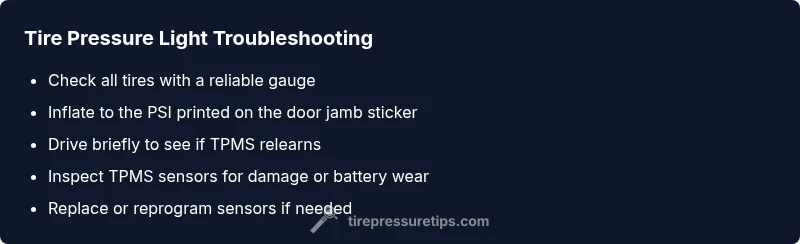
The Chevy Spark tire pressure light is usually triggered by one or more tires being underinflated or a TPMS fault. Start by checking all tires with a reliable gauge and inflating to the recommended PSI on the door jamb sticker. If the light remains after a short drive, perform a TPMS relearn per the owner’s manual or seek service.
What the Chevy Spark Tire Pressure Light Means
The tire pressure light on a Chevy Spark is an alert from the vehicle’s TPMS (tire pressure monitoring system). In most cases, it signals that one or more tires are not at the manufacturer’s recommended pressure. However, a TPMS sensor fault, dead battery, or a required relearn after a tire change can also trigger the warning. According to Tire Pressure Tips, most tire pressure light diagnoses begin with a simple pressure check, especially in fluctuating weather. For Chevy Spark owners, the first step is to verify all tires, including the spare if applicable, are inflated to the PSI listed on the driver door jamb. The difference between underinflation and a TPMS fault matters, because it changes the fix: inflate and drive to reset, or diagnose the sensor itself. In practice, you’ll often find one tire gently leaks air, while the others are ok. When you inflate correctly and still see the light, a relearn or sensor inspection is usually the next move. Tire Pressure Tips also notes that cold weather can exaggerate pressure changes, so a morning check is ideal. This information helps you approach the Chevy Spark tire pressure light calmly and methodically, without guessing.
content_type_for_seo_localization_hint_and_contextual_relevance_for_block1_of_bodyBlocks: null
href_to_relevant_content: null
more_content: null
Steps
Estimated time: 30-45 minutes
- 1
Find the recommended PSI
Locate the recommended tire pressure values on the driver’s door jamb sticker or in the owner’s manual. This is the target pressure for all tires when cold. Use a high-quality gauge for accuracy, and compare each tire’s current pressure to the target.
Tip: Use the same gauge on all tires to avoid inconsistent readings. - 2
Check every tire
Check each tire, including the spare if your model uses one. If a tire is low, inflate it to the target PSI and recheck after a few minutes. Record any tires that repeatedly lose air and note if the leakage is gradual.
Tip: If you find a puncture, address it before inflating to avoid overinflation on a punctured tire. - 3
Drive to initiate TPMS relearn
Some vehicles automatically relearn TPMS after driving at a moderate pace for a short distance. If the light stays on, drive 10-15 minutes on a normal road to see if the system resets.
Tip: Make sure your tires are at the correct PSI before attempting relearn. - 4
Inspect TPMS sensors
If the light remains after relearn attempts, inspect TPMS sensors for physical damage, corrosion, or battery failure. A non-functioning sensor will keep the warning illuminated.
Tip: Sensors can fail gradually; don’t ignore a slow drift or inconsistent readings. - 5
Consider professional diagnosis
If you cannot resolve the light with checks and relearn, seek professional service. Some issues require a scan tool to refresh TPMS data or replace sensors.
Tip: Professional service can confirm whether you need new sensors or a battery replacement. - 6
Address tire issues promptly
If a tire shows a leak or damage, repair or replace it as needed. Driving on underinflated tires can damage the tire and compromise handling.
Tip: Do not drive long distances on a clearly underinflated tire.
Diagnosis: Tire Pressure Light turns on in Chevy Spark
Possible Causes
- highOne or more tires underinflated
- mediumTPMS sensor or battery fault
- lowTPMS relearn required after tire rotation or replacement
Fixes
- easyCheck all tires with a reliable gauge and inflate to the door jamb sticker PSI.
- easyIf pressures are correct but light stays on, perform TPMS relearn as described in the owner’s manual.
- mediumInspect TPMS sensors for physical damage or battery issues; replace sensor/battery if needed and reprogram
Frequently Asked Questions
Why does my Chevy Spark tire pressure light come on after I’ve inflated all tires?
That usually means either a slow leak in one tire or a TPMS sensor fault that didn’t relearn after inflation. Re-check all tires and perform a TPMS relearn if instructed by the manual.
If you inflated all tires and the light remains, recheck for leaks and try a TPMS relearn per your manual.
Can cold weather cause the tire pressure light to come on?
Yes. Cold temperatures lower tire pressure, which can trigger the TPMS warning. Check pressures when tires are cold and inflate to the recommended PSI.
Cold weather can trigger the light; check and adjust when tires are cold.
How do I reset the TPMS on a Chevy Spark?
Most Chevy Sparks require a relearn procedure that involves turning the ignition and using the TPMS menu or following a specific sequence in the manual. Always refer to the owner’s guide for the exact steps.
Refer to your manual for the exact TPMS relearn steps, as they vary by model.
Is it safe to drive with the tire pressure light on?
Short trips at moderate speeds might be possible if pressures are maintained, but you should not drive long distances or aggressively accelerate until pressures are correct and TPMS is functioning.
Drive slowly to a safe location if you must, but fix the issue promptly.
When should I replace TPMS sensors or batteries?
TPMS sensors can last several years, but batteries wear out. If a sensor fails or shows inconsistent readings after checks, replacement or battery service is recommended.
Sensor battery life varies; replace if readings are unreliable.
Watch Video
What to Remember
- Check all tires cold before inflating.
- Inflate to the door jamb PSI, not the max on the tire sidewall.
- If the light stays after inflation, perform TPMS relearn.
- Seek professional help for TPMS sensor faults or battery issues.