Tire Pressure Light on Dash: Urgent Troubleshooting Guide
Facing a tire pressure light on dash? Learn fast fixes, TPMS basics, and safe driving tips to reset alerts, check pressure, and prevent flats on the road.


Most likely the tire pressure light on dash means one or more tires are underinflated or the TPMS has detected a fault. First, pull over safely, inspect tires, and check pressure with a gauge. Inflate to the vehicle’s recommended PSI, then reset TPMS if your model supports it. If the light remains after inflation, a sensor or battery issue is likely.
Understanding the Tire Pressure Light on Dash
According to Tire Pressure Tips, the tire pressure light on dash is more than a nuisance; it’s a real warning from your vehicle’s monitoring system. It usually means one or more tires are underinflated, or the TPMS has detected a fault in a sensor. Temperature changes, slow leaks, or a weak battery in a sensor can all trigger the light. Tire Pressure Tips Analysis, 2026 notes that temperature swings and sensor wear commonly set off TPMS alerts, so don’t ignore it.
Treat the warning as a priority: underinflated tires reduce fuel efficiency, wear faster, and increase the risk of a blowout on the highway. The fix is often simple, but you must distinguish a true pressure drop from a faulty sensor. Start with a quick external check for obvious punctures or damage, then measure actual pressure with a gauge. If you find a tire low, inflate it to the labeled pressure using a reliable gauge, and recheck all tires.
In the following sections, we’ll walk through safe testing, TPMS basics, and practical steps to restore normal operation. The goal is clear: keep you safe, save fuel, and prevent recurring warnings. The Tire Pressure Tips team hopes you can handle routine checks confidently.
Immediate Checks You Can Do Safely
Before you start inflating, ensure you are in a safe, level area away from traffic. Visually inspect all tires for bulges, cuts, or objects lodged in the tread. If a tire appears damaged, do not drive long distances; arrange a tow to a repair shop. Use a reliable tire pressure gauge to measure cold pressures, then compare to the vehicle’s door jamb label or owner’s manual. Inflate each tire to the recommended level, and re-check after a few minutes of resting. If the TPMS light persists after inflation, you may have a sensor issue or a battery in the sensor that needs replacement. For vehicles with a reset procedure, follow the manual steps to relearn the system. Always perform checks with appropriate PPE and gloves, and never rely on a visual estimate alone. If you notice a rapid drop in pressure or a pronounced hissing sound, stop and seek professional help immediately.
How TPMS Works (And Why It Matters)
TPMS combines sensor data from inside each tire with a central control module to determine whether your tires are safely inflated. Direct TPMS uses sensors mounted on each valve stem or inside the tire, while indirect TPMS relies on wheel speed sensor data and ride height. Regardless of type, TPMS is designed to alert you before a tire becomes dangerously underinflated. Temperature shifts, tire repair work, and even a failing sensor can lead to false positives or delayed alerts. Understanding TPMS helps you decide whether to recheck pressure yourself or schedule service. The goal is reliable readings that reflect real-world conditions, not false alarms.
Diagnostic Mindset: How to Approach the Problem
When the light comes on, start with the simplest cause and work toward the more complex. Common causes include underinflation, slow leaks, or a faulty sensor. Use a structured approach: confirm actual pressure, inspect for visible damage, test sensors if you have access to a relearn procedure, and check for recent temperature changes. If inflation fixes the issue but the light returns after a drive, there may be a leaking valve stem or a sensor fault. Keep safety front and center: pull over, assess hazards, and avoid driving too far with uncertain tire pressure. Remember, the TPMS warning can also reflect ambient temperature effects, so gauge readings after a cool-down period for the most accurate check.
Practical Quick Fixes: Step-by-Step (Non-Technical)
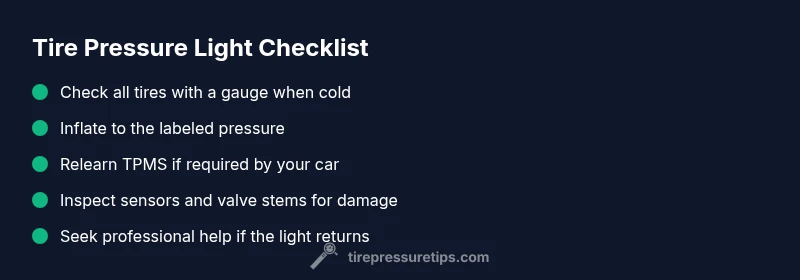
- Inflate all tires to the recommended pressure using a reliable gauge. Ensure the tires are cold for the most accurate reading.
- Re-check after a few minutes to account for any heat buildup during inflation. If a tire refuses to reach the label, do not overinflate; instead, inspect for leaks or damage.
- Reset TPMS if your vehicle supports a relearn procedure in the owner’s manual. Some systems require you to drive a short distance after resetting to calibrate.
- Inspect valve stems and TPMS sensors for damage or corrosion. A damaged sensor can cause persistent warning lights even after correct inflation.
- If the light remains after these steps, schedule a professional diagnostic to verify sensor integrity and calibration. Driving with an unresolved TPMS fault can mask other tire issues.
Safety Tips and Common Pitfalls
- Never rely on an illuminated warning as a permit to ignore tire condition. Check for nails, cuts, bulges, and uneven tread wear.
- Do not exceed the tire’s maximum pressure printed on the sidewall or the manufacturer’s label; overinflation can cause a harsh ride and reduced contact area.
- If you must drive after the light comes on, keep speeds moderate and plan a short trip to a safe area for inspection rather than a long highway drive.
- Beware of false positives; some TPMS faults arise from sensor battery depletion, which requires replacement rather than merely inflating tires.
- Document any changes you make so you can explain the sequence to a technician if needed.
Prevention, Maintenance, and Next Steps
To minimize recurring TPMS alerts, keep tires inflated to the recommended level and inspect tires regularly, especially after temperature extremes or long trips. Rotate tires as per your vehicle’s maintenance schedule, check wheel nuts for proper torque, and replace damaged sensors promptly. If you notice ongoing fluctuations with ambient temperature, consider checking tire valve stems and seals; small leaks are easy to miss but accumulate over time. Remember to keep a portable gauge in your glovebox for quick at-a-glance checks and to verify readings when you notice any warning.
When to Seek Professional Help
If the tire pressure light remains on after you have inflated to the label and performed the standard relearn procedure, it’s time to seek professional help. A technician can perform a TPMS relearn when necessary, inspect sensors for corrosion or dead batteries, and verify the system calibration with specialized tools. Persistent warnings can also indicate a slow leak that requires a professional repair, or a tire that cannot be safely repaired. In all cases, addressing the issue promptly reduces the risk of a blowout and preserves tire life.
Steps
Estimated time: 45-60 minutes
- 1
Check all tires with a gauge
Ensure the vehicle is on a level surface and the tires are cold. Use a reliable pressure gauge to measure each tire’s current pressure, including the spare if applicable. Compare readings to the labeled specification and note any deviation.
Tip: Always check when cold for the most accurate result. - 2
Inflate to the recommended pressure
Inflate each tire to the manufacturer’s recommended pressure as shown on the door jamb label or inside the owner’s manual. Avoid inflating beyond the tire’s maximum pressure printed on the sidewall.
Tip: Use a gauge with a built-in deflation valve to fine-tune pressure. - 3
Inspect for leaks and damage
Carefully inspect tires for nails, cuts, bulges, or slow leaks around the tread and sidewalls. Check valve stems and rims for damage that could cause air loss or inaccurate readings.
Tip: Look for signs of wheel or rim corrosion around the TPMS sensor area. - 4
Reset or relearn TPMS
If your vehicle supports it, perform the TPMS relearn procedure as described in the owner’s manual. Some cars require a specific sequence or a drive after reset to calibrate.
Tip: Keep the ignition on and follow the official sequence; a mismatch can trigger another warning. - 5
Test-drive to confirm
Drive a short distance to let sensors reassess tire conditions. Re-check all pressures after the drive once the tires have cooled.
Tip: If the light returns immediately, you may have a slow leak or sensor fault. - 6
When to seek professional help
If warning persists after inflation and relearn, a technician should diagnose the TPMS sensors, battery health, and calibration with proper tools.
Tip: Document warnings and readings for efficient service.
Diagnosis: Tire pressure light on dash
Possible Causes
- highUnderinflated tires
- mediumTPMS sensor fault or dead battery
- lowTemperature changes or minor puncture
Fixes
- easyCheck all tires with a gauge and inflate to the recommended pressure
- easyReset TPMS or relearn sensors per owner’s manual
- mediumInspect tires for leaks, punctures, or valve stem damage; replace faulty sensors if needed
- easyIf unresolved, visit a certified technician for TPMS calibration or sensor replacement
Frequently Asked Questions
What does the tire pressure light on the dash mean?
The light signals a possible low tire pressure or a TPMS fault. It’s a safety feature designed to prevent driving on underinflated tires. Always verify actual pressure with a gauge and inspect for issues.
The tire pressure light means your tires may be underinflated or the TPMS has a fault. Check your tires with a gauge to be safe.
Can I drive with the tire pressure light on?
Short urban trips at moderate speeds are generally acceptable after you verify inflation, but avoid long drives until you confirm the issue. If in doubt, pull over safely and reassess.
Yes, for short trips if you have confirmed the pressures, but avoid long drives until you’ve checked things.
How do I reset TPMS after inflating tires?
Many cars have a TPMS relearn procedure in the owner’s manual. It often involves a sequence of steps and sometimes a drive after completion to recalibrate.
Follow your manual’s TPMS relearn steps; you may need to drive a bit for the system to recalibrate.
What if the light stays on after inflating to the correct pressure?
A persistent light after correct inflation usually points to a sensor fault or battery issue. A professional inspection can verify sensor health and calibration.
If it stays on after inflation, it’s likely a sensor or battery problem; get it checked by a technician.
Are TPMS batteries replaceable?
Most TPMS sensors have non-serviceable batteries inside the sensor. When a battery dies, the sensor is typically replaced as a unit.
TPMS batteries aren’t usually replaceable; sensors are replaced if the battery dies.
How do temperature changes affect tire pressure and TPMS?
Tire pressure naturally falls with cooler temps and rises with heat. Rapid changes can trigger TPMS alerts even if tires are within normal range.
Cold weather lowers tire pressure and can trigger the TPMS warning even if you haven’t changed tires.
Is it safe to drive if the tire looks damaged?
If you see bulges, cracks, or penetrations, stop driving and seek professional assessment. A damaged tire can fail suddenly.
If there’s visible damage, don’t drive; get the tire inspected right away.
Watch Video
What to Remember
- Check tire pressure first with a gauge.
- Inflate to the label and recheck after cooling.
- TPMS may need a relearn or sensor check.
- Consult a professional if the light persists.